

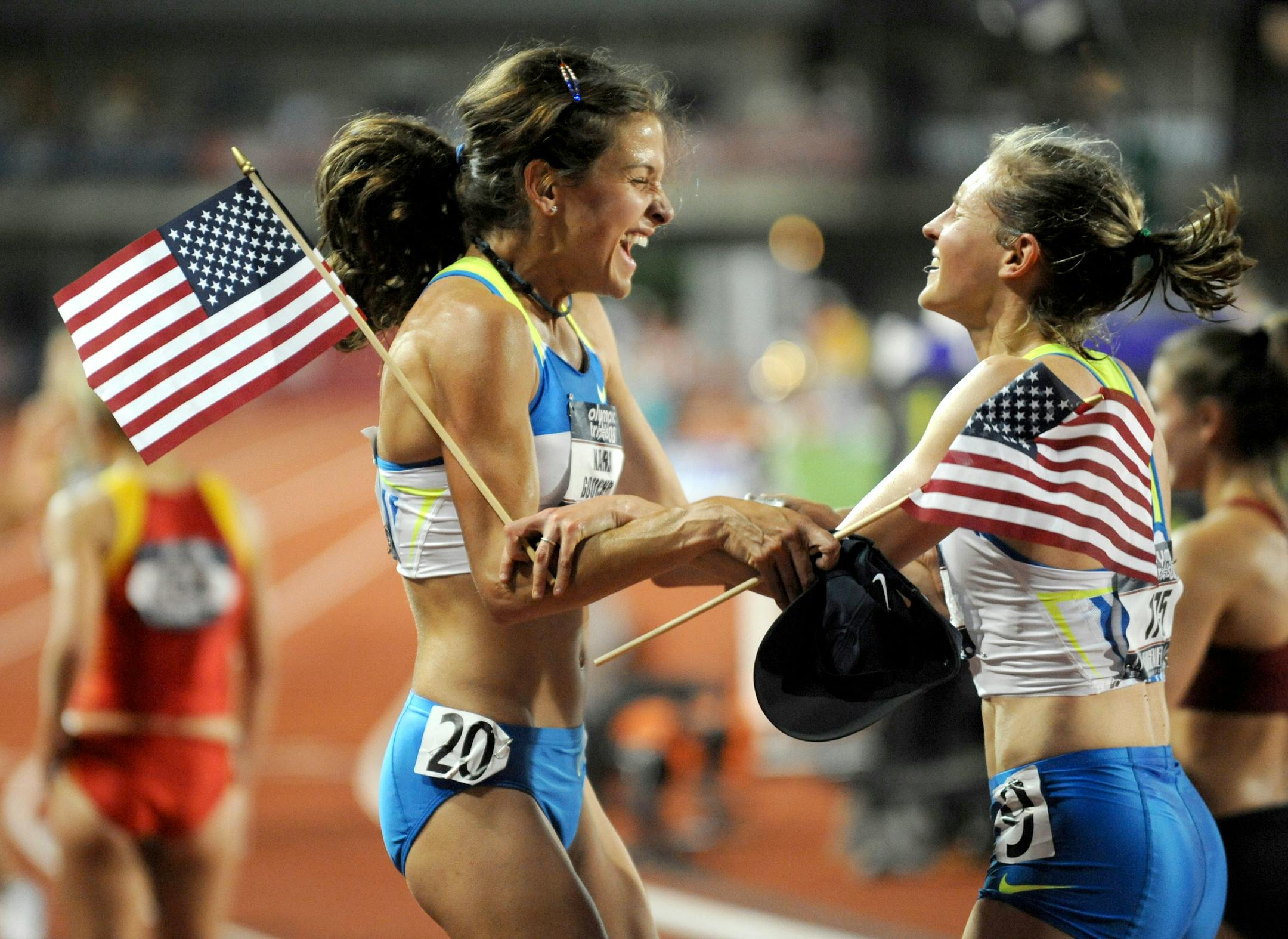
EUGENE, ORE. — Through all the years of self-doubt, of injuries and insecurities and poor results, Kara Goucher persevered. But in 2004, when she failed to advance to the finals of the 5,000-meter run at the Olympic trials, she wondered whether she would ever achieve all the things she dreamed of as a young runner in Duluth.
Goucher and her husband, who was enduring his own struggles on the track, decided to give themselves one more shot with a move to Portland, Ore., and coach Alberto Salazar. "There was always a little hope in me, which is why I didn't quit," she recalled. "Then, in my first year with Alberto, it was like, 'Yeah. There's still a fast girl in here.' "
Friday night, the fast girl ran all the way to the Beijing Games. Goucher, 29, earned her first Olympic berth with a second-place finish in the women's 10,000 meters at the U.S. Olympic track and field trials. The girl who won multiple Minnesota state titles in cross-country and track has matured into one of the world's premier female distance runners, finally outrunning the hardships that nearly caused her to stop.
"I've wanted to be an Olympian for so long," said Goucher, who went by her maiden name of Kara Grgas-Wheeler when she graduated from Duluth East in 1996. "This is the childhood dream. I don't mind talking about [her struggles]. That makes me who I am; I had to go through that. I learned to appreciate running so much more because of it."
Many members of Goucher's family still live in Duluth, including mom Patty and sister Kelly, an assistant women's soccer coach at Minnesota Duluth. They were at Eugene's Hayward Field to cheer her on in the state she now calls home.
Goucher came to Oregon after the 2004 trials with her husband, Adam Goucher, as they sought relief from their frustrations. Kara had helped Duluth East win several state cross-country titles in the early 1990s and was a three-time NCAA champ for the University of Colorado in 2000. As she and Adam continued their running careers, both battled nagging injuries, and the self-doubt that Kara had wrestled with throughout her life had grown louder.
Salazar believed both could turn things around. He started Kara on a core-strengthening program, and she began working with a sports psychiatrist. By 2006, she had set personal records at four distances; a year later, she won the bronze medal in the 10,000 at the world championships, becoming the first American to medal in that event.
"The medal proved to me I could compete with anybody on any given day," Goucher said. "But now, I'm an Olympian. This is better."


