

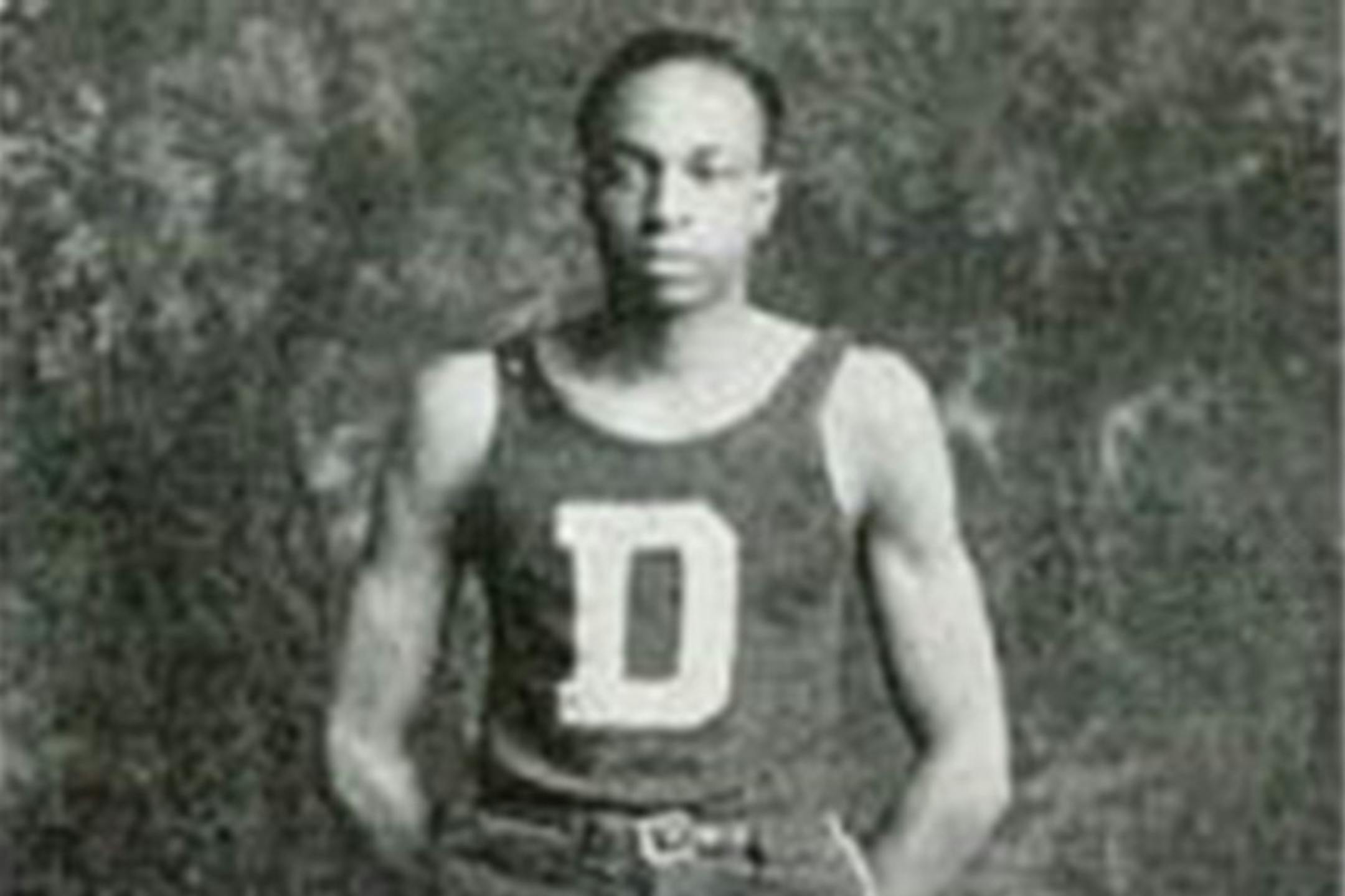
During a one-point victory over Little Falls at the 1918 Minnesota boys' high school basketball tournament, Duluth Central High center Eugene Watts Jr. twisted his ankle — limping off the floor and into the nearly forgotten ranks of historical footnotes.
The son of a Mississippi-born janitor, Watts — nicknamed "Boots" — is believed to be the first Black player in the history of the tournament, which turns 109 next week. Watts' appearance in the sixth tournament in Northfield came two years before three African American circus workers were lynched in his hometown of Duluth when a woman falsely accused them of rape.

"Boots had little trouble in out-jumping all opposing centers," according to the 1918 Zenith, the yearbook for Duluth Central, which closed in 2011. "He played a hard consistent game all season … Watts covered his position in a splendid manner."
The Zenith said Watts was the "deciding factor" in Central's victory over Buhl in a district title game in Eveleth in 1918. After twisting his ankle in his first state tournament game, Watts missed Central's next game, a 32-31 squeaker over pre-tournament favorite St. Paul Humboldt. He also missed his team's 24-18 loss to Waseca in the championship.
"It was due in large part to his injury that we lost the state championship," the yearbook said.
For years, tournament historians considered two African American members of the 1947 St. Paul Marshall team — Leon Combs and Curtis Russell — the racial barrier breakers. Hopkins' Bob Wagner made the all-tournament team in 1951 and 1952, and St. Paul Central's LeRoy Gardner and Jim Hill joined those pioneers in the mid-1960s.
But Watts beat them all by a generation. Northfield hosted the first decade of state hoops tournaments at Carleton College before the event moved to the Twin Cities, where it's been held in a variety of venues. Those early years in Northfield attracted scant newspaper coverage.
"Rarely have news reports ever made things easy for those in the distant future by simply saying that a player, any player, was African-American," Minnesota basketball historian Marc Hugunin wrote in 2018 on his Minnesota Hoops blog.


