
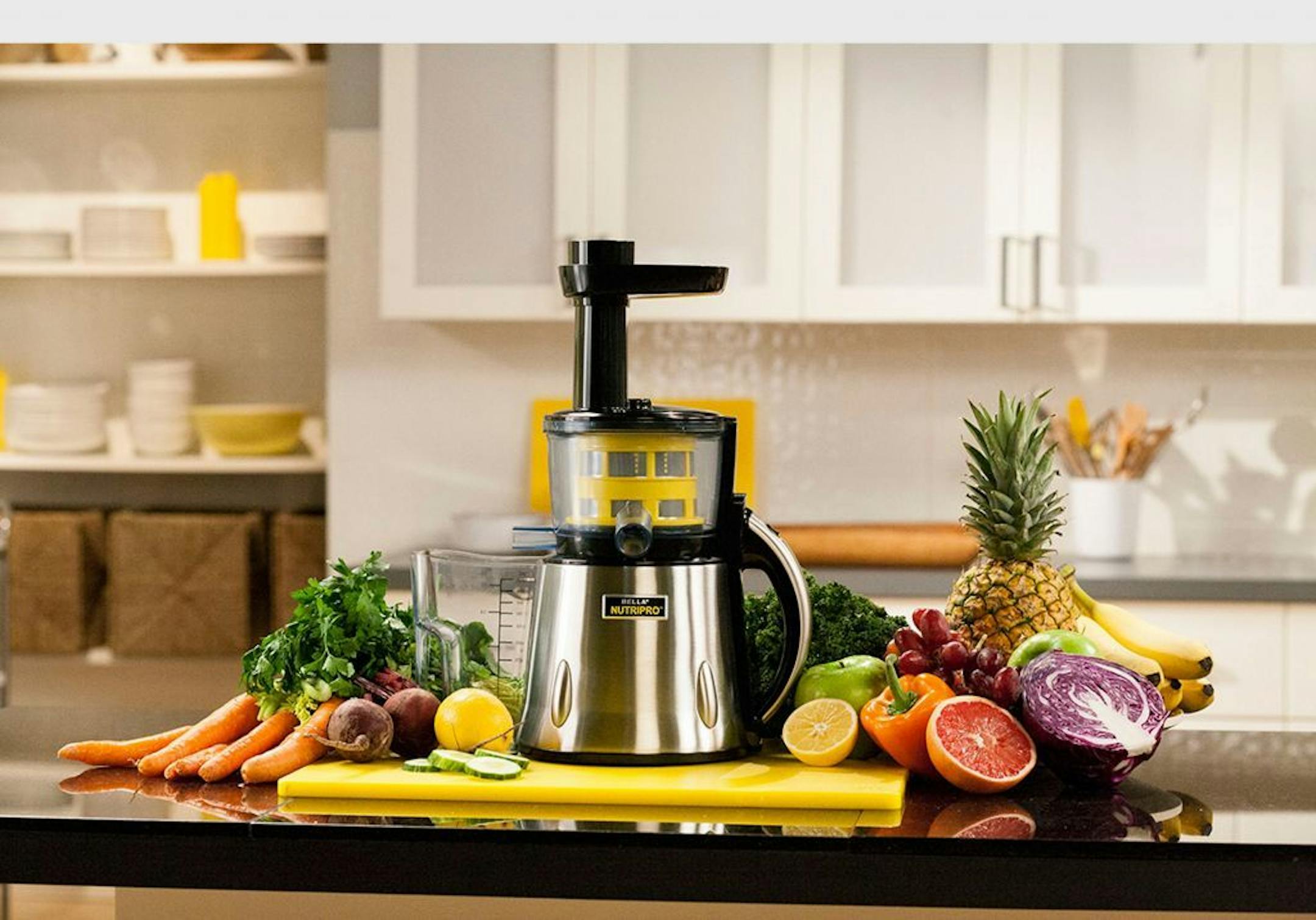
Drink to your good health with juice

Juicing has become a popular way to boost veggie and fruit intake.

February 4, 2013 at 9:03PM
BELLA introduces the NutriPro cold press juicer. BELLA NutriPro's technology provides more juice, more nutrients and great taste. BELLA NutriPro is now available at Macy's and JCP stores nationwide, and will soon also be available through TV for a suggested retail price of $249.99. For more information, please visit www.NutriProJuicer.com.
From November 2011 to November 2012, sales of home juice extractors, such as the Bella NutriPro, rose 71 percent, according to the NPD Group, a market research firm. (Associated Press - Pr Newswire/The Minnesota Star Tribune)

A tall glass of kale?

It might sound strange, but a growing number of people are drinking their daily quota of vegetables and fruits — and say their health is better for it.

Known as juicing, the concept is simple: Extract the juices of nutrient-rich fruits and veggies, and drink it. The practice is fast becoming a $5 billion industry in the United States, according to market watcher Barron's, and is expected to grow.

Fans of juicing say they think the body absorbs nutrients better from raw juices and gets a boost of energy. Especially popular right now are green juices — made with dark leafy greens such as kale, chard and spinach. Although fruits are used to sweeten these juices, they are done so sparingly to avoid adding calories.

But home juice extractors aren't cheap.

An average one can cost $70; higher-end models cost $400 or more. But the prices haven't dampened sales.

From November 2011 to November 2012, sales of home juice extractors rose 71 percent, according to the NPD Group, a market research firm.

There are two kinds of home juice extractors that work differently: centrifugal and masticating juicers. Both look about the same.

Centrifugal: This is the most common type of juicer sold at kitchen stores and big-box retailers. It's the most affordable. Once you feed in the vegetables or fruit, it shreds and spins very fast so that the pulp and bits of fruit and vegetables are caught by a strainer or filter and the juice spins out. Centrifugal juicers can be loud. And, because they are fast, they heat up, which can affect the nutritional value of the juice.

Masticating: These juicers have an auger that crushes or grinds the fruit and vegetables. The crushed fruit and vegetables are pressed against a filter or strainer. Masticating juicers run slower so they don't heat up and destroy the nutrients in the juice. They are known to create pulp that's drier than that left by centrifugal models.

Registered dietitian Rebecca Da Silva of Beaumont's Weight Control Center in Royal Oak, Mich., says she has seen increased interest in juicing, with more patients in the past year asking her about it.

"Used effectively to help get in more fruits and vegetables, it's an acceptable way," Da Silva says. "Juicing fruits has been around forever, but more people are now juicing vegetables with their fruit."

But, she cautioned, you can get a lot of calories if you overdo it, especially with fruits.

"You should be mindful of the fruits you are putting in the juices," Da Silva says. "The fruits, with their natural sugar, can add more calories."

And, Da Silva said, you need to be mindful if the juicer you use extracts only the juice.

"If you're using a juicer that takes some of the pulp out, you are losing out on some of the nutritional value," she says. "Some of the fiber is in the skin and some in the flesh, and most of the pulp gives you fiber."

Consuming fiber, Da Silva says, helps control hunger because it helps you feel fuller longer.

"And that can help you lose weight," she said.

about the writer

about the writer

Susan M. Selasky, Detroit Free Press

More from Minnesota Star Tribune

See More
card image
Provided/Sahan Journal

Family members and a lawyer say they have been blocked from access to the bedside of Bonfilia Sanchez Dominguez, while her husband was detained and shipped to Texas within 24 hours.

card image