

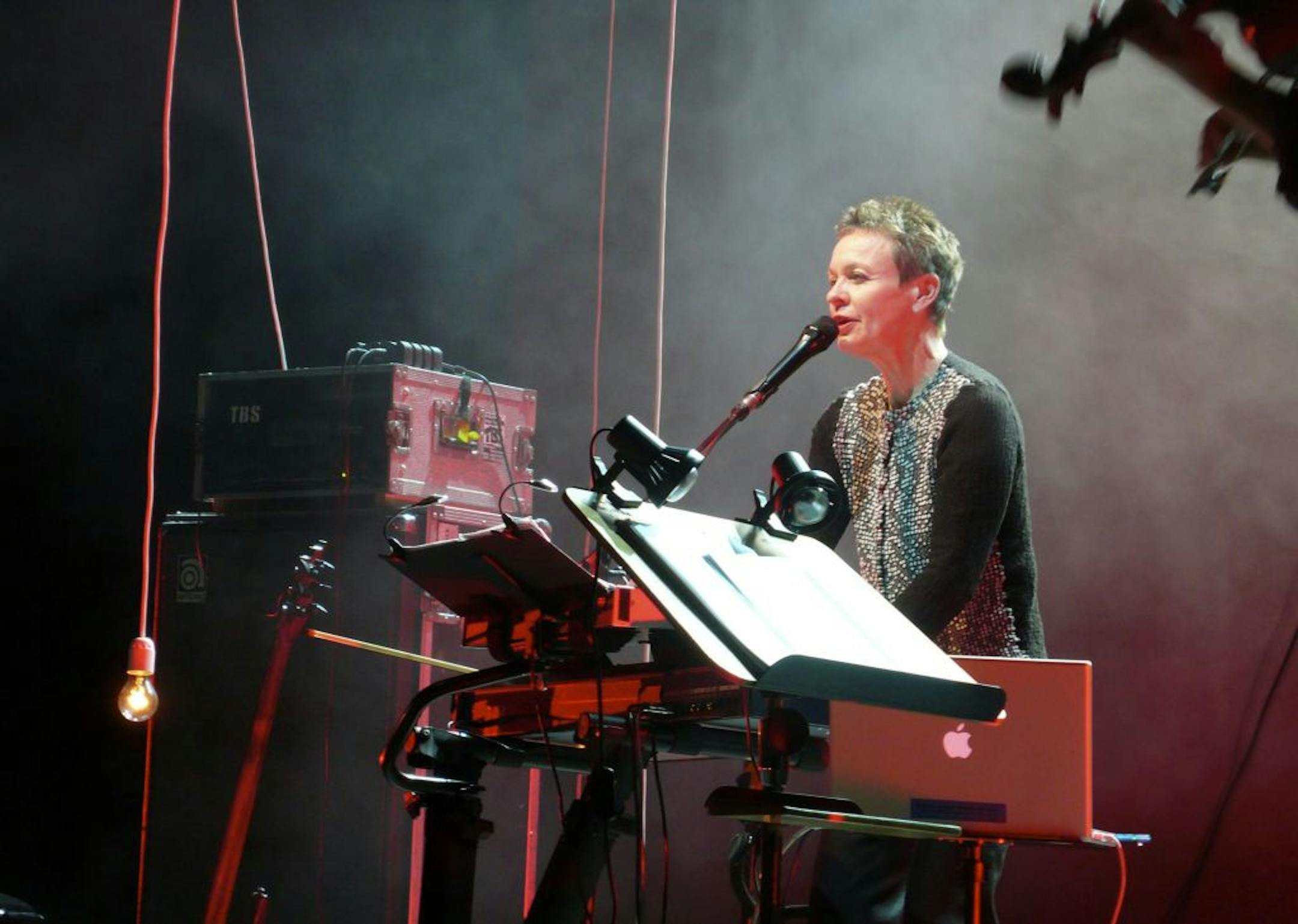
It has been a decade since performing-arts pioneer Laurie Anderson, 65, last did a show in the Twin Cities.
The tone and themes of that work, "Happiness," were colored by the shock of the 9/11 terror attacks. Assisted by voice-masking technology, much of it of her own making, Anderson delivered in a multiplicity of voices and colors to bring varied stories to the stage.
In the intervening years, she has toured Europe and created a raft of new meditative works, including "Delusion," about the stories we tell ourselves and our families, and "Homeland," a querulous piece on the state of the nation. In 2008, she married her longtime partner, music legend Lou Reed.
The Star Tribune spoke with Anderson last Sunday as she was concluding a stay in Seattle, where she performed her latest piece, "Dirtday!" The Seattle Times described this hallucinatory dreamscape as being about "everything: evolution, the post 9/11 security state, popes on other planets, tent cities, our health-care system, sleep, dreams, music, regrets, superstition, love and, emphatically, death."
"Dirtday!" plays next weekend at Walker Art Center in Minneapolis.
• "'Dirtday!' started out pretty differently. It was going to be all music. I had been playing the violin a few hours a day and loved the harmonies that were coming out. I thought, wouldn't it be great to do a whole evening of violin filters? The time I was writing it, a lot of diverse [ideas] started to converge. It changed with some political ideas. I was involved with the Occupy Wall Street movement at the time.
"But some of the things I wanted the violin to do, it wasn't doing. For example, I wanted a note to trigger another note. So, I began to write software for that. Then the whole thing became one long shaggy-dog story that extended into dreams and anthropology and journalism.
"I'm someone who throws away 90 percent of what I make. I'm always trying to analyze what my work is doing. I try to be an intuitive artist, but I also have to be a good editor. I asked myself, 'What was leading, the music or the story?' And it was the story. That's how 'Dirtday!' went from something that I imagined as all music in a completely different direction."


