6:34
6:34The revenge western "Django Unchained" is a hell-for-leather hoot.
Quentin Tarantino's colorful patchwork makes an old-fashioned genre fresh and interesting, assembling familiar elements in unfamiliar ways, and spinning stock characters in surprising (sometimes even deep) directions. He teases us with eccentrically timed action beats, giving us a lot of time to get to know the players and like or loathe them before the guns come out. His characters are never flesh-and-blood people, but as pop icons they are sublimely entertaining.
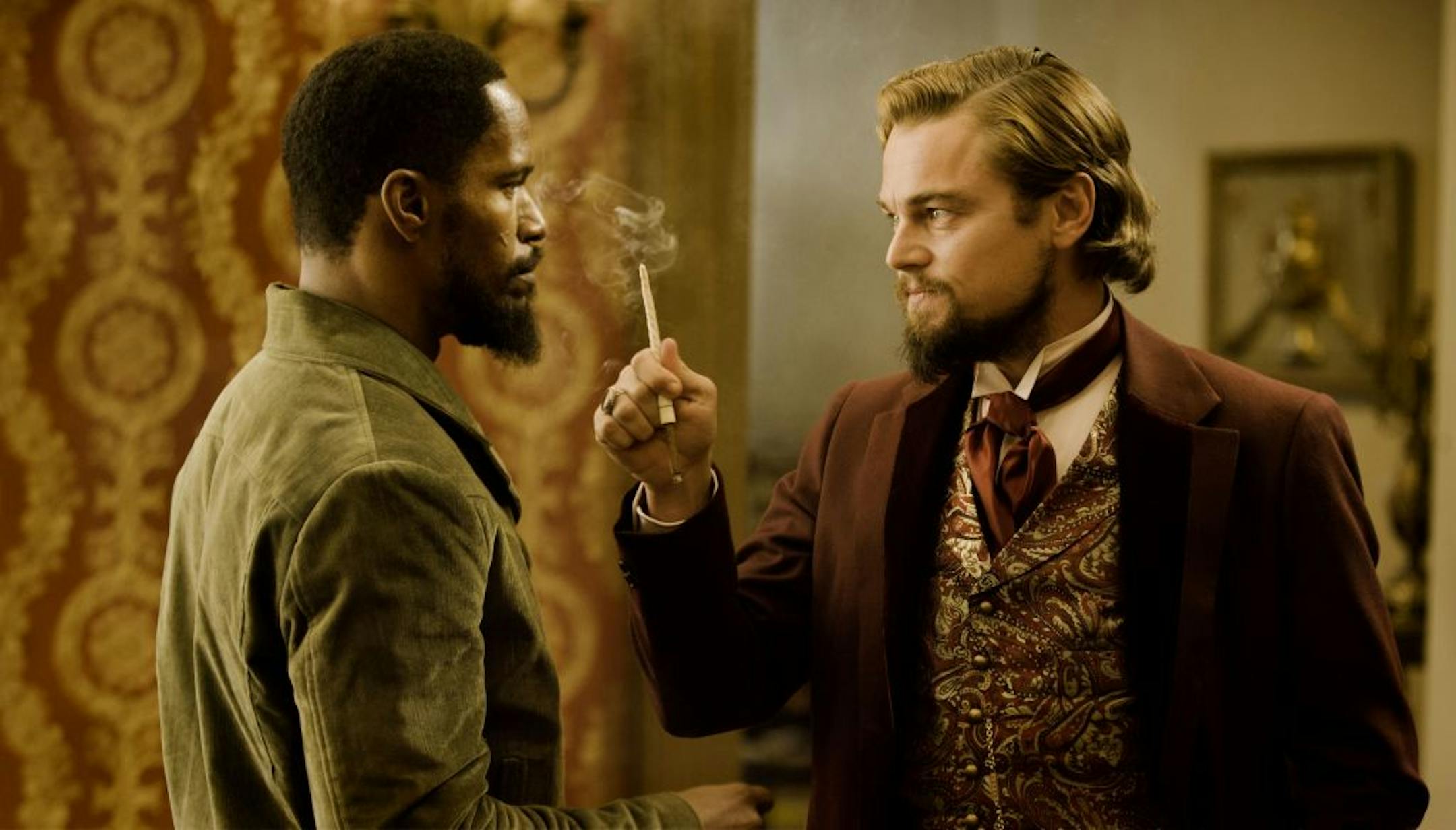
Set two years before the Civil War, the film stars Jamie Foxx as a slave named Django and Christoph Waltz as Dr. King Schultz, a German bounty hunter. Schultz greets Django's slave gang with a tip of the hat and a cheery, "Hello, you poor devils." In short order, and with a rich helping of "Hell, yeah" violence, Schultz frees Django and takes him as a partner.
Right there, with "Dr. King" liberating a black man, you understand that this is going to be exploitation filmmaking with some thematic bite to it. The film has a lot more on its mind, and explores it to stronger effect than its six-shooter trappings imply.
Django agrees to help Schultz track down a trio of nefarious outlaws. In exchange, Schultz promises to help Django rescue his enslaved wife, Broomhilda (Kerry Washington). The corpses pile up fast during this setup, but the character development is handled with excellent attention to detail. Schultz prefers to outwit his enemies, but if reason fails, he'll blow them out of their boots without batting an eye.
Django learns fast how to handle himself as a total outsider in white society. A fascinating contrast to the image of the Eastwood-style loner, he proves very much dependent on community and romantic love.
The Oscar-winning leads are a dream team. Waltz is an urbane delight as the more expressive of the pair, gradually ceding the spotlight to Foxx as his newly freed character gains self-assurance.
Foxx is willing to be the foil for some humor -- when Schultz invites Django to choose his own wardrobe for the first time, the result is an outrageous visual gag -- but he never makes a joke of the character. The laughable fools here are the racists, like Don Johnson's Foghorn Leghorn-inspired landowner and the posse of hooded freedom riders who set out to capture Schultz and Django. The extended scene in which they pause to discuss the pros and cons of wearing masks could be an uproarious outtake from "Blazing Saddles."