
Dirt? Mold? Grimy gunk on Jefferson Memorial baffles experts

The Associated Press
August 10, 2016 at 9:20PM
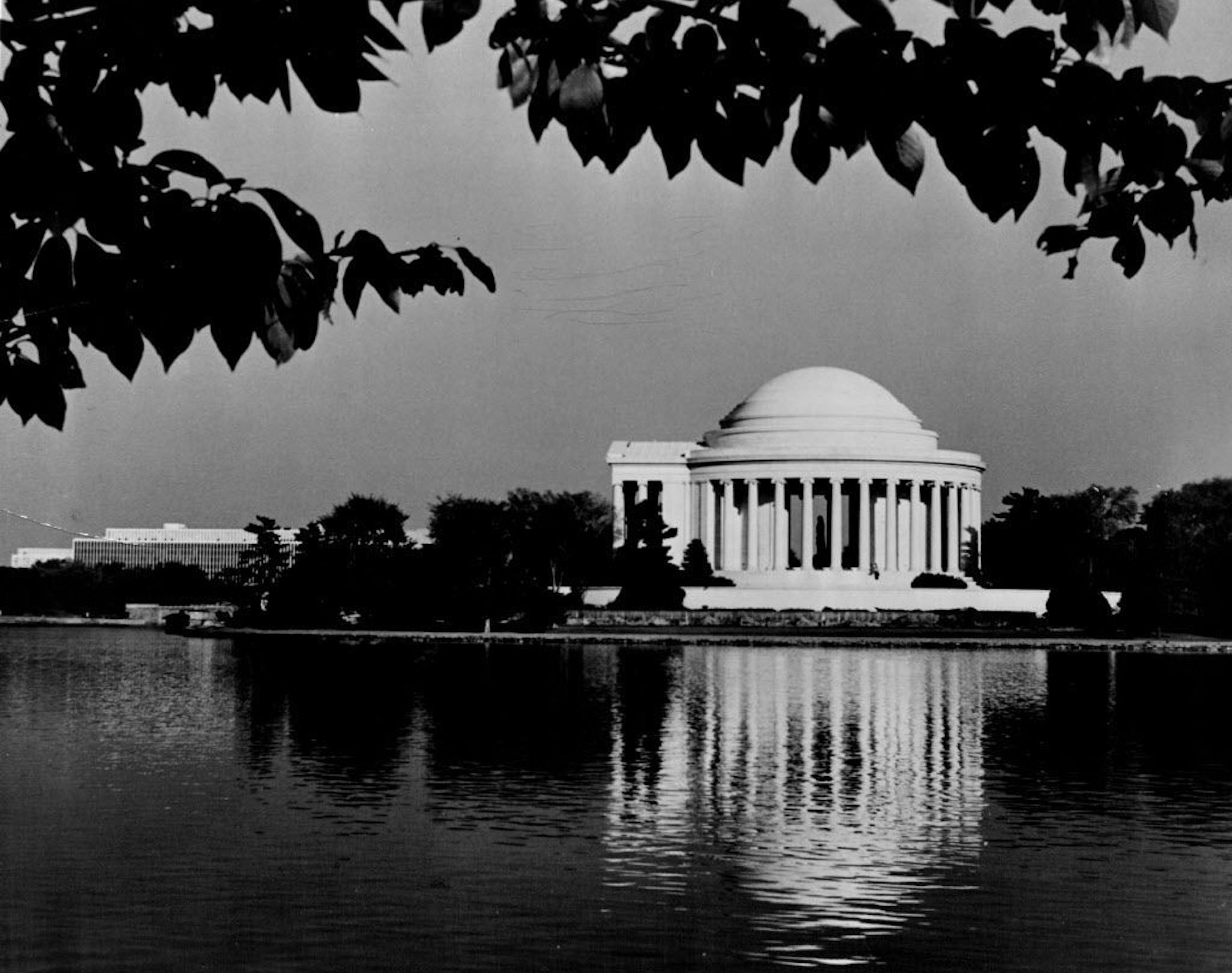
September 27, 1971 The Jefferson Memorial, considered by many to be the most beautiful building in the District of Columbia, was dedicated in 1943 by President Franklin D. Roosevelt. Since Thomas Jefferson, the third president, was also an architect, his memorial incorporates many of his personal architectural ideas. Situated on Washington's famed Tidal Basin, the monument is surrounded by a blaze of cherry blossoms every spring and is the focal point of the city's traditional National Cherry Bl
September 27, 1971 The Jefferson Memorial, considered by many to be the most beautiful building in the District of Columbia, was dedicated in 1943 by President Franklin D. Roosevelt. Since Thomas Jefferson, the third president, was also an architect, his memorial incorporates many of his personal architectural ideas. Situated on Washington's famed Tidal Basin, the monument is surrounded by a blaze of cherry blossoms every spring and is the focal point of the city's traditional National Cherry Blossom Festival. (Rpa -/The Minnesota Star Tribune)

WASHINGTON — What's darkening the formerly white rotunda of the Thomas Jefferson Memorial?

Is it dirt? Is it mold?

No, it's biofilm!

The National Park Service said in a news release Wednesday that biofilm, colony of microscopic organisms, has become increasingly pronounced at the memorial.

Officials say biofilm is not unique to the Jefferson Memorial; it was successfully treated at the D.C. War Memorial in 2011.

Gay Vietzke, superintendent of National Mall and Memorial Parks, said the increase presence of biofilm is a new challenge throughout the mall.

"We are continuing to study biofilm and research treatment methods, and look forward to restoring the dome to its original luster while ensuring its long-term preservation," Vietzke said in a statement.

Officials are testing several techniques to treat the biofilm, with an eye toward doing the least damage to the soft marble of the Jefferson Memorial and making it safe for the environment and visitors.

The film is actually a "multicultural" community of organisms living in the relatively harsh environment of the sun-blasted stone, Federica Villa, a microbiologist who has been studying the memorial, told The Washington Post.

The organisms — algae, bacteria and fungi — produce the black pigment to protect themselves from solar radiation, she explained. And Park Service experts note that it is not dirt or mold as some might suspect.

Officials aren't sure whether any of the efforts can prevent the organisms from coming back. They also don't know whether the biofilm is damaging, or perhaps even protecting, the stone.

"To be honest, we have a lot of work to do," Villa said.

The Park Service said that the marble blocks that make up the memorial were smooth when first hoisted into position but years of rain have slowly eroded the marble, pitting surfaces and creating a "perfect environment for a biofilm."

The statement added the biofilm first became noticeable at the memorial in 2006 and now is increasingly pronounced.

No timeline has been set for treatment of the dome, Park Service officials said.

about the writer

about the writer

More from Minnesota Star Tribune

See More
card image
J. SCOTT APPLEWHITE, ASSOCIATED PRESS/The Minnesota Star Tribune

The "winners" have all been Turkeys, no matter the honor's name.

In this photo taken Monday, March 6, 2017, in San Francisco, released confidential files by The University of California of a sexual misconduct case, like this one against UC Santa Cruz Latin Studies professor Hector Perla is shown. Perla was accused of raping a student during a wine-tasting outing in June 2015. Some of the files are so heavily redacted that on many pages no words are visible. Perla is one of 113 UC employees found to have violated the system's sexual misconduct policies in rece