

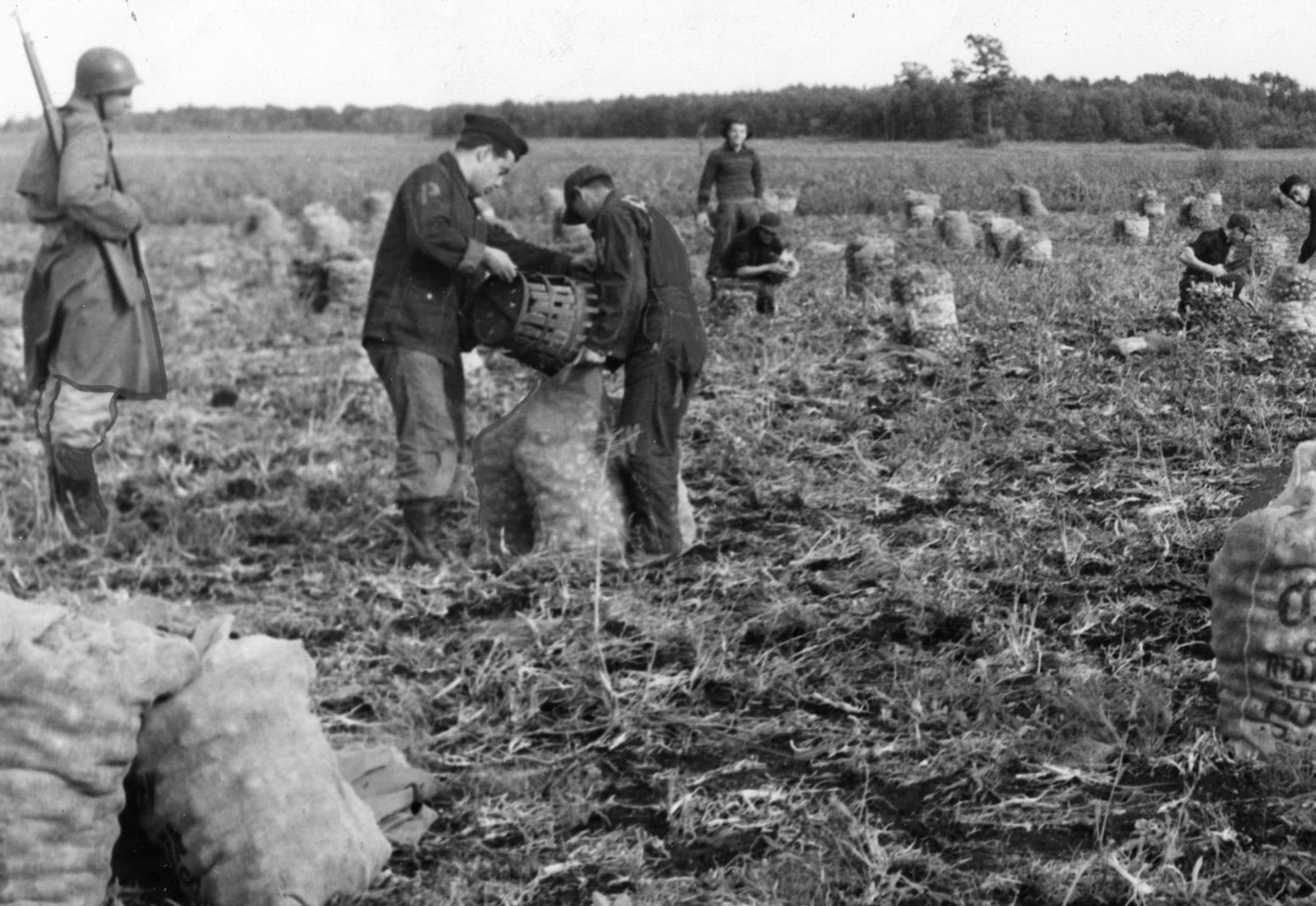
At age 95, Alfred Neber fondly remembers his stay in Minnesota 75 years ago — attending church, going swimming, as if on a typical Minnesota summer visit. But Neber wasn't a typical visitor, he was a German prisoner of war.
Neber was among some 400,000 Axis POWs captured during World War II and dispatched to 500 camps around the United States. The prisoners did work normally done by Americans, who were busy overseas fighting the prisoners' comrades.
Many Minnesotans are unfamiliar with this episode in history. A reader who requested anonymity asked Curious Minnesota, our community-driven reporting initiative, to look into it.
Thousands of POWs, mostly German and some Italian, worked in Minnesota between 1943 and 1946 (there were Japanese POWs in the country, but none in Minnesota). Experts can't pinpoint the number because they were constantly being moved around from a "base camp" in Algona, Iowa, and "branch camps" in 10 Minnesota locations. Most did farm work but also logging, factory production and other jobs. Their employers paid the government 40 cents an hour, of which the prisoners received 10 cents to spend in canteens.
The camps weren't exactly brutal chain gangs. Many employers were friendly to the prisoners, fed them hearty meals, took them to county fairs, even invited some to spend the night with the farm families.
"One thing I remember with a smile is that we were allowed to go to swim in a lake nearby," Neber said, in an e-mailed interview translated by his son Ralph.
A farmer in Moorhead "bent camp rules by buying prisoners beer and taking them into town, including a trip to a movie theater and one to a local tavern," Angela Beaton, a former graduate student at North Dakota State University in Fargo, wrote in an article published by the Minnesota Historical Society.
"Midwesterners who worked beside them in the fields and the factories discovered they were humans, pretty much like themselves," said Michael Luick-Thrams, who has published several books on the subject, operates an information-packed website and briefly operated a museum in St. Paul.


