

Blois Olson's ankles hurt so much that the pain made him walk "like an old man."
The St. Louis Park man consulted his doctor, who told Olson he had early arthritis and recommended a supplement — glucosamine — for relief. For the next six months, Olson downed glucosamine tablets every day.
These days, Olson, 42, no longer feels that throbbing pain in his ankles. And he's become a believer in the healing power of nutritional supplements.
"Once one of them worked, then I trusted others. I was more open to taking them," said Olson, who has since added fish oil to his daily intake.
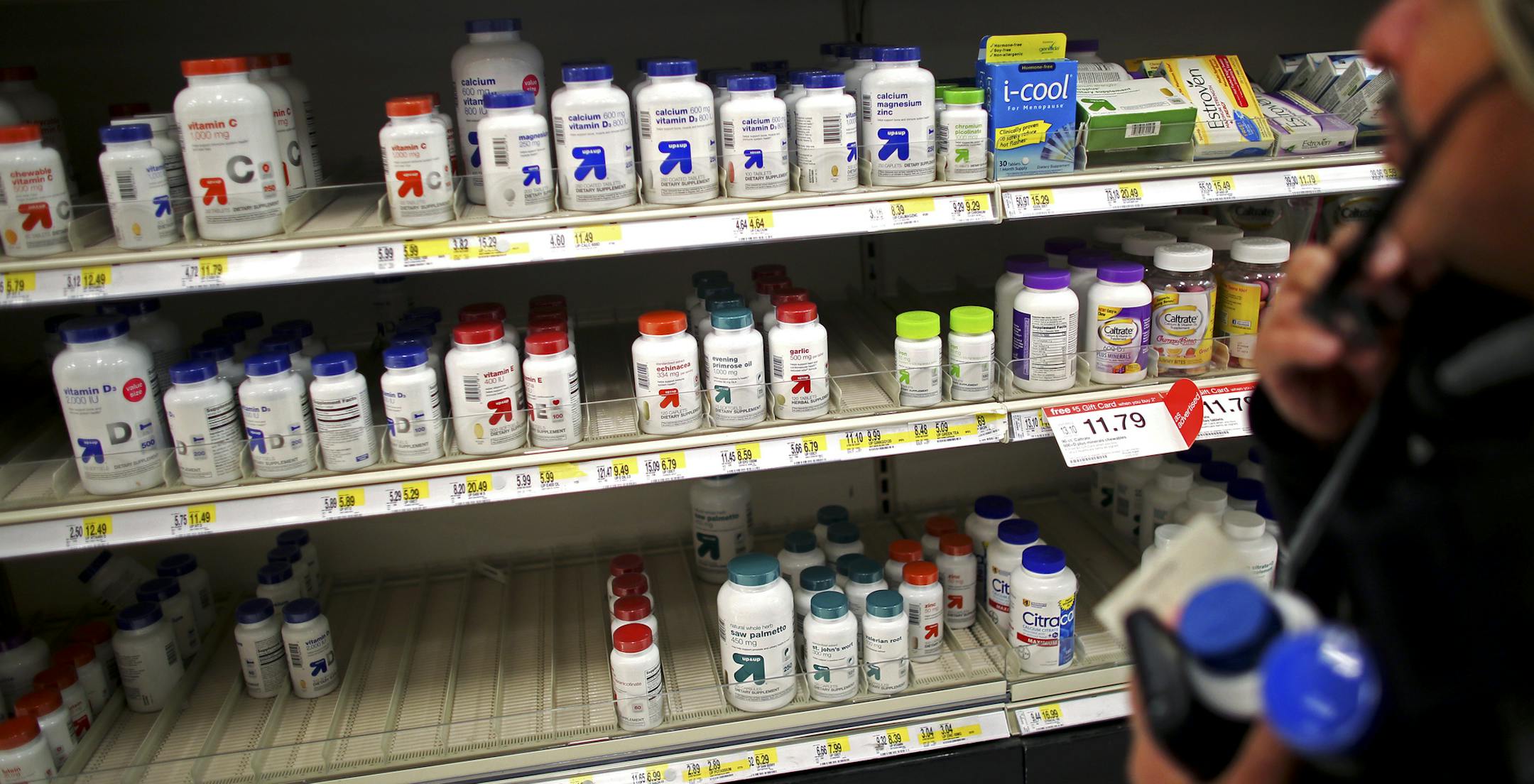
He's among the more than half of American adults who take dietary supplements to prevent or treat health problems.
Use of supplements — including vitamins, minerals and herbs — has become a $32 billion industry, despite scant evidence of their effectiveness.
A 2013 review of 27 studies on vitamin and mineral supplements found no evidence that supplements protect against heart disease or that those who take them live longer. Supplements only slightly reduced the risk of cancer, according to the review conducted for the U.S. Preventive Services Task Force.
Yet people continue to embrace them — believing that supplements are "natural" and therefore safe. In fact, some patients who are hesitant to take prescribed medications show little or no skepticism about taking supplements, doctors say.


