

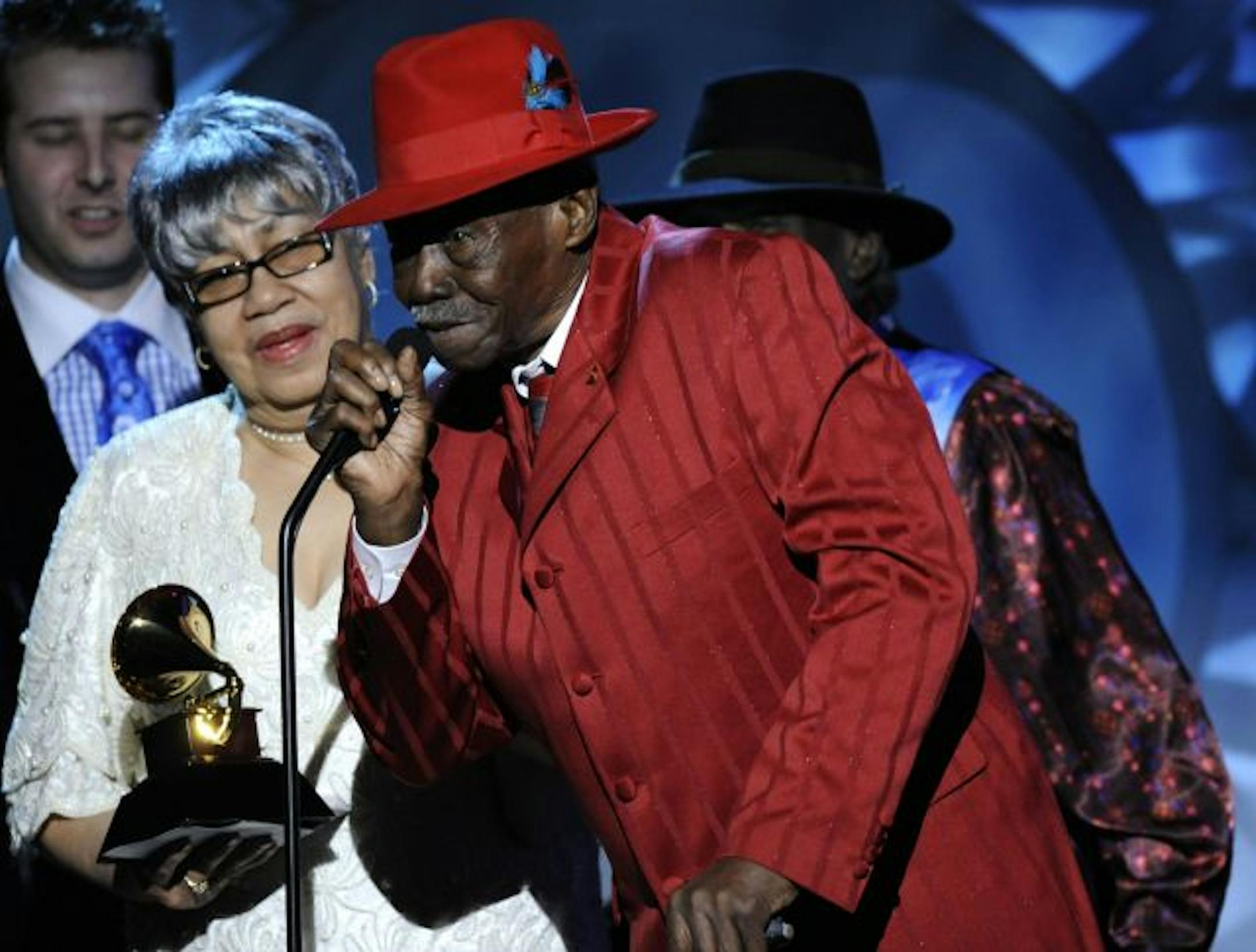
Even if he croaked his vocals and resorted to playing "Chopsticks" on the piano as his sole means of carrying a tune, Joe Willie (Pinetop) Perkins would draw a fair share of morbidly curious gawkers and diehard -- but not as hard as Pinetop -- blues enthusiasts when he plays the Dakota Jazz Club next week.
The gawkers will come to get a glimpse of a musical headliner who will be just five weeks short of his 96th birthday. The diehards will be there because, more than any other human being on the planet, Pinetop Perkins is the flesh-and-blood essence of the blues.
Blues biographies tend to be as hyperbolic as fish tales, but Pinetop's -- which is colorful enough to strain the credulity of a "Karate Kid" screenplay -- is the bona fide exception that proves the rule.
Pinetop really did pick cotton from sunup to sundown on a Mississippi plantation. He really did learn to copy the licks of Blind Lemon Jefferson and other mentors (including someone he calls Terrible Sludge) by stretching a wire -- he calls it a "diddly bow" -- between two nails in his boyhood shack. He really did run gambling houses and play juke joints, plantation parties, whorehouses and chicken fights, where sometimes the only pay was the carcass of the chicken that lost the fight. He really did switch from guitar to piano after a woman slit the tendons and muscles in his left arm with a knife.
Of course none of this would matter much if Pinetop didn't deliver the goods at the piano. But his distinctive, rolling style (caused in part by the way his compromised left arm approaches the keys) made him one of the now-legendary King Biscuit Boys, who provided blues succor to listeners across the South on the "King Biscuit Time" radio program out of Helena, Ark., in the 1940s. When he joined the great northward migration from the Mississippi Delta to Chicago, his playing caught the attention of Muddy Waters, the father of the electric blues, who employed Pinetop for 11 years.
His legacy rivals that of any living blues artist.
"He won the W.C. Handy Award for piano players something like 19 or 20 years in a row until they finally named the award after him so they could give it to somebody else," said Doug Nelson, a harmonica player who has performed with Pinetop and helped produce last year's album "Pinetop Perkins & Friends."
"From Elton John to Billy Joel to Billy Payne of Little Feat to Gregg Allman, all these boogie-woogie characters say that Pinetop's playing has been a huge influence," Nelson said. "It's been said many times that his rolling left hand helped create the sound of rock and roll. And if you know the influence Muddy Waters and his band had on the Rolling Stones and Eric Clapton, you see how that happened."


