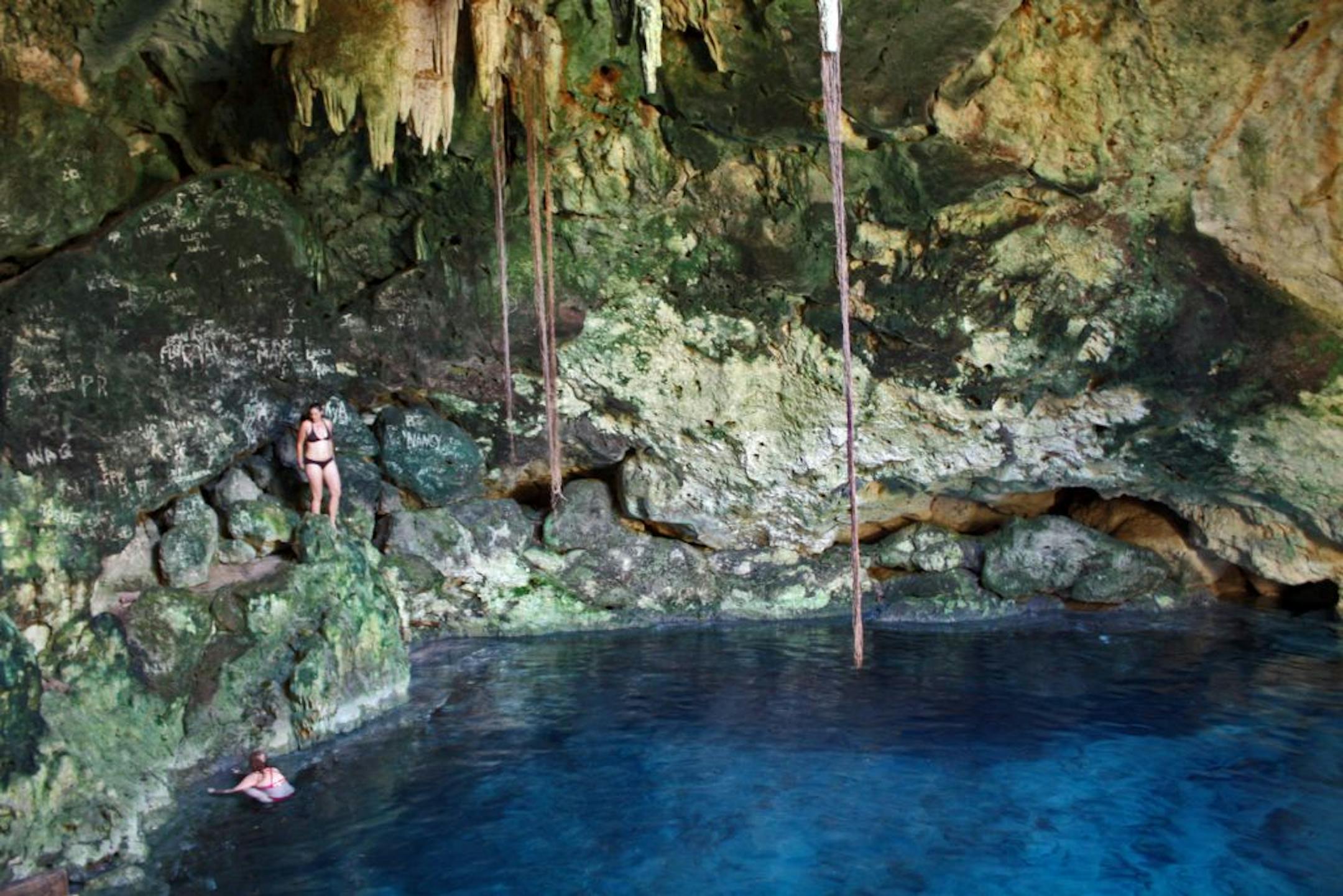
I stood with my toes at the edge of the wooden platform and stared down at the water-filled pit 10 feet below, feeling like an 8-year-old attempting the high dive for the first time. Even if other people were splashing around in it, the pool looked cold, dark and just a bit dangerous. But after climbing through a narrow hole in the Yucatan earth and down a steep ladder into the underground cave, I'd already made my decision.
I jumped, plunging feet-first into the depths. When I surfaced, I treaded aqua water, took in the mossy walls and stalagmites and wondered, "How the heck did I end up here?"
I'd come to the Yucatan peninsula with my wife and two friends looking for sun, seafood and mystical ruins.
Swimming in a cenote -- a sinkhole filled with fresh water dozens of feet below ground -- did not rank high on the list of things to do.
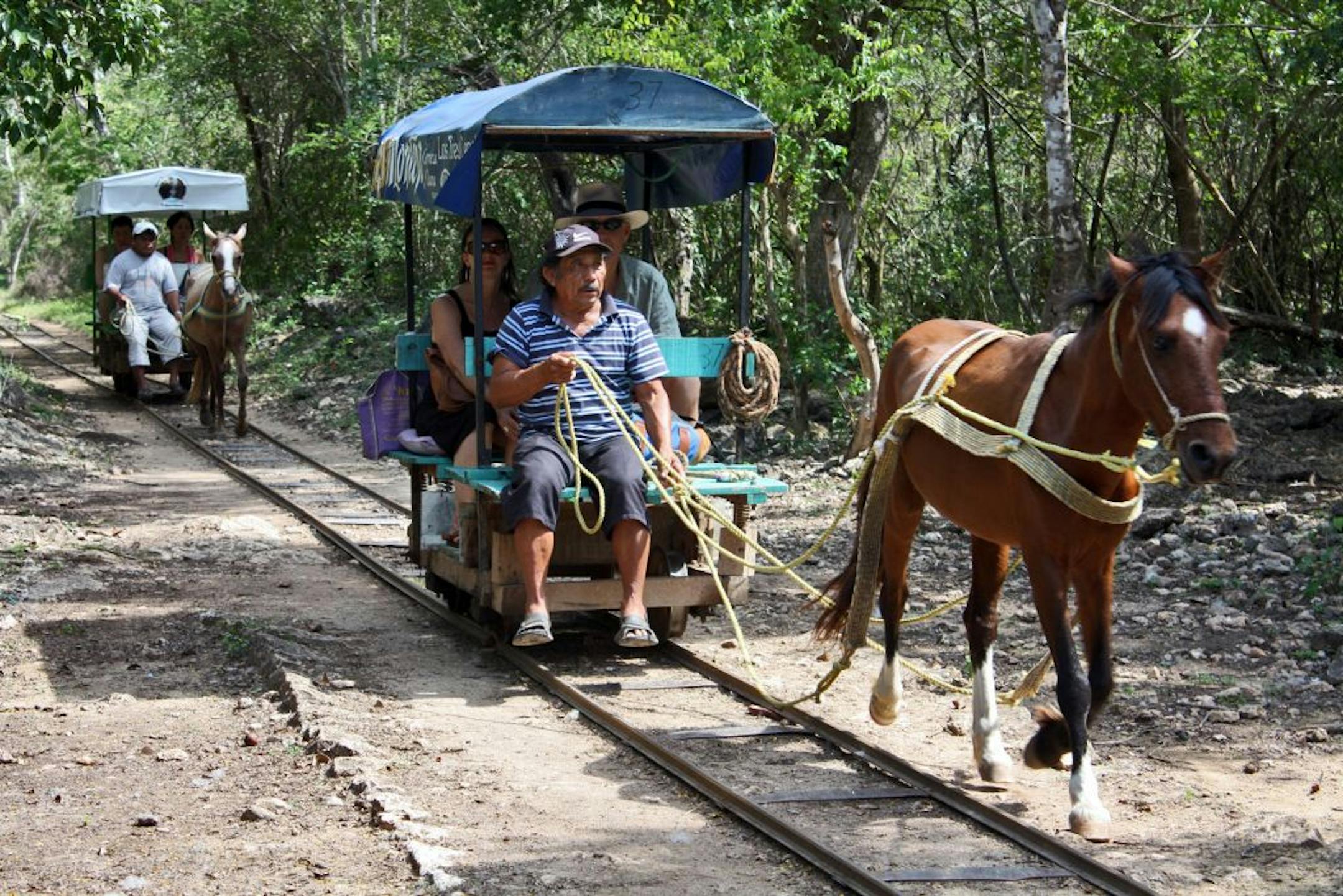
We'd heard that some cenotes can be touristy, packed with busloads of visitors and guys at the top vying to take you down for a fee. Then we met a couple of Minnesotans who live part of the year in Mérida, the Yucatan's largest city. They'd recently visited a chain of cenotes reached by horse-drawn carts that run on defunct rails. It was a mere hour's drive from Mérida, where we were staying.
Never mind that it was in the opposite direction of where we had planned to go. We were on a seven-day, 900-mile mostly unscripted road trip, which meant we were in charge of our itinerary -- and we changed it.
Most literature we saw said the cenotes were in Cuzama, a town on a main road. They're actually south a few miles, in a village called Chunkanan. We had heard rumors of people being forced to pay unnecessary fees to get to the cenotes from Cuzama, so we decided to take a more circuitous, alternate route to Chunkanan.
In our rented Nissan Tsuru, an economical if not spartan sedan, we followed the highway from the city, then turned off on a backroad. In a matter of meters, the road narrowed, with jungle brush crawling right up to the road's edge.