

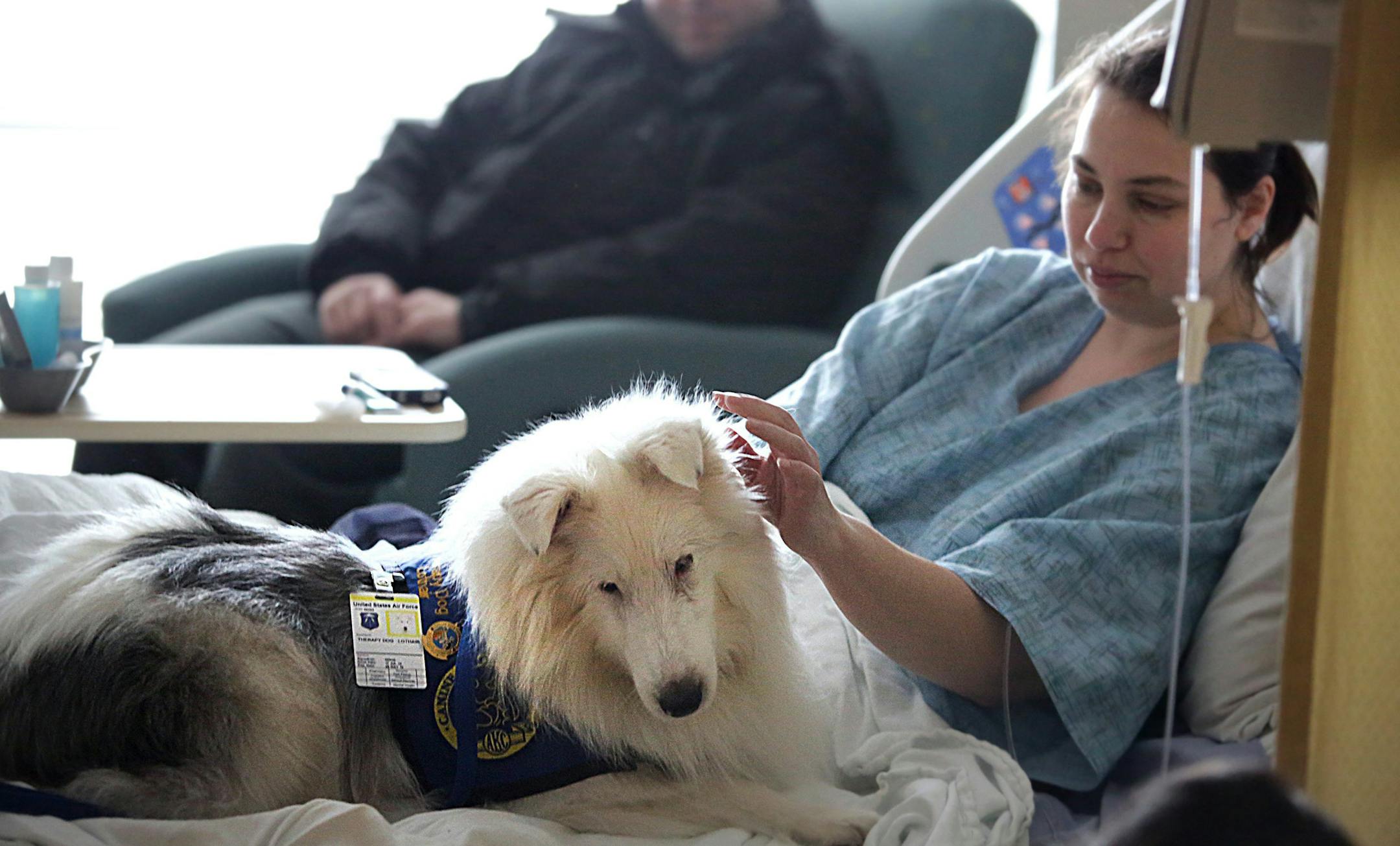
NEWPORT NEWS, Va. – As Lothair, a white Sheltie therapy dog, walks tall and proud into the hospital for his weekly visit, he is greeted with a hug from a receptionist at the front desk.
Lothair continues on, carrying himself like royalty, appropriate for a dog named after a French monarch. From the time he was a puppy, he had a proud, dignified air about him, said his owner, Melanie Paul, who became deaf at age 12.
"He was beautiful," she said. "He was like a king."
Lothair's interactions with patients at United States Air Force Hospital Langley in Hampton, Va., don't reveal that he has been deaf since birth.
"Deafness is an invisible disability," Paul said via e-mail.
Lothair learned American Sign Language from Paul and began serving as a therapy dog — providing emotional support to patients in hospitals, nursing homes and other settings.
He is registered with New Jersey-based Therapy Dogs International, which has dogs in all 50 states and Canada. Along with tests required by the organization to become a certified therapy dog, deaf dogs must also undergo a startle test. During the test, someone will come up behind the dog and pet and touch its rear quarters, and the dog must not be startled or react negatively, TDI's website states.
Paul has had therapy dogs for more than 15 years. She started a pet therapy program at Sentara CarePlex Hospital in Hampton more than a decade ago and created the same program at Langley Air Force Base about five years ago.


