

 2:16
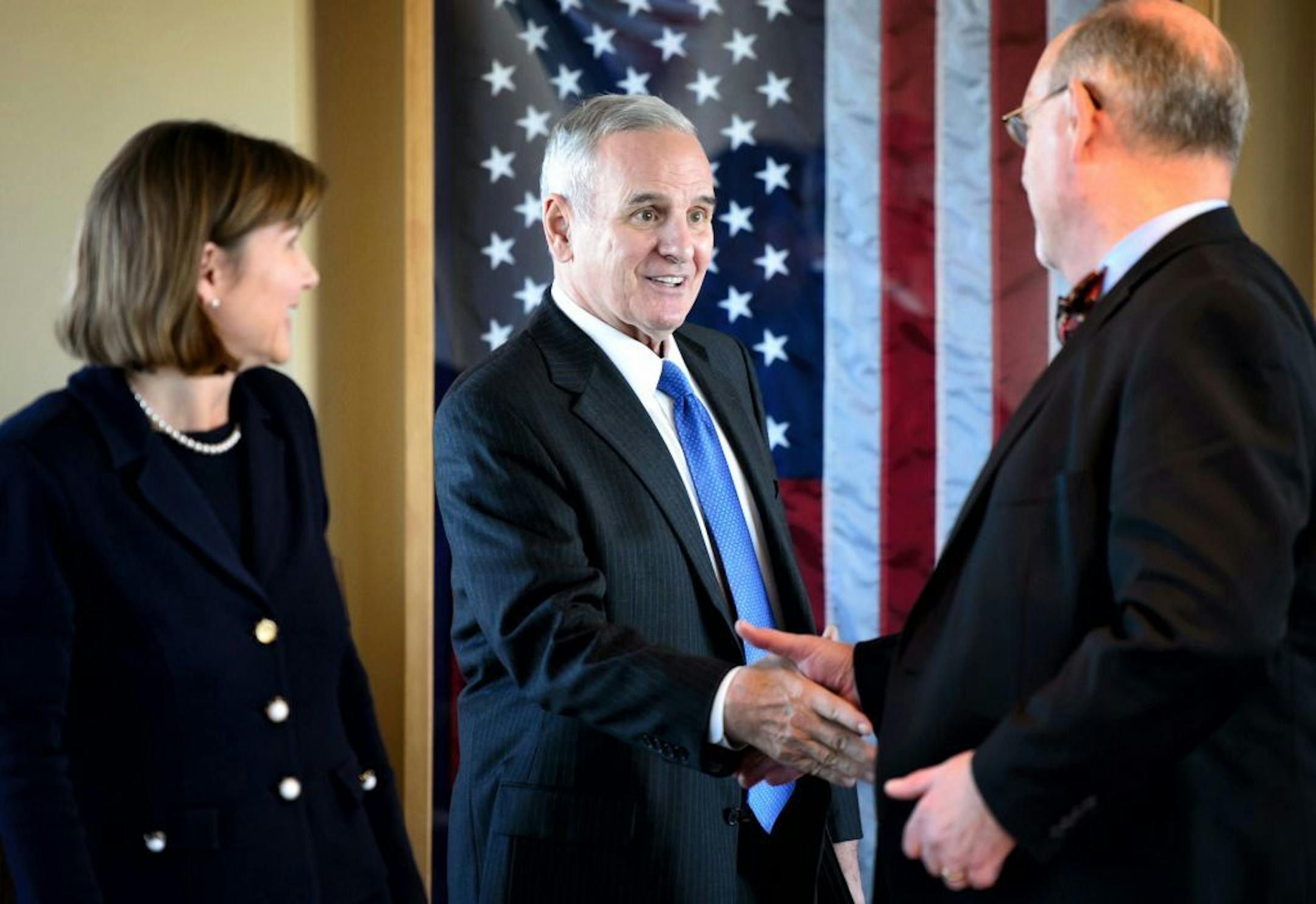
2:16With Ebola anxiety spreading faster in the United State than the virus itself, Gov. Mark Dayton reviewed Minnesota's preparedness measures with top cabinet officials Thursday and said he will ask that Minneapolis-St. Paul International Airport join five others getting special federal medical screening.
"Minnesotans should be assured that everything humanly possible is being done," Dayton said. The governor said he left the meeting feeling "hopeful" that the state's public health system is ready to deploy quarantines and other safety measures to halt the virus. Dayton said he was reassured that hospitals statewide are prepared to detect and isolate Ebola patients.
He said a request to the U.S. Centers for Disease Control and Prevention (CDC) for airport screening here makes sense because of Minnesota's large Liberian community. The West African nation is at the center of an Ebola outbreak that has afflicted at least 8,000 people and resulted in at least 3,800 deaths. The CDC this week announced tighter health screenings at airports in New York, Atlanta, Chicago, Newark and Washington, D.C.
Dayton convened Thursday's meeting in part to address what his cabinet acknowledged is a heightened level of concern among Minnesotans, even though state health officials believe the risk of cases here is fairly low.
"People worry," said Dr. Ed Ehlinger, state health commissioner. "They take it to a level that is beyond the concern that they really should have."
Hospital and health officials were taking precautions well before the first (and so far only) U.S.-diagnosed Ebola case was reported in Dallas last week, partly because of the Twin Cities' large Liberian community. The Dallas patient died Wednesday.
Hospitals train staff
Despite the alarming death rate in West Africa, state health officials are confident they could contain any outbreak here.
Unlike seasonal flu viruses, for example, the current Ebola virus cannot spread through the air. Instead it is transmitted by physical contact with the saliva, blood or other bodily fluids of an infected person.
![Jaime Tincher, Chief of Staff, Richard Nash, Adjutant General of the Minnesota National Guard, Attorney General Lori Swanson, Health Commissioner Dr. Ed Ehlinger, Governor Mark Dayton, Lt Governor Yvonne Prettner Solon, Human Services Lucinda Jesson at the Ebola meeting, L to R ] GLEN STUBBE * gstubbe@startribune.com Thursday, October 9, 2014 Governor Mark Dayton met with key Cabinet members and airport officials to discuss Minnesota's Ebola prevention and preparation efforts. ***EMBARGOED UNTIL](https://arc.stimg.co/startribunemedia/OF6VHLT33TLNYB5ATM46ZYPDNE.jpg?&w=1080)


