

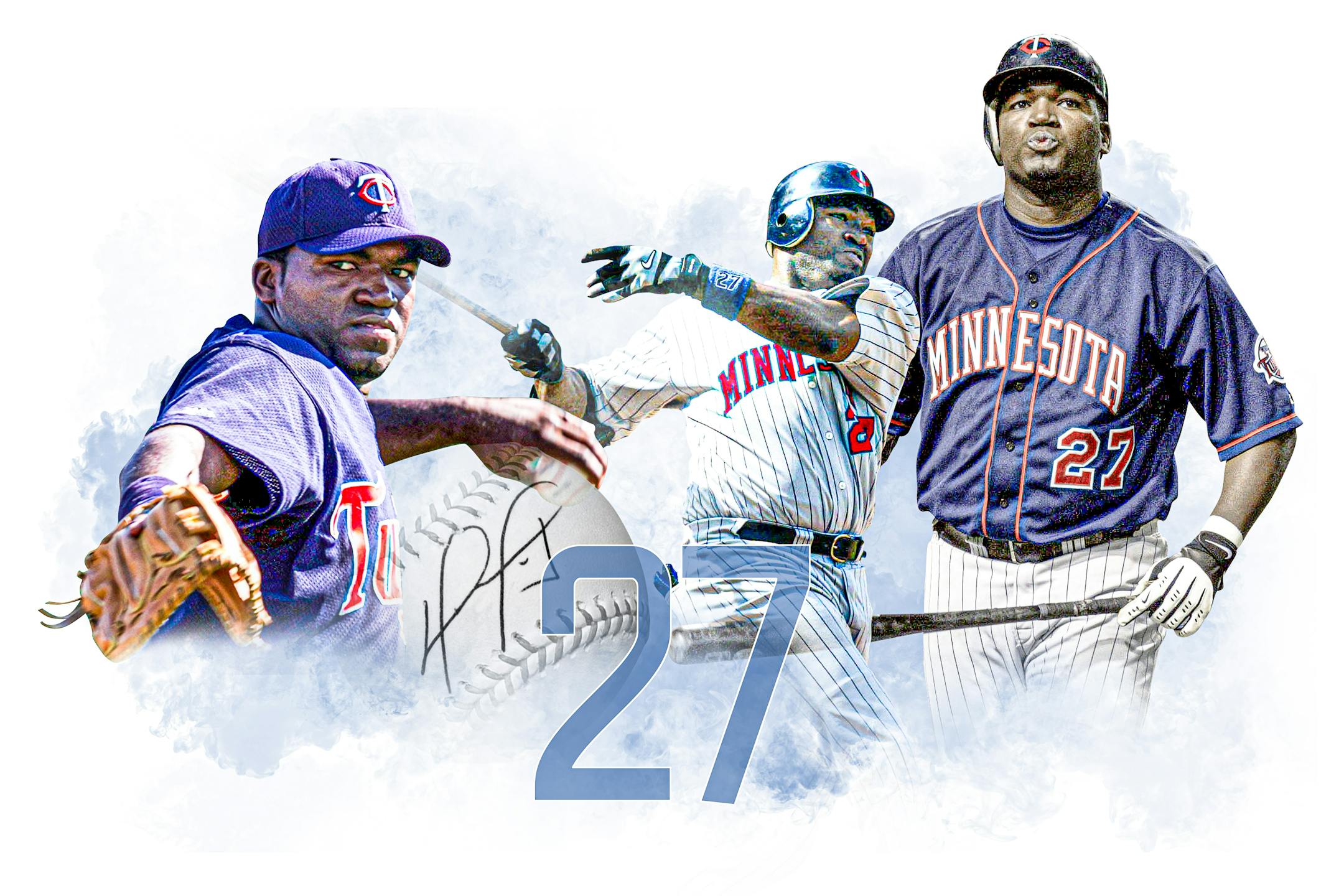
While the Boston Red Sox enjoyed David Ortiz's improbable rise to greatness, the Twins had their moments, too.
Four of them:
- When Ron Gardenhire took over as manager of the Twins, his first bonding ritual of his first spring training involved putting an exploding golf ball on a tee and daring Ortiz to hit it, with predictable results. Ortiz roared. Gardenhire had found the right comic foil for the season.
- Ortiz was thrown out of a game in Kansas City for arguing calls at home plate. When the team returned to the clubhouse after the game, Ortiz was dressed and sitting at a table, from which he unleashed a not-safe-for-workplace comedy routine that lasted until they boarded the bus.
- On another day in Kansas City, Ortiz launched a long home run to right, then revealed after the game that he had done so with a broken hamate bone. It takes talent to hit a home run in the big leagues. It takes something more than talent to homer with a broken wrist.
- On Dec. 15, 2002, Ortiz was playing in the Dominican winter league when the Twins designated him for assignment. I was in the country doing stories on Twins players, including Cristian Guzman, and I sat with Ortiz in the dugout. He was despondent. He shrugged, sadly — then hit a long home run early in the game.
That proved to be an omen. Within one season, Ortiz went from Bruce Banner to The Hulk, developing into one of the best power and clutch hitters in modern baseball history while elevating the Red Sox to their first two World Series titles since their reverse-Ortiz move — trading Babe Ruth to the Yankees.
Ortiz had the last laugh on the Twins, and he kept laughing, frequently ridiculing Minnesota's efforts to have him hit to all fields and occasionally produce productive outs.
The Twins' decision was made further questionable by its accompanying moves: Placing shortstop Jose Morban on the big-league roster, and making room for Matthew LeCroy to become the team's DH.
Morban enjoyed 71 big-league at-bats, all for Baltimore. LeCroy, a former first-round draft pick, would hit 45 homers over his next and last five years in the big leagues.
Ortiz would hit 46 home runs in his final season alone, in 2016.
The Twins had reason to release Ortiz. He had failed to stay healthy, and sometimes appeared out of shape. His stock around baseball was so low that he signed, in late January, with Boston to be a backup first baseman to Jeremy Giambi, on a one-year deal for $1.25 million — what teams were paying bad middle relievers.


