Review: 8 reasons why David Byrne gave Minneapolis’ concert of the year

Once again, he brings an imaginative and funky blend of rock, theater and performance art.

Columnist Icon
The Minnesota Star Tribune
November 4, 2025 at 5:51AM
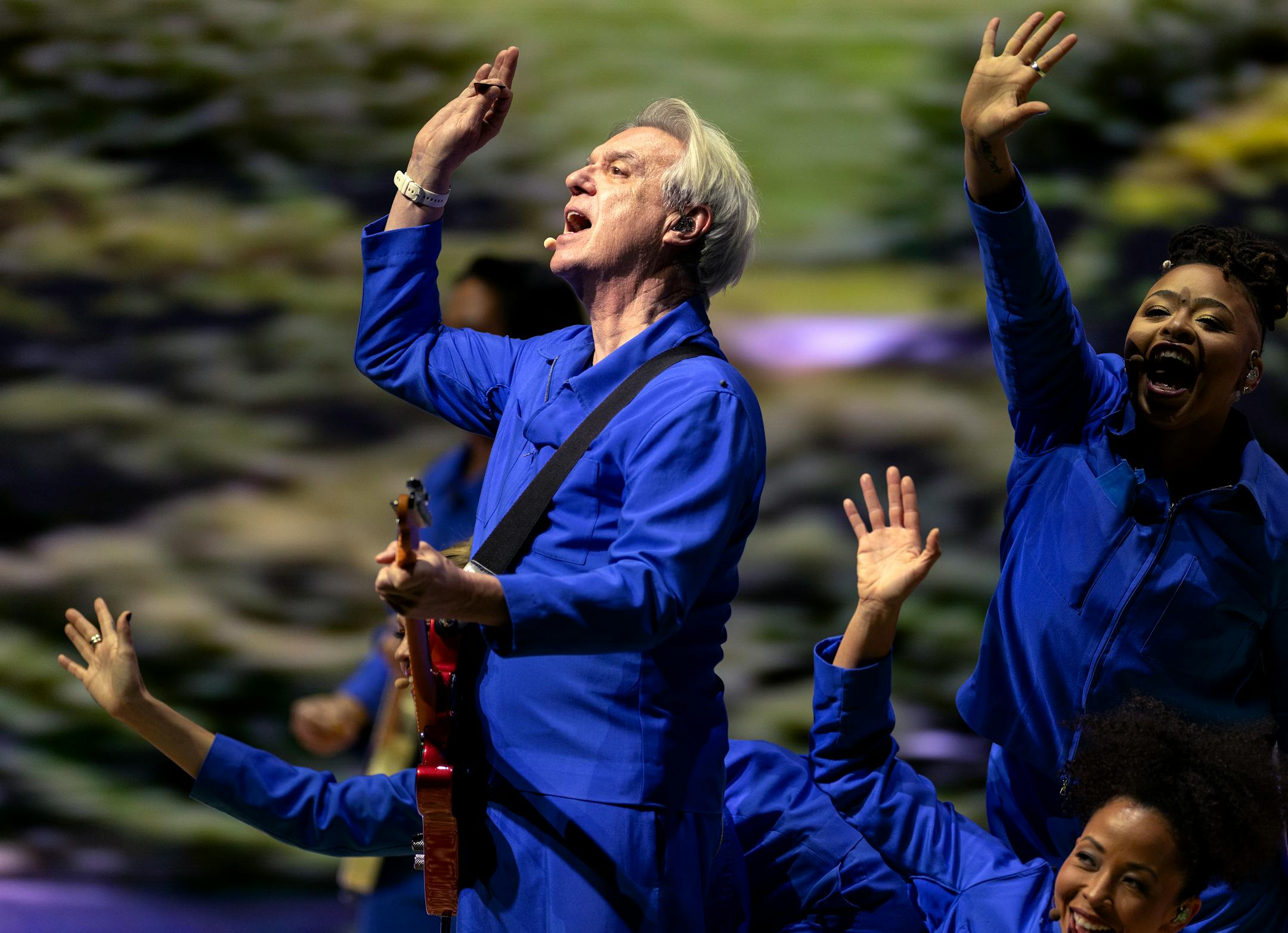
David Byrne rocks out at the Orpheum Theatre, where he wraps up a two-night engagement on Tuesday. (Carlos Gonzalez/The Minnesota Star Tribune)

Prince and Michael Jackson were more dazzlingly dynamic in concert. Bruce Springsteen is more heroically passionate onstage. Madonna and Lady Gaga take live spectacle to new levels. But David Byrne and his little art shows in theaters are popular music’s must-see concerts.

From 1984’s indelible “Stop Making Sense” live movie with the Talking Heads to his 2019 Broadway smash “American Utopia,” Byrne has captivated audiences with his imaginative and funky blend of rock, theater and performance art.

His only peer is Tom Waits, a brilliant conceptualist and notable reclusive who hasn’t toured since 2007.

Renaissance man Byrne, 73 — film director, composer for theater, film and modern dance, exhibited visual artist and photographer, author of books, founder of a world-music record label and designer of bicycle racks for New York City — is back on tour. He’s playing two nights once again at Minneapolis’ Orpheum Theatre, where he memorably brought the American Utopian Tour in 2018, giving the best concert of the year.

Although not as revolutionary as his 2018 shows, Byrne’s performance Monday night at the immediately sold-out Orpheum will undoubtedly rank as one of the year’s top concerts. Here are eight reasons why:

1. He has reinvented his “Utopia” concept by having 13 free-moving people onstage in matching outfits (royal blue this time) without risers, amplifiers or instruments/kits tethered to the stage floor. The musicians and singer/dancers including Byrne parade around in choreographed movements conceived by Steven Hoggett.

Although he may have seemed more dramatic than last time, Byrne’s movements are predictably purposely stiff at times (he revels in his dorkiness) and flexible sometimes, though not as agile and graceful as the motions of his five dancer/singers.

The stage is framed by a curved video screen, showing artful and creative visual images, though never live performance footage. Whether it is a depiction of flowing water or Byrne’s actual New York City apartment, it has an immersive effect, somewhere between being at an Imax theater and Las Vegas’ the Sphere.
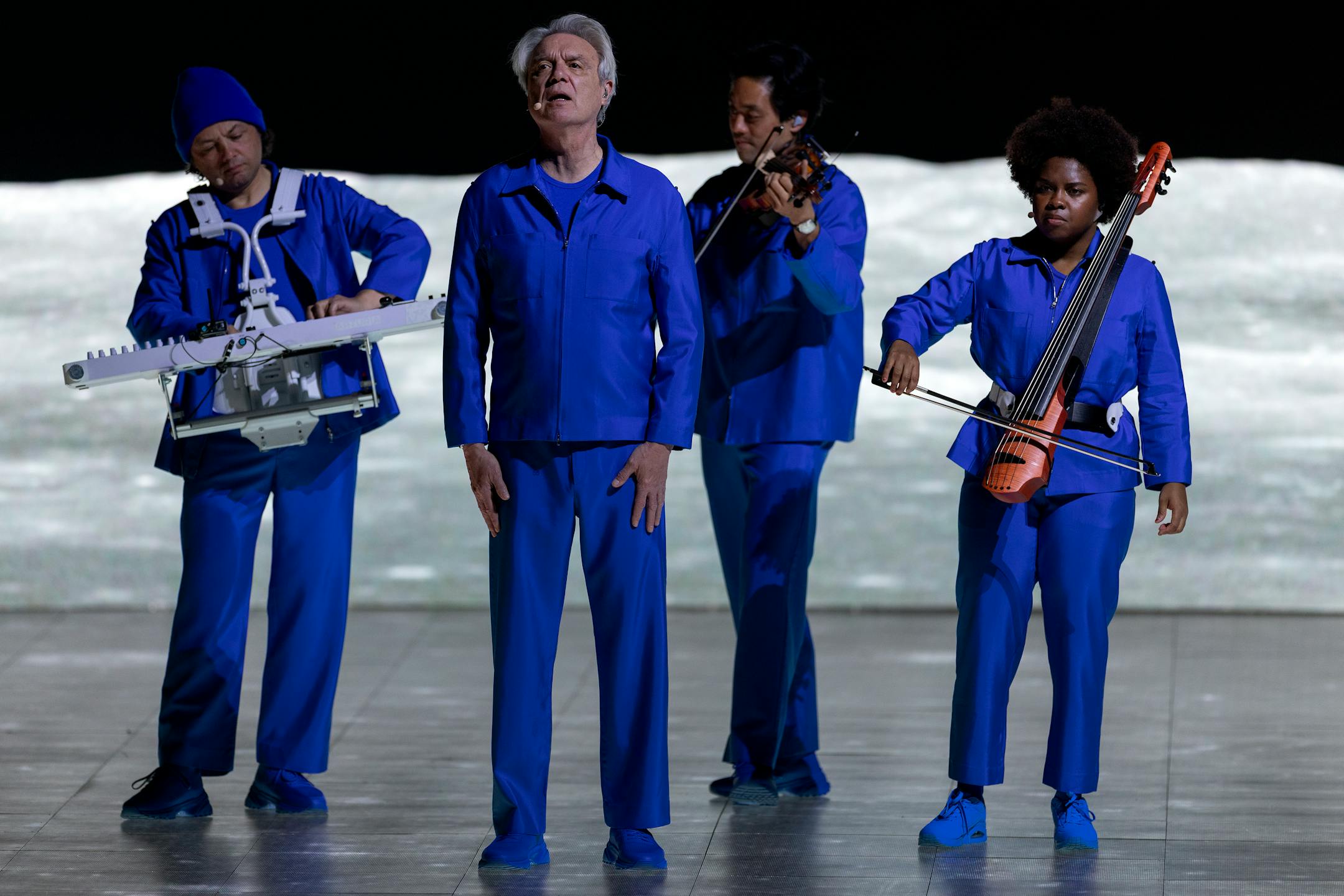
Byrne’s show is both stagey and magical, like a well-drilled marching band doing a complicated, nearly two-hour halftime show on an artsy stage instead of a football field.

David Byrne opens with "Heaven" at the Orpheum Theatre in Minneapolis. (Carlos Gonzalez/The Minnesota Star Tribune)

2. This democratized staging — there are some “where’s David?” moments — fits Byrne’s overall message: Be kind, take care of each other, we’re all in this world together, let’s all get along. Or as he stated between songs, “Love and kindness are a form of resistance.”

3. Like a savvy theater director, Byrne is a master of pacing. He alternates Talking Heads favorites with solo tracks and skillfully inserts tunes from his two-month-old album, “Who is the Sky?” Giving the fans what they want, he opens with a Talking Heads tune, “Heaven.” The current, childlike single “Everybody Laughs” comes next and then “And She Was” by Talking Heads. Five of the first eight selections are from the Heads catalog.

Next Byrne samples four tunes from his solo career before delivering a killer minimalist slinky funk reading of Talking Heads’ “Slippery People.”

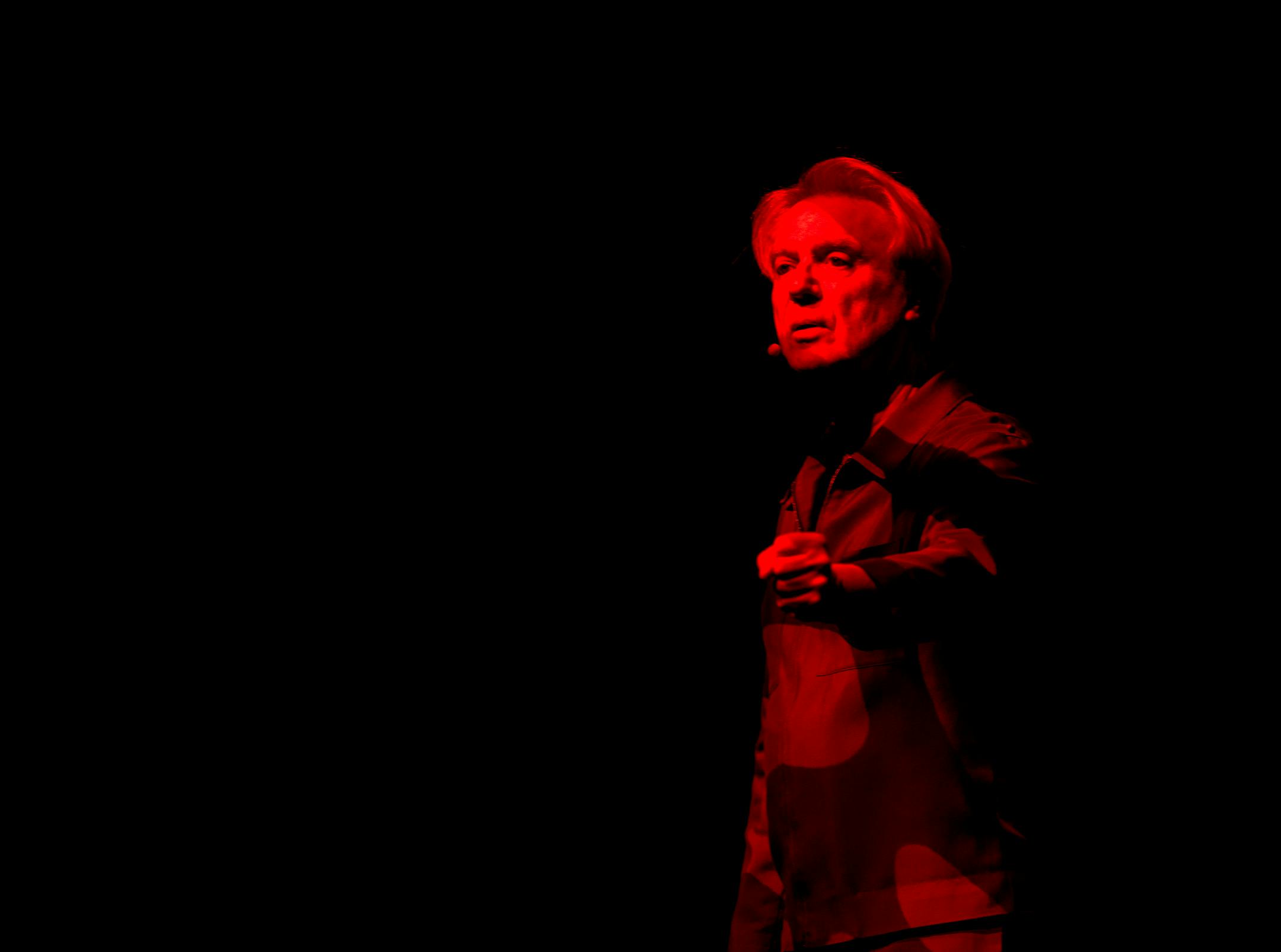
A dramatic David Byrne performs at the Orpheum Theatre in Minneapolis. (Carlos Gonzalez/The Minnesota Star Tribune)

4. He doesn’t do a hard sell for his guileless new album “Who is the Sky?,” his first collection in seven years and 11th solo studio effort. He does five numbers from the new project, most notably the light-hearted slice of sing-song optimism of “Everybody Laughs,” the mariachi-seasoned “What Is the Reason for It?” pondering the mysteries of love, and the herky-jerky funk of “My Apartment Is My Friend” with a surround view of his luxe New York place with its wraparound windows and giant bookcase.

5. Byrne plucks a few older gems from his solo catalog, including “Strange Overtones,” his 2008 collab with Brian Eno; 2001’s “Like Humans Do,” with nonstop movements on the bare but busy stage; and a fiddle-fueled “Independence Day” from his 1989 solo debut.

6. Byrne manages to deliver social commentary without making preachy comments. Near the end of “Life During Wartime,” the video wall is filled with images of recent protests and ICE raids. During an unreleased new number presumably titled “T-Shirt,” Byrne flashes a series of slogans on the screen like “Make America Gay Again” the Burger King-styled “No Kings” and “Minneapolis Kicks Ass.”

View post on X

7. Byrne knows how to ignite his crowd. He stands in front of a white spotlight on the screen but the shadow cast isn’t his. He’s setting up the creepy “Psycho Killer,” the Talking Heads classic that hasn’t been part of his repertoire for nearly 20 years. It’s part of a 1-2-3 knockout flurry including “Life During Wartime” and “Once in a Lifetime,” which features some outstanding African-influenced vocal harmonies.

View post on X

8. Byrne balances his overriding message about community by threading a homey theme into the evening. He likes being rooted, luxuriating in the comforts of home as evidenced in “My Apartment Is My Friend” and the encore of “Everybody’s Coming to My House” (the lone song from “American Utopia” in the set) and the fiery finale “Burning Down the House,” the Talking Heads’ inevitable barnburner.

View post on X
View post on X
View post on X
about the writer

about the writer

Jon Bream

Critic / Reporter

Jon Bream has been a music critic at the Star Tribune since 1975, making him the longest tenured pop critic at a U.S. daily newspaper. He has attended more than 8,000 concerts and written four books (on Prince, Led Zeppelin, Neil Diamond and Bob Dylan). Thus far, he has ignored readers’ suggestions that he take a music-appreciation class.

See Moreicon