

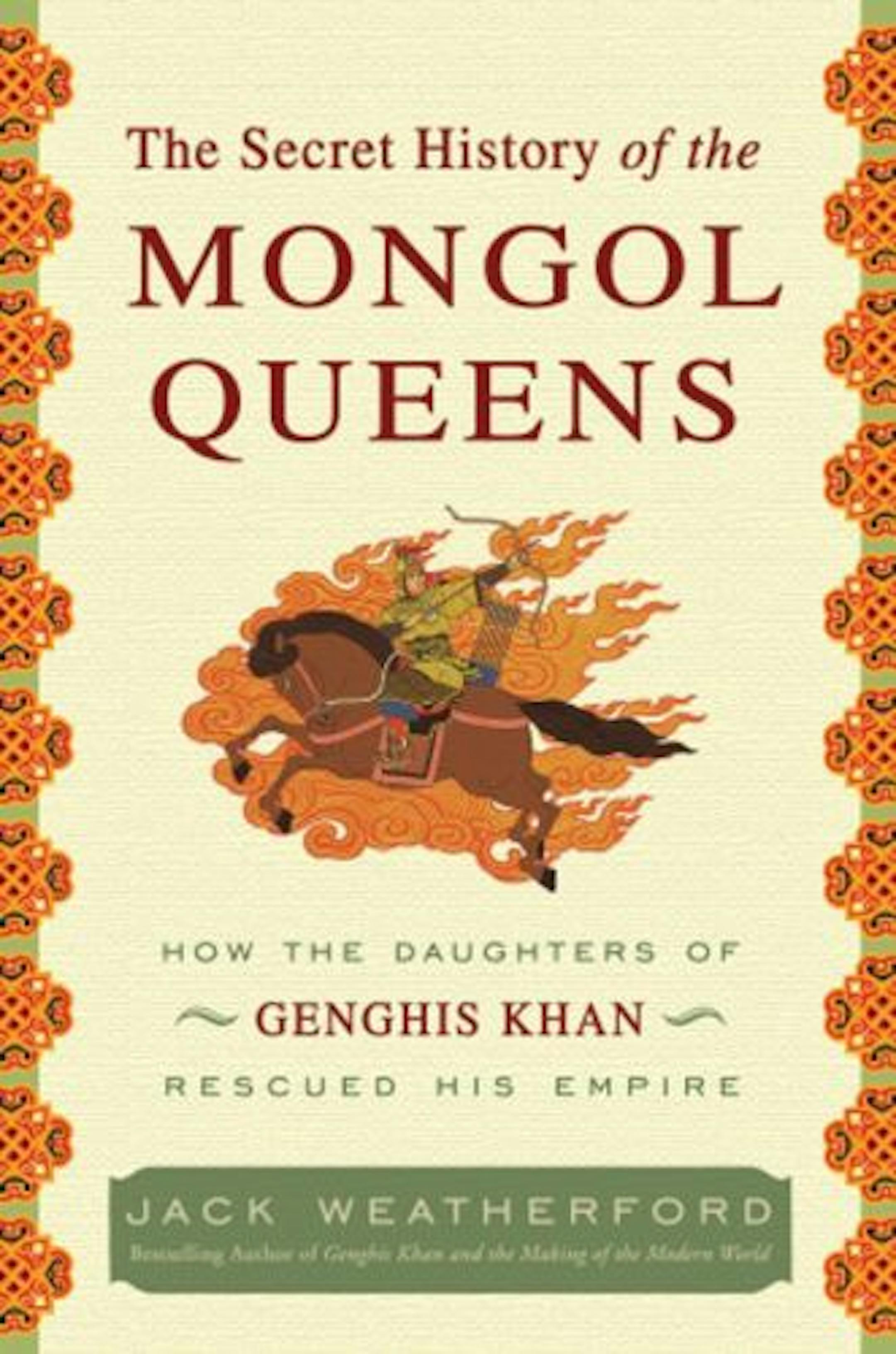
Early in his career, Jack Weatherford wrote books about Indian tribes throughout the Americas. Eventually, the anthropology professor whose academic home is Macalester College in St. Paul found a new fascination even farther away -- Mongolia.
Six years ago, his book "Genghis Khan and the Making of the Modern World" appeared in print and started selling well. But Weatherford gradually realized one volume could not convey all the stories he wanted to write about the 13th-century ruler who gave shape to a gigantic Asian empire.
One of the strands that fascinated Weatherford involved Khan's female descendants in a world long ago when males dominated -- at least in spoken and written histories. Khan's four sons figured in the histories, but by many accounts the sons did little to glorify the name of their father. As Weatherford says in his new book, "The Secret History of the Mongol Queens: How the Daughters of Genghis Khan Rescued His Empire," "Genghis Khan sired four self-indulgent sons who proved good at drinking, mediocre in fighting, and poor at every- thing else; yet their names live on despite the damage they did to their father's empire." The ruler's seven or eight daughters (Weatherford notes that documentation is unclear about the precise number), however, possessed "su- perior leadership abilities" to the sons, so Khan willed "strategically important parts of his empire" to the women.
Learning their precise accomplishments would be difficult because of gaps in the historical record caused partly by misogyny. "In their lifetime, [the daughters] could not be ignored, but when they left the scene, history closed the door behind them and let the dust of centuries cover their tracks," Weatherford writes. "Those Mongol queens were too unusual, too difficult to understand or explain. It seemed more convenient just to erase them."
Without the wisdom of the daughters, Weatherford is convinced, the Mongol Empire would have crumbled much faster than it did. Dissolution arrived during the decade of the 1360s. But Mongol pride did not evaporate. The most compelling part of Weatherford's new book is the restoration of the Mongol empire during the late 15th century with the emergence of another woman descended from Genghis Khan, a woman known by the name Queen Manduhai the Wise. She was such a superb warrior that the Chinese dynasties feared she would encroach on their population, their lands. The Chinese built what today is known as the Great Wall of China partly to halt Manduhai's invaders.
Weatherford writes clearly and dynamically. Yet the book is still difficult to follow at times -- so many names with unfamiliar sounds, so many battles to track, so many marriages and murders within the Khan empire and outside of it. That said, Weatherford's original research makes the difficult effort worthwhile for readers who care about the history of a faraway, mysterious empire.
Steve Weinberg is a writer in Columbia, Mo.


