

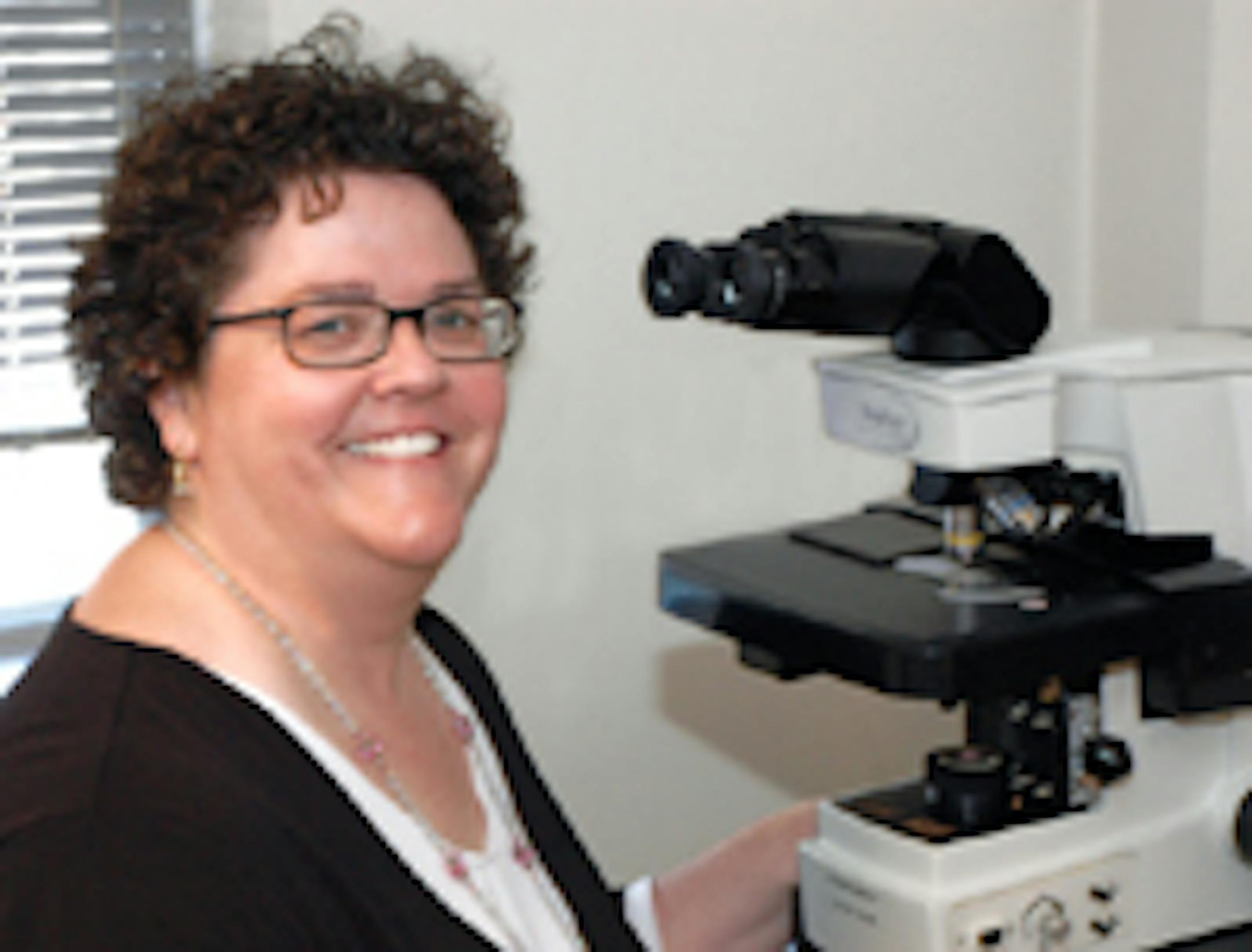
Cheryl Lewis, Cytotechnologist II and Cytology Imager Specialist at Allina Laboratories at Abbott Northwestern Hospital, talks about her job.
Q: What's a typical workday like for you?
A: I spend approximately six hours a day screening, or scrutinizing cells on prepared glass slides using a microscope, looking for anything abnormal, malignant, pre-malignant, or any unusual organism or inflammatory process. I work with gynecological and non-gynecological specimens. The non-gyn specimens include pleural fluids, found around the lungs; urine; bronchial washes and brushes; and cerebral spinal fluids. I work closely with pathologists and also assist radiologists during fine-needle aspiration biopsies.
Q: How does your role fit into the bigger healthcare picture?
A: I help diagnose conditions earlier when the treatments can be more successful. I also help monitor conditions, especially gynecological ones such as human papillomavirus (HPV). By screening pap slides, cytotechnologists have helped reduce cervical cancer by 90 percent since the 1950s.
Q: Who do you interact with during the course of the day?
A: I interact with a pathologist, radiologist and radiology technologist, other cytotechnologists and the cytotechnology prep staff, who obtain the fluids and stain the slides. I also occasionally interact with clinic staff to clarify information.
Q: Why did you become a cytotechnologist?


