

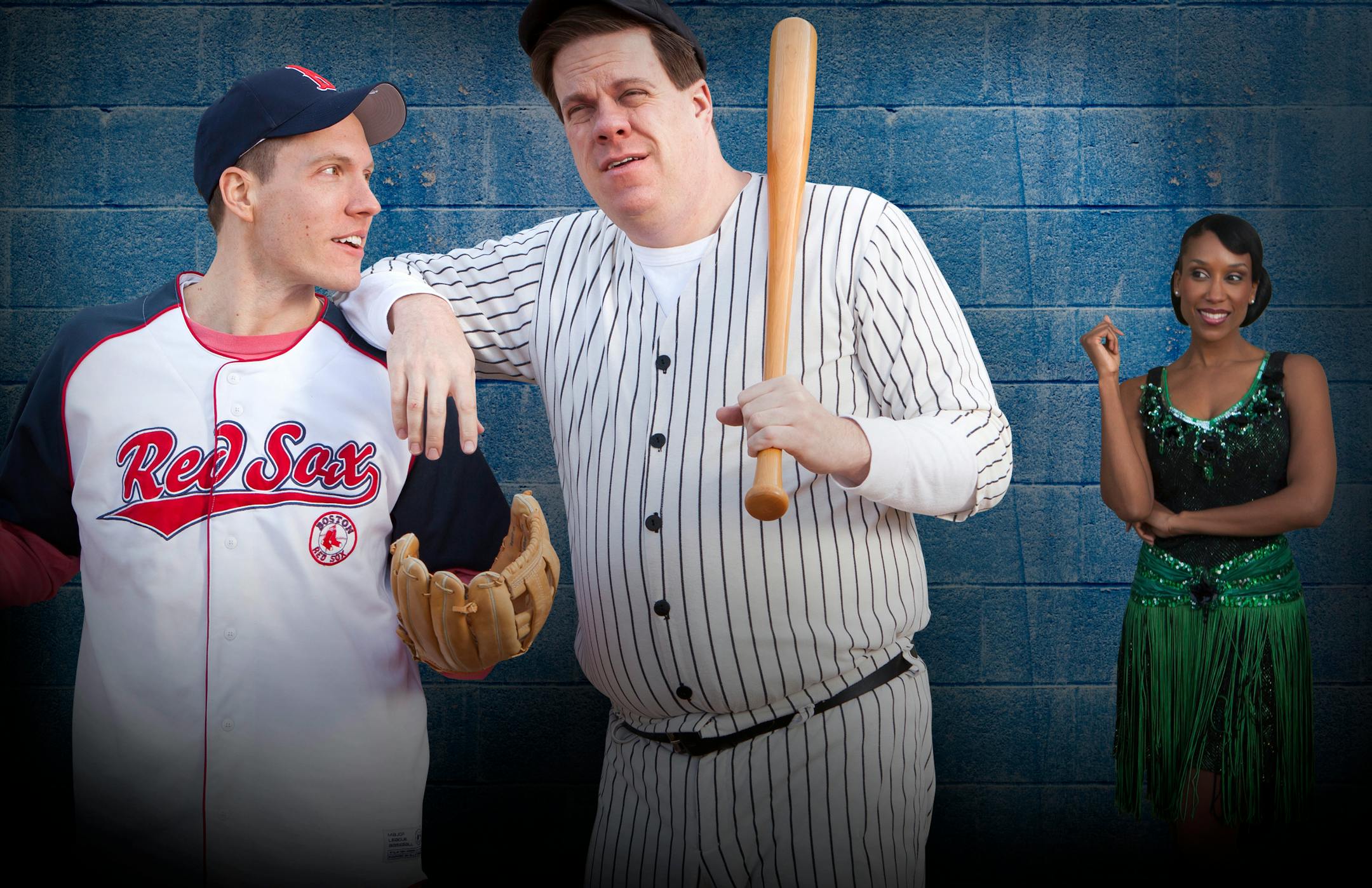
Life changed for Richard Dresser on Oct. 27, 2004. On that night, his beloved Boston Red Sox released him from the haunting and defining myth of his existence: They won the World Series. The dreaded curse that had hexed Red Sox fans in 1946, 1967, 1975, 1978, 1986, 2003 and countless other seasons -- had been broken. For the first time since 1918, pandemonium reigned in New England.
And Dresser had a happy ending for "Johnny Baseball," the Red Sox musical he wrote with brothers Rob (lyricist) and Willie (composer) Reale. The show, which had its premiere (naturally) at American Repertory Theatre outside Boston in 2010, opens in previews Friday at Park Square Theatre in St. Paul.
In popular lore, the "Curse of the Bambino" befell the Red Sox after they sold Babe Ruth to the New York Yankees in 1920. Ruth's Yankees became the most-storied team in the sport, and the once-dominant Red Sox were frustrated at every turn. Dresser and the Reale boys propose in their musical that the real cause of this losing streak was a different babe, who was affected by the racial climate of Boston.
"That's all I'll say; I don't want to spoil it," Dresser said the other day at Park Square.
"Johnny Baseball" might just be one more sports-related stage show -- only Boston audiences that have seen it can judge that. However, the real drama exists in the creative team. The Reales are Yankees fans from New York. Dresser would have cheered for Stalin had the old Communist ever fielded a team against the Yankees. Willie Reale sat with five Red Sox fans at Yankee Stadium when it appeared they had the New Yorkers beaten in the 2003 American League Championship Series. He watched those same friends blink back tears after the Yankees snatched the game away in the last two innings.
"I couldn't gloat," Reale said. "That would have been like hurting a kitten, they were so devastated."
Reale and Dresser have theater in common, though, having collaborated from way back. So when Reale phoned to console Dresser after the 2003 debacle, he mentioned they should have lunch and talk about the rich history and drama evident in the "Curse."
What's real, what's fiction


