

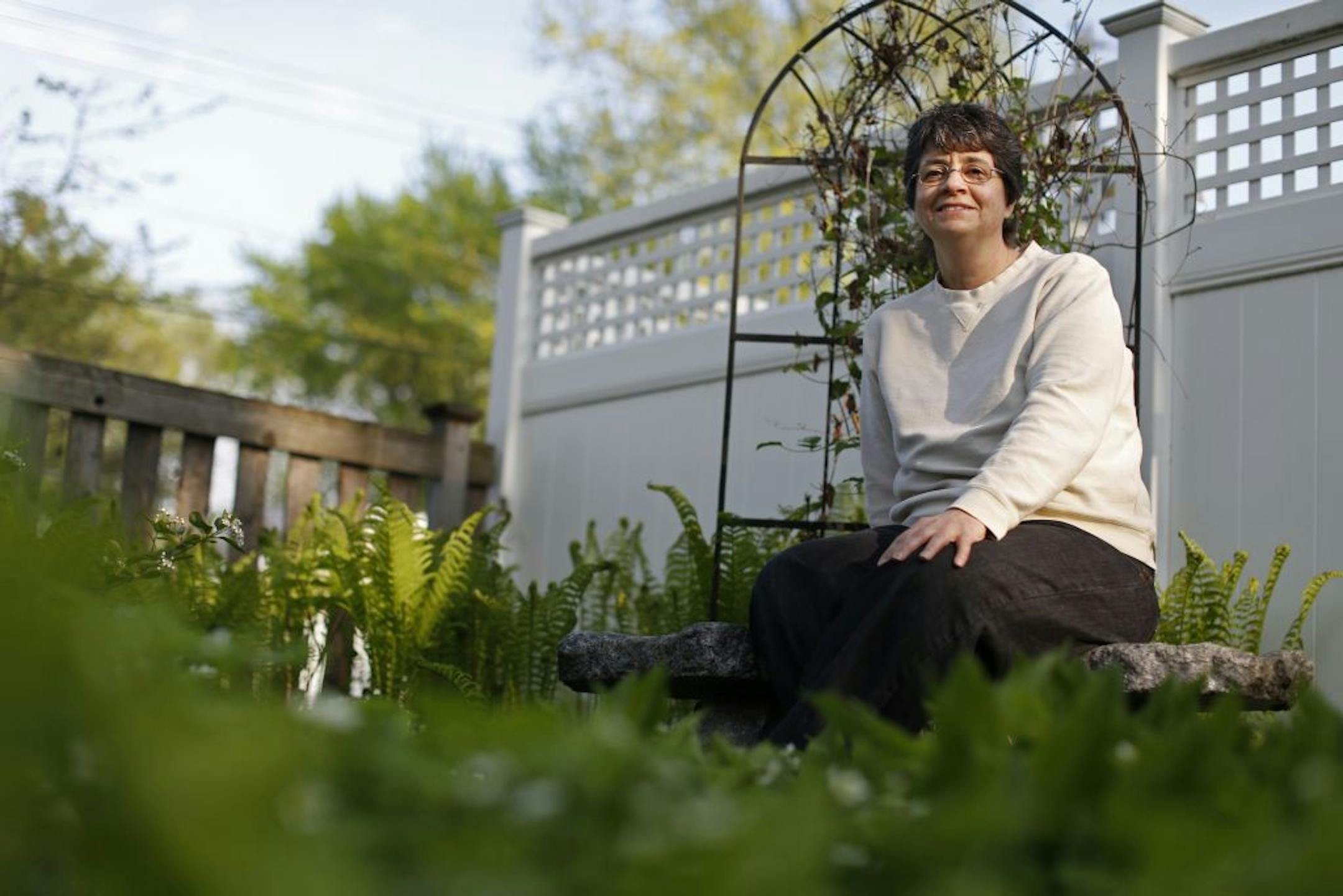
The landscaping on Michelle Kalantari's small Richfield yard used to be generic: a carpet of turf grass surrounding a couple of small garden beds.
"I was mowing my lawn like everybody else," said Kalantari, a nature photography hobbyist who used to have to go to her cabin or to a public garden to find wildlife.
Not anymore. Now her yard is alive with butterflies, birds and bugs. "I'm amazed how many can find my little Shangri-La -- it's like I'm in a nature preserve," she said.
What's Kalantari's secret? It started with a lightbulb moment several years ago after she planted a single meadow blazing star plant because she liked its purple flower. Like magic, Monarch butterflies started fluttering around it. "Before, they used to fly by," she said. "I realized, 'Oh! I need native plants to attract native birds and insects.'"
So she replaced all of her lawn, first in back, then in front, with mostly native plants, more than 150 different species. Since then, she's never lacked for photographic subjects. "The more variety you have in plants, the more variety you have in things that depend on plants," she said.
Few gardeners go as far as Kalantari, who works for the Nature Conservancy, but a growing number are incorporating native plants into their landscapes. Natives have been identified as a top trend by both the Garden Media Group and the American Society of Landscape Architects.
Minnesota was ahead of the curve, with more native-plant nurseries than most other states, according to Steve Milburn, president of the Minnesota Native Plant Society, a nonprofit devoted to conservation and education. "You do see more interest in native plants, more acceptance and more availability, especially in the Midwest."
Landscape Alternatives, a native-plant nursery near Marine on St. Croix, reports a widening of its customer base since it first opened in 1986. "It's a pretty broad spectrum now, from new homeowners looking for hardy, low-maintenance plants that are attractive to look at and attractive to wildlife, to longtime gardeners looking for something a little different," said co-owner Roy Robison.


