Just before sunrise, in the hourglass heart of the North American continent, the temperature has dipped to 15 degrees on the Platte River near Kearney, Neb.
I'm shivering in a wooden blind, even with layers of fleece and foot warmers to ward off frostbite. It's late March and it shouldn't be this cold, not even in the Great Plains. Across the frozen landscape, the sun begins its ascent into a blush-colored sky and slowly dark shapes on the river begin to stand and stretch and flap.
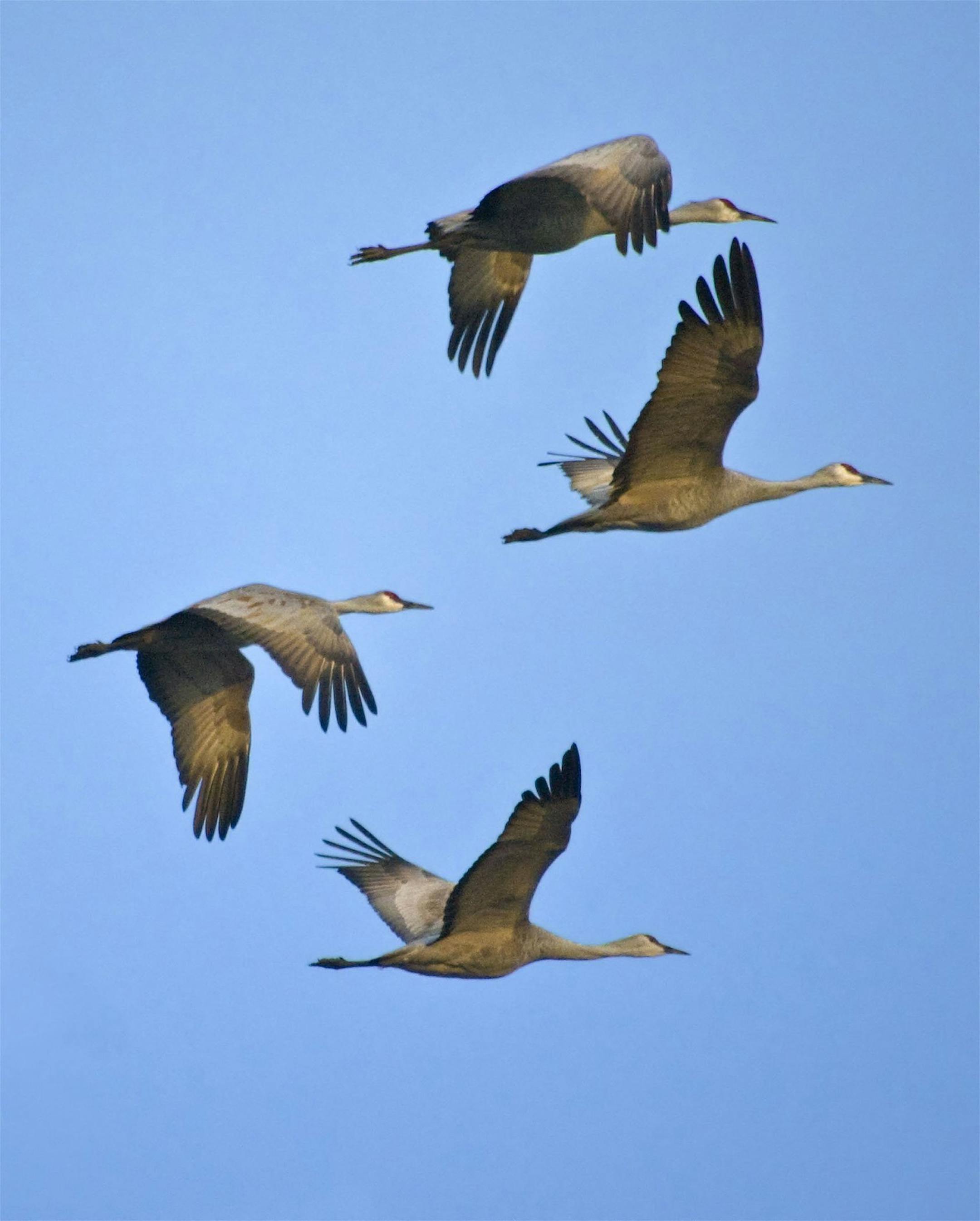
An ancient, natural avian spectacle is about to happen here at the Rowe Sanctuary. The sandhill cranes are awakening, untold thousands of them, their silhouettes barely visible in the bitter predawn cold. From the mist, a cacophony of cackles, calls and coos rises with each passing minute, the cadence increasing with daylight.
For the cranes, waking from a cold night on the silent, swiftly running river, sunrise brings feeding time. Up to a half-million birds will rise and fatten up on waste corn, most of it leftover from autumn harvest months earlier, in the vast acreage of fields, open landscapes and pastures of rich, sweet grass before returning back to the river at sunset to slumber again.
During that time, the cranes will look for a mate, striking poses, bending and preening for a few moments of passion on the prairie. For the nosey birdwatcher — that would be me — it's worth a 15-degree morning to see the spectacle of the cranes searching for a mate for life.
Flock takes off as one
I'm in Nebraska to see the annual migration of the cranes passing through the Platte River Valley from their wintering grounds in Texas and Mexico as they glide north to Canada and Siberia for the breeding season. I'm in the blind — a shed, really — anticipating the massive breakfast liftoff that will soon occur.
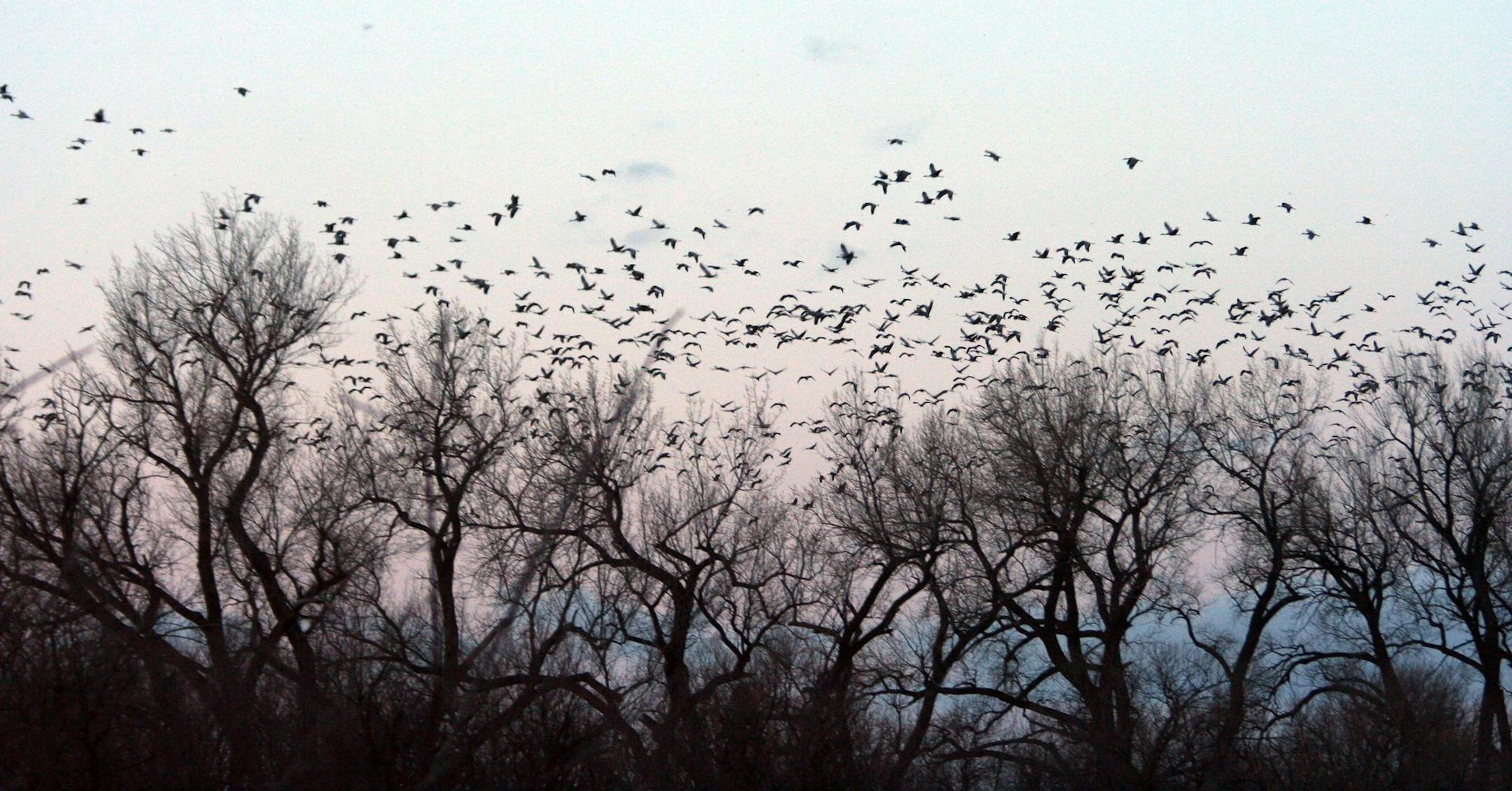
That surreal moment comes sooner than I expect. A pair of scalawag eagles have caused havoc among the birds, and suddenly, seemingly impenetrable synchronized clouds of blue-gray cranes lift to the skies in a furious attempt to escape becoming the predators' next meal.
The eagles dive into the mass of birds, with flocks of cranes going every which way. The bright early morning sun is occluded by the wing-tracks of 10,000, 20,000, 30,000 birds.