

In "Who are we planning for?" (Opinion Exchange, Feb 10), John Widen lists groups whom he says will "clearly not" support the push toward transit and biking: family men and women, the elderly and the disabled. Yet many transit riders, myself included, belong to one or more of these groups.
- I am a family man. We take our two children (ages 4 and 9) everywhere using a mix of bikes and buses. If you send your kids to Minneapolis Public Schools, then free busing is provided. But if not, time on the city bus can be a great opportunity to give children focused attention: Since someone else is driving, we are able to tell stories and play games with our kids. Our kids also love riding bikes when the weather allows, and our bikes cost us a fraction of what a car would.
- I have a medical disability which makes it unsafe for me to drive. At many points in my life it has been illegal for me to drive. My condition is currently well-controlled, but this could change at any time. I simply cannot afford to build a life that depends on driving.
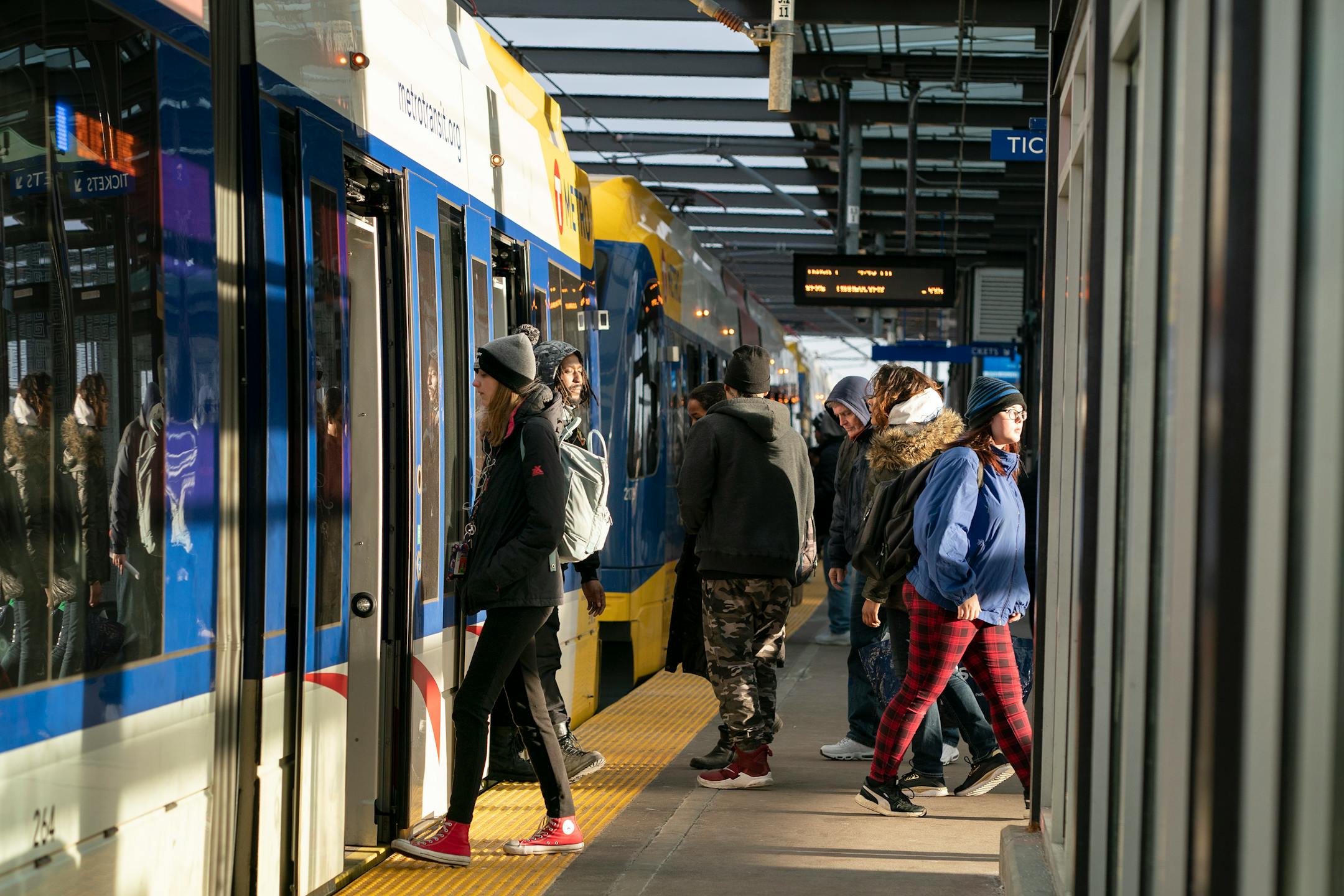
There is no such thing as a "typical" transit rider. However, it is worth describing some groups of people who regularly ride the bus with me:
- People with physical disabilities. For some disabilities, driving may be preferable to busing. However, driving is difficult if not illegal for those suffering from vision or hearing loss, and for some who have lost the use of a limb. The bus is a lifeline for people facing such challenges.
- Elderly. Yes, getting around by bus is hard for elderly people, but driving may also be difficult or impossible, due to various effects of aging. I see a significant number of elderly bus riders. I remember vividly when my mother and her siblings had to convince their mother to stop driving, because her coordination and response time simply made it unsafe. It was an excruciating conversation. A convenient bus — equipped with a ramp as our buses are — would have been a measure of independence for her at that time.
- Business people. On morning buses heading toward downtown, there are certainly many people dressed for a day at the office; they have come to appreciate that riding the bus eliminates the stress of driving and parking downtown.
- People living in poverty. It is impossible, just by looking at someone, to tell whether they are poor — yet I can say with some confidence that many bus riders live in poverty. Widen claims that "no one needs a personal transportation vehicle" more than poorly paid people working multiple jobs. That may apply to some types of poverty, but many who live in deep poverty can't afford the upfront capital needed to buy a car. Just as there is more than one way to be a family man or a disabled person, there is more than one way to be poor.
Many people tell me that what I do is impossible: That there is simply no way to have a family without having a car. If reading this makes you feel that way, then you clearly recognize just how much our current system favors those who drive. Having realized this bias in favor of cars, I hope that you will want to give better support to those for whom driving is not an option.
Given how much our current system favors those who drive, it is natural to ask drivers to make some small sacrifices to make life a bit easier for those who cannot drive. In any case, eliminating parking spots doesn't force any one person to give up on driving: If transit becomes more convenient and there is an uptick in ridership, this will free up parking spots even if you personally still use a car.
Please support a transportation system that works for everyone, including those whose life circumstances prevent them from driving.
Andrew Cantrell lives in Minneapolis.


