But the nation's highest judicial body, the Supreme Judiciary Council, watered down its opposition to the decrees on Sunday. It told judges and prosecutors to return to work and announced that its members would meet with Morsi on Monday to try to persuade him to restrict immunity to major state decisions like declaring war or martial law or breaking diplomatic relations with foreign nations.
Morsi supporters insist that the measures were necessary to prevent the courts, which already dissolved the elected lower house of parliament, from further holding up moves to stability by disbanding the assembly writing the new constitution, as judges were considering doing. Both the parliament and the constitutional assembly are dominated by Islamists. Morsi accuses Mubarak loyalists in the judiciary of seeking to thwart the revolution's goals and barred the judiciary from disbanding the constitutional assembly or parliament's upper house.
Opposition activists, however, have been adamant since the crisis first erupted that they would not enter a dialogue with Morsi's regime before the decrees are rescinded.
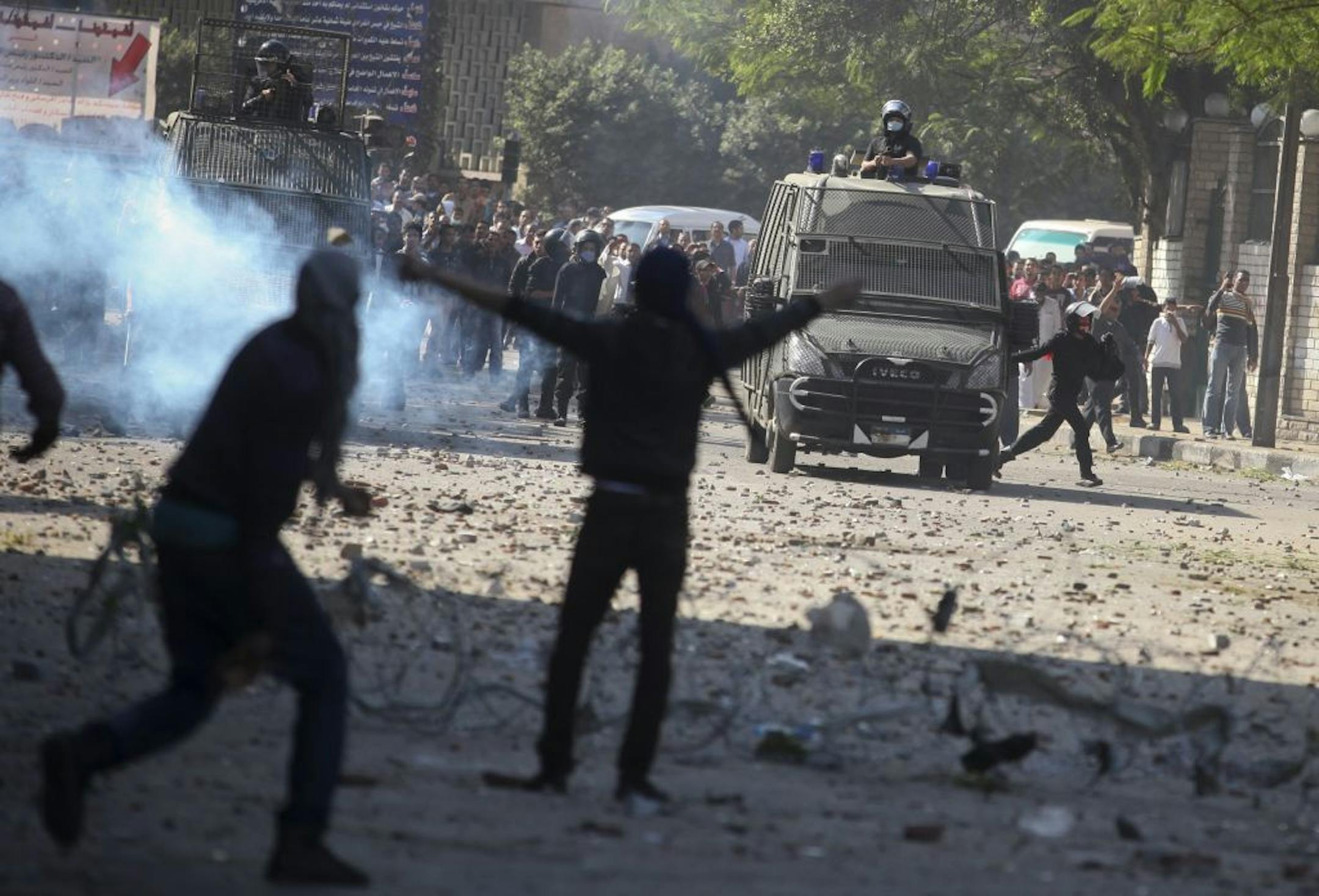
Protesters also clashed with police at Cairo's Tahrir Square, the birthplace of the mass protests that toppled Mubarak, and in the side streets and avenues leading off the plaza. The Interior Ministry, which is in charge of the police, said 267 protesters have been arrested and 164 policemen injured since the unrest began a week ago, initially to mark the anniversary of street protests a year ago against the nation's then-military rulers. Forty-two protesters were killed in those demonstrations.
The ministry did not say how many protesters were injured in the latest clashes in Tahrir, but security officials put the figure at 260.
Hundreds of protesters staging a sit-in in Tahrir have vowed not to leave before Morsi rescinds his decrees. The two sides also have called for massive rival protests Tuesday in Cairo, signaling a protracted struggle.