
Consumer reporter David Horowitz who was once taken hostage on TV dies at 81

February 23, 2019 at 3:32AM
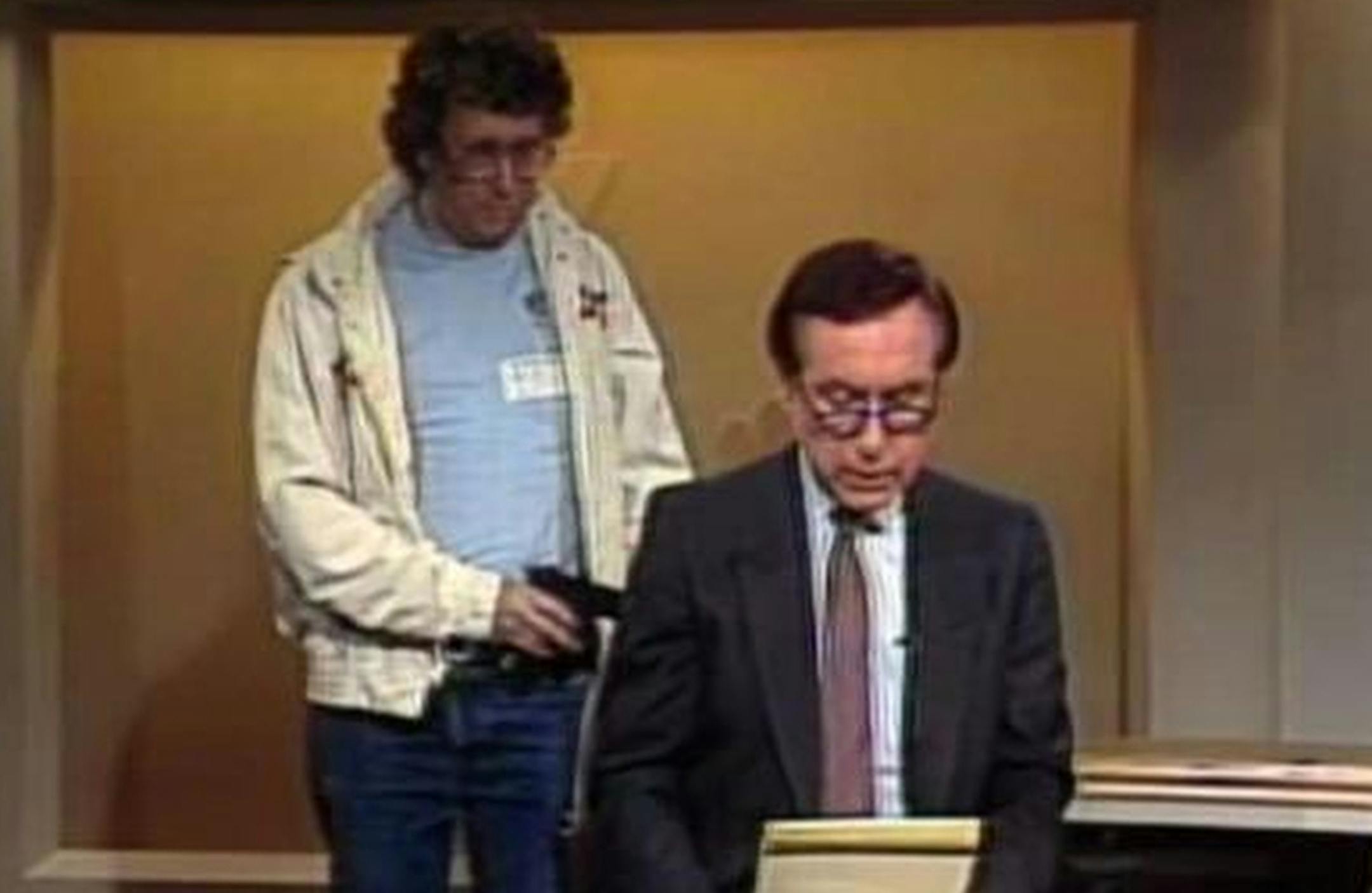
This Aug. 20, 1987, image made from video shows an intruder with a gun, as journalist David Horowitz is taken hostage during a live broadcast of Channel 4 Los Angeles. Horowitz remained calm and read the gunman's statements on camera, but the station had cut the broadcast without the gunman becoming aware of that fact. The gun turned out to be a toy BB gun, and Horowitz then took on the campaign to ban toy guns that look like real guns. Longtime consumer journalist David Horowitz has died at age
This Aug. 20, 1987, image made from video shows an intruder with a gun, as journalist David Horowitz is taken hostage ­during a live broadcast of KNBC Los Angeles. He remained calm. (The Minnesota Star Tribune)

David Horowitz, 81, whose syndicated consumer affairs TV show, "Fight Back!" made him a national fixture, and who was once briefly taken hostage while live on the air, died Feb. 14 in Los Angeles.

His family said the cause was complications of ­dementia.

Horowitz was for many years perhaps the most recognizable consumer affairs reporter in the U.S. — so much so that Johnny Carson created a caricature of him. The show made its national debut in 1976, growing out of a local consumer show he had on KNBC in Los Angeles.

Horowitz's main technique was to assess whether a product's or service's claims were accurate. The Associated Press once called him "a video Don Quixote who makes dishonest advertisers squirm." He did it with a telegenic ease that was deliberate. "It's not a news program, it's not really a public affairs program," he told the AP in 1981. "It's an informational entertainment show."

But there was nothing lighthearted about a moment in 1987, when, as he was doing a segment on KNBC, a man with mental illness got into the studio, stuck a gun in his back and demanded that he read a screed involving the CIA and UFOs.

Horowitz calmly did so as control room technicians took the show off the air. At the end of the reading, the man set down the weapon, an unloaded BB gun.

"People later told me how calm I looked," Horowitz said afterward, "but believe me, I wasn't." He went on to campaign against toy guys that looked like the real thing. Bans on such toys were later approved in Los Angeles and elsewhere.

As "Fight Back!" spread nationally, Horowitz was frequently a guest on "The Tonight Show With Johnny Carson," and Carson, in a loopy homage, developed a recurring character, David Howitzer, parodying Horowitz's style.
Horowitz was also a guest correspondent on "Today" for eight years and had a "Fight Back!" radio show and a syndicated newspaper column.

When KNBC did not renew his contract in 1992, he continued to do consumer segments for a time on a competing Los Angeles station, KCBS. In 2001, he started fightback.com, where, for a fee, he would write to companies on behalf of aggrieved consumers.

Horowitz became so well- known during the run of his TV series that, he said, it would take him hours to do his grocery shopping because of all the advice seekers.

"People come up to me like I'm a public institution," he told the AP in 1981. "They expect me to be an expert on everything from toilet paper to theater tickets to food products."

David Charles Horowitz was born on June 30, 1937, in the Bronx, New York.

W.E.B. Griffin, 89, who depicted the swashbuckling lives of soldiers, spies and cops in almost 60 novels, dozens of which became bestsellers, died Feb. 12 at his home in Daphne, Ala. The cause was colorectal cancer.

He estimated that he had published more than 150 books, many of which appeared on the bestseller lists of the New York Times and Publishers Weekly. His output included fiction for young adults and children's books. According to his website, there are more than 50 million copies of his books in print in more than 10 languages.

He also was a ghostwriter for many, and many others were published under a variety of pseudonyms, including Webb Beech, Edmund O. Scholefield, Allison Mitchell and Blakely St. James. Even the name W.E.B. Griffin was a pseudonym; his real name was William E. Butterworth III.

His best-known books are under Griffin. The first was "The Lieutenants" (1982), which became the first installment in "The Brotherhood of War," a nine-novel series that followed soldiers in the U.S. Army from World War II through the Vietnam War. Among his other series were "Badge of Honor," about the Philadelphia Police Department, and "Clandestine Operations," about the birth of the Central Intelligence Agency.

William Edmund Butterworth III was born on Nov. 10, 1929, in Newark, N.J.

New York Times

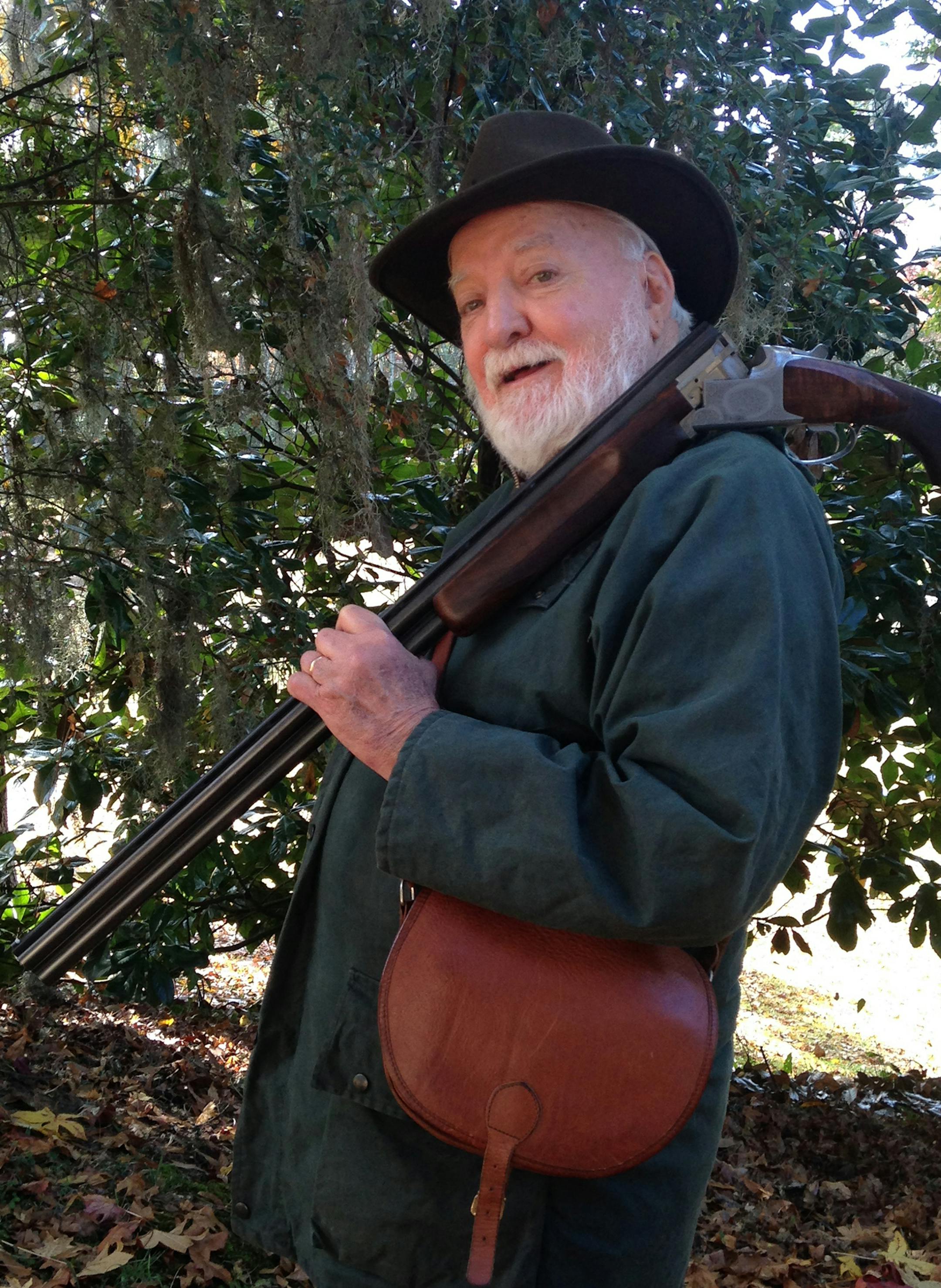
A handout photo shows the writer W.E.B. Griffin at his home in Daphne, Ala., in 2014. Griffin, who depicted the swashbuckling lives of soldiers, spies and cops in almost 60 novels, dozens of which became best sellers, died on Feb. 12, 2019, at his home in Daphne, Ala. He was 89. (Pilar Menendez Butterworth via The New York Times) -- NO SALES; FOR EDITORIAL USE ONLY WITH NYT STORY OBIT GRIFFIN BY DANIEL E. SLOTNIK FOR FEB. 23, 2019. ALL OTHER USE PROHIBITED. --
Author W.E.B. Griffin at his home in Daphne, Ala., in 2014. He died Feb. 12 at 89. (The Minnesota Star Tribune)
about the writer

about the writer

More from Minnesota Star Tribune

See More
card image
J. SCOTT APPLEWHITE, ASSOCIATED PRESS/The Minnesota Star Tribune

The "winners" have all been Turkeys, no matter the honor's name.

In this photo taken Monday, March 6, 2017, in San Francisco, released confidential files by The University of California of a sexual misconduct case, like this one against UC Santa Cruz Latin Studies professor Hector Perla is shown. Perla was accused of raping a student during a wine-tasting outing in June 2015. Some of the files are so heavily redacted that on many pages no words are visible. Perla is one of 113 UC employees found to have violated the system's sexual misconduct policies in rece