

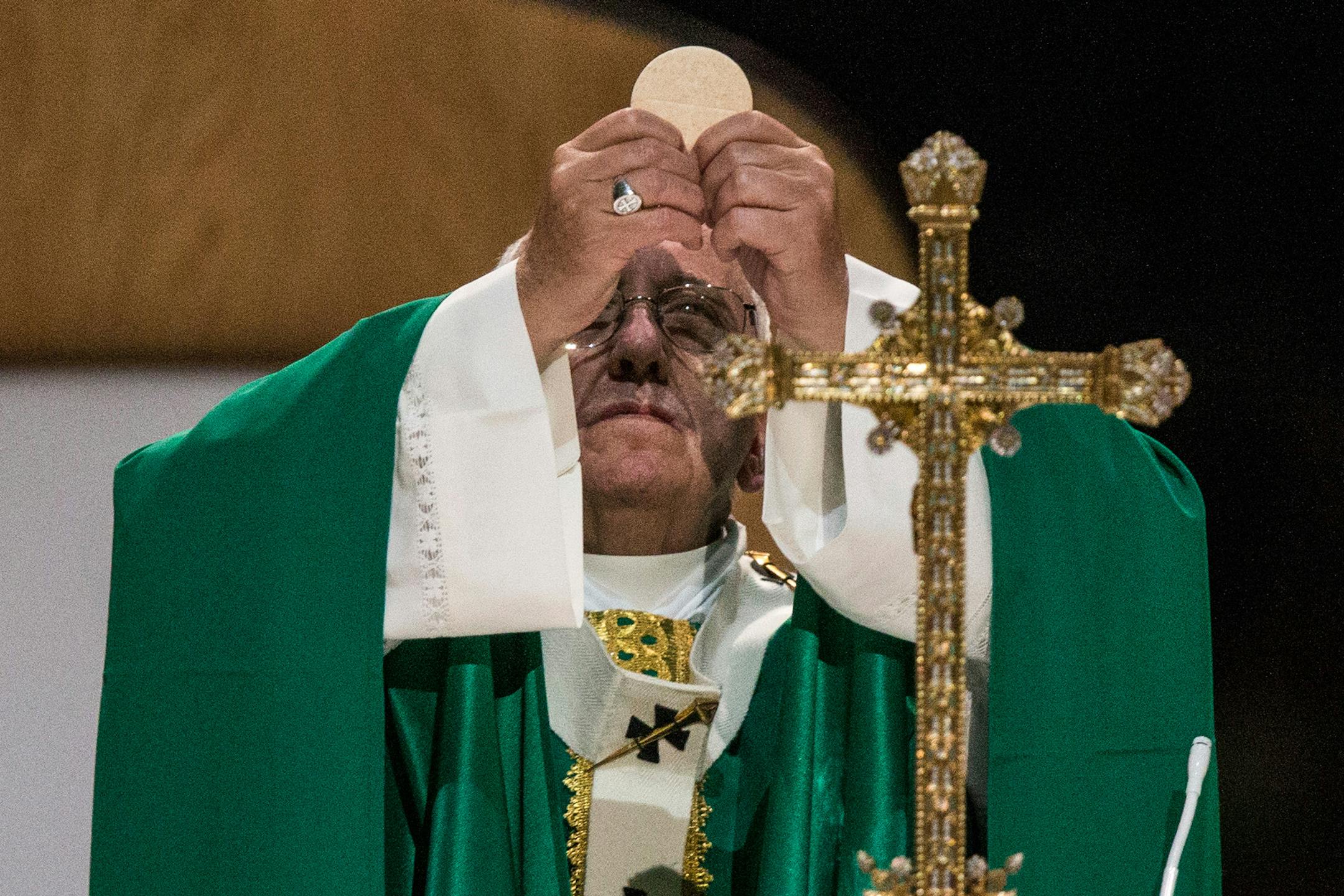
The unleavened bread that Roman Catholics use in the celebration of communion must contain some gluten, even if only a trace amount, according to a new Vatican directive.
The directive, which was dated June 15 but received significant attention only after it was reported by Vatican Radio on Saturday, affirms an existing policy. But it may help to relieve some of the confusion surrounding church doctrine on gluten, a protein that occurs naturally in wheat and has become the subject of debates over nutrition and regulation.
The issue is especially urgent for people with celiac disease, a gastrointestinal immune disorder that causes stomach pain, diarrhea and weight loss and that can lead to serious complications, or for those with other digestive conditions that make them vulnerable even to small amounts of gluten.
Many other people who do not have celiac disease may nonetheless have a sensitivity or allergy to gluten, and yet others have adopted a gluten-free diet in the belief that it is healthier — although science is far from clear on this point.
In both the United States and the European Union, the description "gluten-free" can be legally applied to foods made with wheat starch from which almost, but not absolutely, all gluten has been removed — the upper limit is 20 parts per million. The Catholic Church will allow bread of this kind to be used for communion.
But it will not allow truly gluten-free altar breads made with rice, potato, tapioca or other flours in place of wheat. (The Anglican Communion has taken a similar position, while some other Christian denominations consider such breads acceptable.)
"The confusion can be great when these 'breads' are advertised as gluten-free alongside what are described as gluten-free but are in fact low-gluten altar breads," according to the Catholic Church in England and Wales. "The confusion can also be the cause of great upset both to those Catholics who are allergic to gluten and to those who minister to them."
The new instructions — given in a letter to bishops from the Vatican's Congregation for Divine Worship and the Discipline of the Sacraments — said that the confusion had worsened because communion breads had become widely available, with varying standards of marketing and labeling.


