2:15
2:15The word "commune" conjures visions of flower children sharing everything, including each other. But modern versions of that idealistic alternative lifestyle of the 1960s exist on less radical planes, including some in Minnesota.
At a time when a record number of Americans live alone (nearly 27 percent, according to the latest census data), a small but determined minority is bucking the trend by forming "intentional communities," places where amenities and decision-making are shared in varying degrees -- common spaces, meals, chores, group consensus on household matters. As a result, they say, they eat better, live greener and feel more supported in good times and bad amid an "it takes a village" mind-set.
Most intentional communities are located on the West Coast and in New England, but interest is growing in some pockets of the Midwest, as well, mostly in college towns like Madison, Wis. In exurban and outstate Minnesota, the rural/CSA model of communal living is gaining ground, with some in the forming stages, but the Twin Cities area is also home to several such arrangements. Here's a snapshot of three versions -- the Students' Co-op at the University of Minnesota, the Monterey Cohousing development in St. Louis Park and the Red House Community in St. Paul.
Students' Co-op
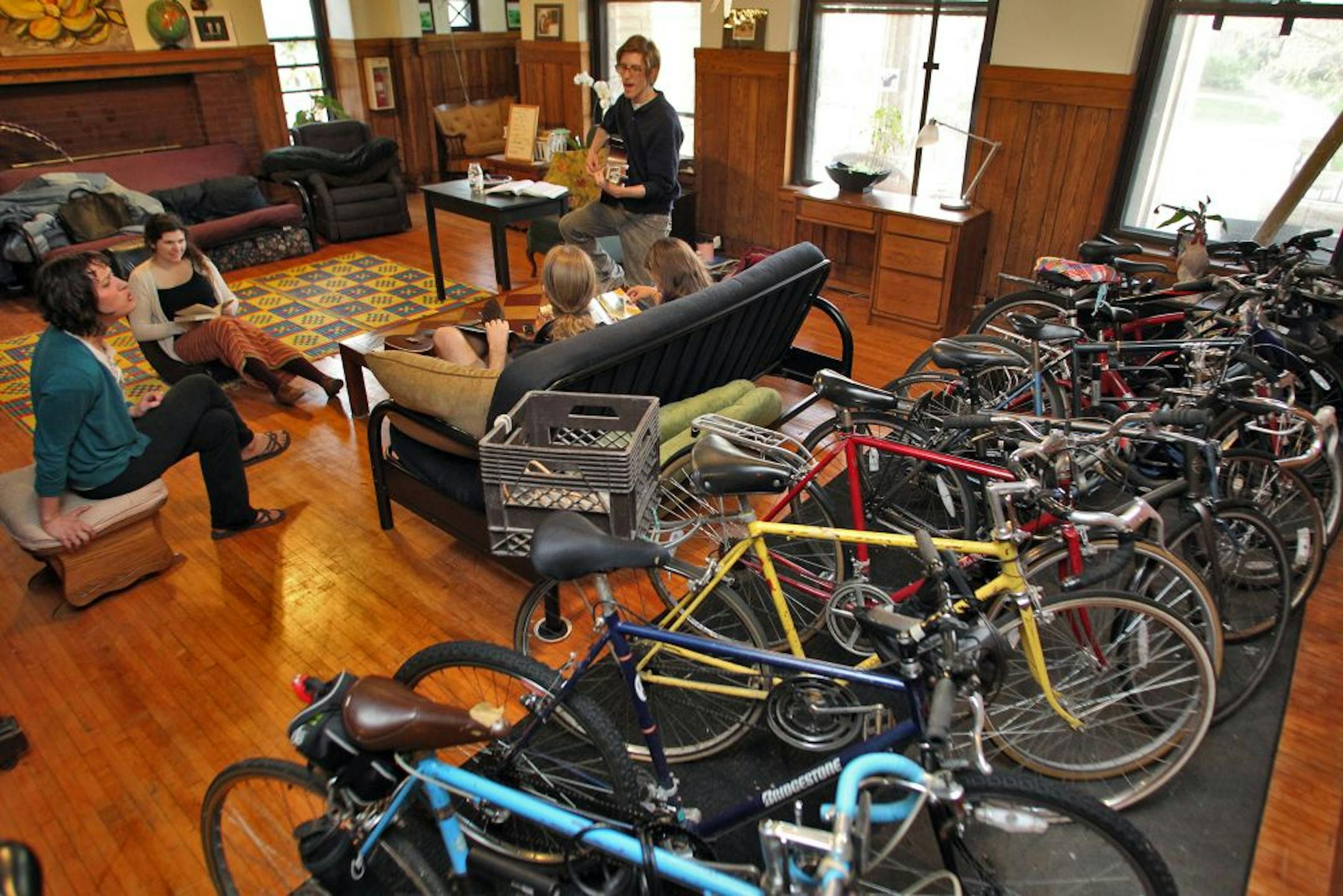
Squeezed between fraternity houses on University Avenue, the co-op with its three imposing columns might be mistaken for another Greek-system dwelling, were it not for the tire swing, the radish crop and the brightly painted vintage bicycle making an eco-art statement outside a second-floor window. Inside, several residents hang out on comfy couches in the TV room, eating bowls of noodles and veggies prepped in the industrial-sized kitchen by whomever is on dinner duty that night.
The co-op has sometimes had trouble filling up its rooms, but not lately. It's filled to capacity at 29 residents, with a waiting list nearly as long, said president Charlie Lehnen, who applied to live there because "I was so sick of the normal living model of taking up too much space and paying too much for it."
With monthly expenses as low as $290, including a $45 all-you-can-eat organic meal plan, many prospective residents are attracted by the promise of savings, "but you have to want to be a part of a community" to be accepted, Lehnen said. All members have to do chores like yard work, kitchen duty and bathroom cleaning, or face fines that start at $10 and increase daily until it gets done.
Because residents are pursuing majors ranging from physics and geology to fashion and social services, they get exposed to a wider variety of conversations than students who stick with a peer group, said Andrew Morrison, a junior studying environmental sciences. "It's also great to have people around when you're going through a hard time," he said, recalling a recent romantic breakup. "I don't know what I would have done if I had to go home to an empty apartment."