

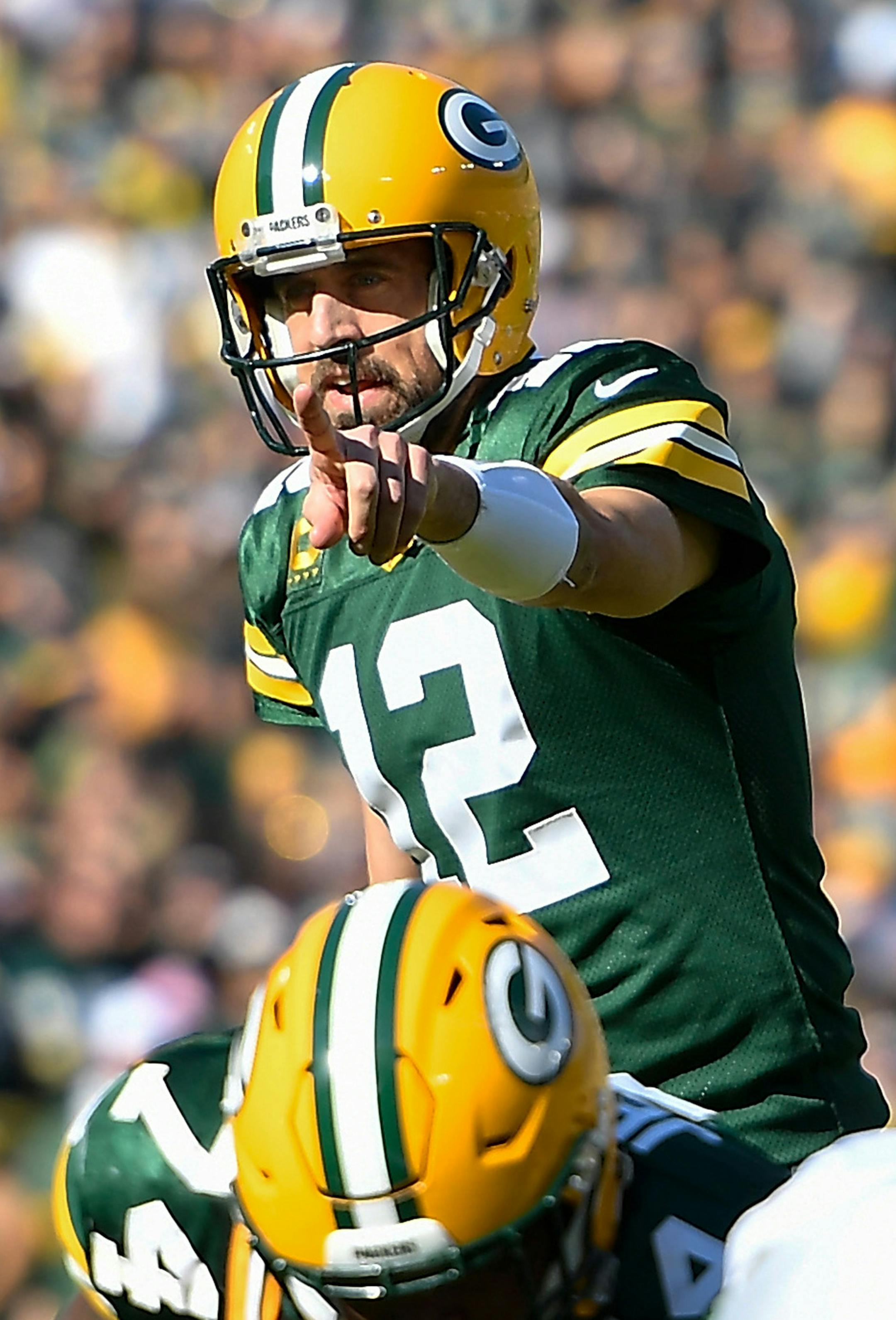
GREEN BAY, Wis. – Aaron Rodgers paused.
"I'll try and say this nicely," he said.
Staring out into the Packers' locker room, Rodgers let the words dangle. After an offseason of change and criticism, of different coaches expecting him to adapt and former teammates sniping at his leadership style, he is ever more attuned to his role within the team dynamic. At this late stage of his career, Rodgers said he knows when to project calmness or quiet strength through how he speaks — and to whom.
Seeking to minimize anxiety among younger teammates, Rodgers has taken to what he recently called overcommunicating.
"My brain and responsibilities, it operates at a different level than other positions," Rodgers said in an interview. "Everybody has different responsibilities. And it's important that when I'm trying to convey a message that it's as clear as possible. Even if in my own brain it might be crystal clear, I've got to make sure I'm thinking about it from their perspective. I think that's the most important thing that I have to do as a quarterback."
Rodgers spoke four days after he wrecked the Oakland Raiders on Oct. 20 at Lambeau Field, throwing for 429 yards and recording the first perfect passer rating of his splendid career. The crazy thing is, he kind of predicted it.
After a wobbly opening month, he started feeling more comfortable and confident, and after throwing his first touchdown against the Raiders, he sidled over to his new coach, Matt LaFleur, and said he wanted to throw four more. So he did.
That performance, the inflection point of Green Bay's joyful return to the NFC elite, offered evidence that Rodgers' capabilities endure. The Packers (8-2) head into Sunday's matchup at NFC West-leading San Francisco with their best record through 10 games since 2011, when they started 13-0. That year, the statistical apex of his career, Rodgers won the first of his two MVP awards.


