

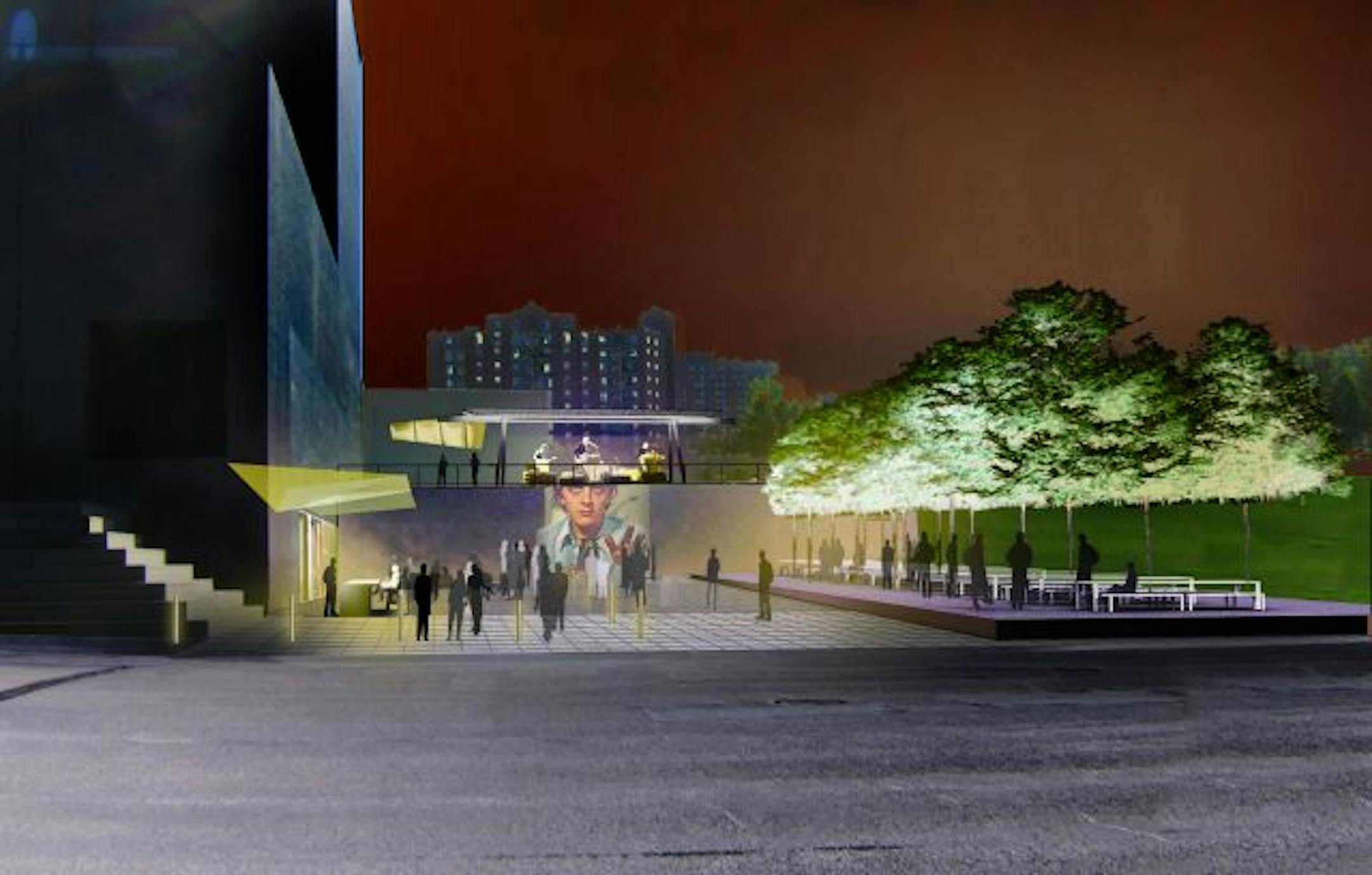
What to do with the prettiest hillside in downtown Minneapolis? For the past five years Walker Art Center honchos have been scratching their well coiffed heads about the future of the grassy declivity where the Guthrie Theater once stood. Sculpture? Trees? Ski jump? Water park? Experts were summoned from abroad, proposals launched, shoulders shrugged.
In the end, a day of brainstorming by more than 30 local artists, designers, architects, landscapers and other creative types spawned a temporary plan that goes into effect June 3. It is expected to be in place for three to five years, during which the museum will develop a more permanent design.
"My hope is it will actually change our practice, how we engage people and bring audiences in," said Walker director Olga Viso.
The biggest change is a grove of trees that will materialize on the western edge of an expanded plaza at the Walker's Vineland Place entrance across the street from the Minneapolis Sculpture Garden. Artist-designed furniture will sprout in the trees' shade.
On the plaza, snacks and beverages will be sold around a barbecue grill, for consumption at umbrella-shaded tables, starting June 3. A new Garden Cafe just inside that entrance will offer sandwiches, salads and more refreshments. The cafe will replace the building's original top-floor Gallery Eight restaurant, which will be closed. The food service will be run by the Wolfgang Puck firm, which manages the Walker's 20.21 restaurant.
Curiously, although martinis and local brews are featured, the cafe will be open only from 11 a.m. to 5 p.m. except on Thursdays, when it will close at 9 p.m. Walker must be angling for the flexibly employed and those "Mad Men" who still take three-martini lunches. (As with the museum, it will be closed on Mondays.)
There also will be an arty "Tool Shed" from which visitors can borrow umbrellas, picnic blankets, books, sports equipment, crayons and other art supplies to use as they sprawl on the hill. The Walker is even launching its own low-frequency radio broadcasts of music, tapes, podcasts and more.
"We're trying to really create a cultural commons adjacent to the Sculpture Garden and the galleries," explained Viso. "We need a more flexible platform to bring artists and the public together, so rather than make designated galleries for discrete objects, we'll have a space where people can go to concerts, or give tango lessons or have dinner."


