

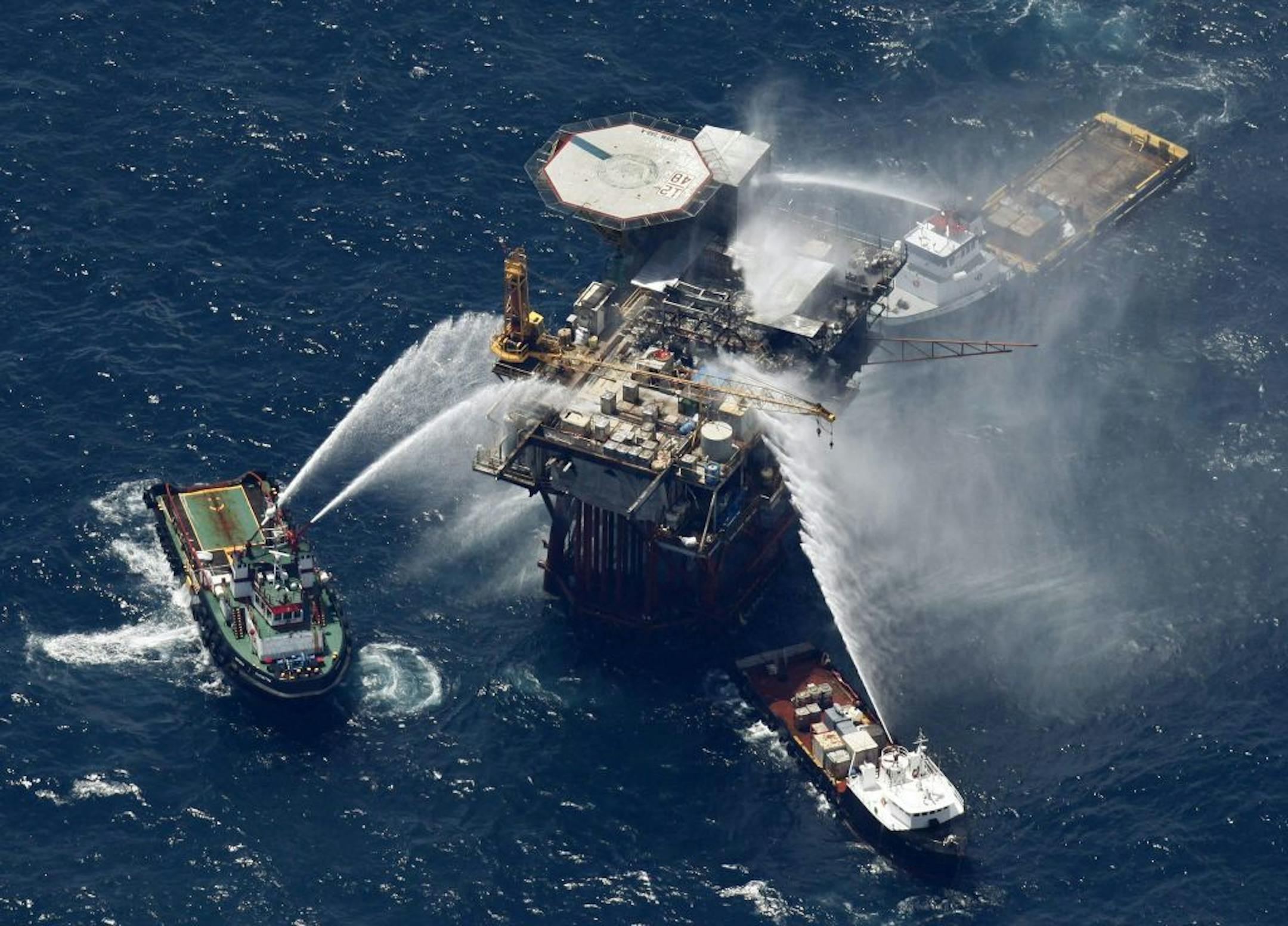
NEW ORLEANS - The eruption of a fire on an oil platform in the Gulf of Mexico — which left two workers missing and four others badly burned — is a vivid reminder of the dangers involved in offshore drilling and the risk it poses to the gulf's ecosystem and shoreline.
The Coast Guard was searching early Saturday for two workers missing after the fire broke out Friday, sending an ominous black plume of smoke into the air reminiscent of the 2010 Deepwater Horizon explosion that transformed the oil industry and life along the Gulf Coast.
The blaze, which started while workers were using a torch to cut an oil line, also critically injured at least four workers who had burns over much of their bodies. The four were being treated late Friday at the burn center at Baton Rouge General Medical Center.
Coast Guard Chief Petty Officer Bobby Nash said late Friday that a Coast Guard cutter was continuing its search into the night, and that a broader rescue effort would resume after daybreak Saturday.
The images Friday were eerily similar to the massive oil spill that killed 11 workers and took months to bring under control. The fire came a day after BP agreed to plead guilty to a raft of charges in the 2010 spill and pay a record $4.5 billion in penalties.
There were a few important differences with the Deepwater Horizon explosion that spawned one of the nation's biggest environmental disasters: Friday's fire at an oil platform southeast of Grand Isle, La., was put out within hours, rather than burning for more than a day and causing the rig to collapse and sink.
The site of Friday's blaze is a production platform in shallow water, rather than an exploratory drilling rig looking for new oil on the seafloor almost a mile deep.
A sheen of oil about a half-mile long and 200 yards wide was reported on the Gulf surface, but officials believe it came from residual oil on the platform.


