

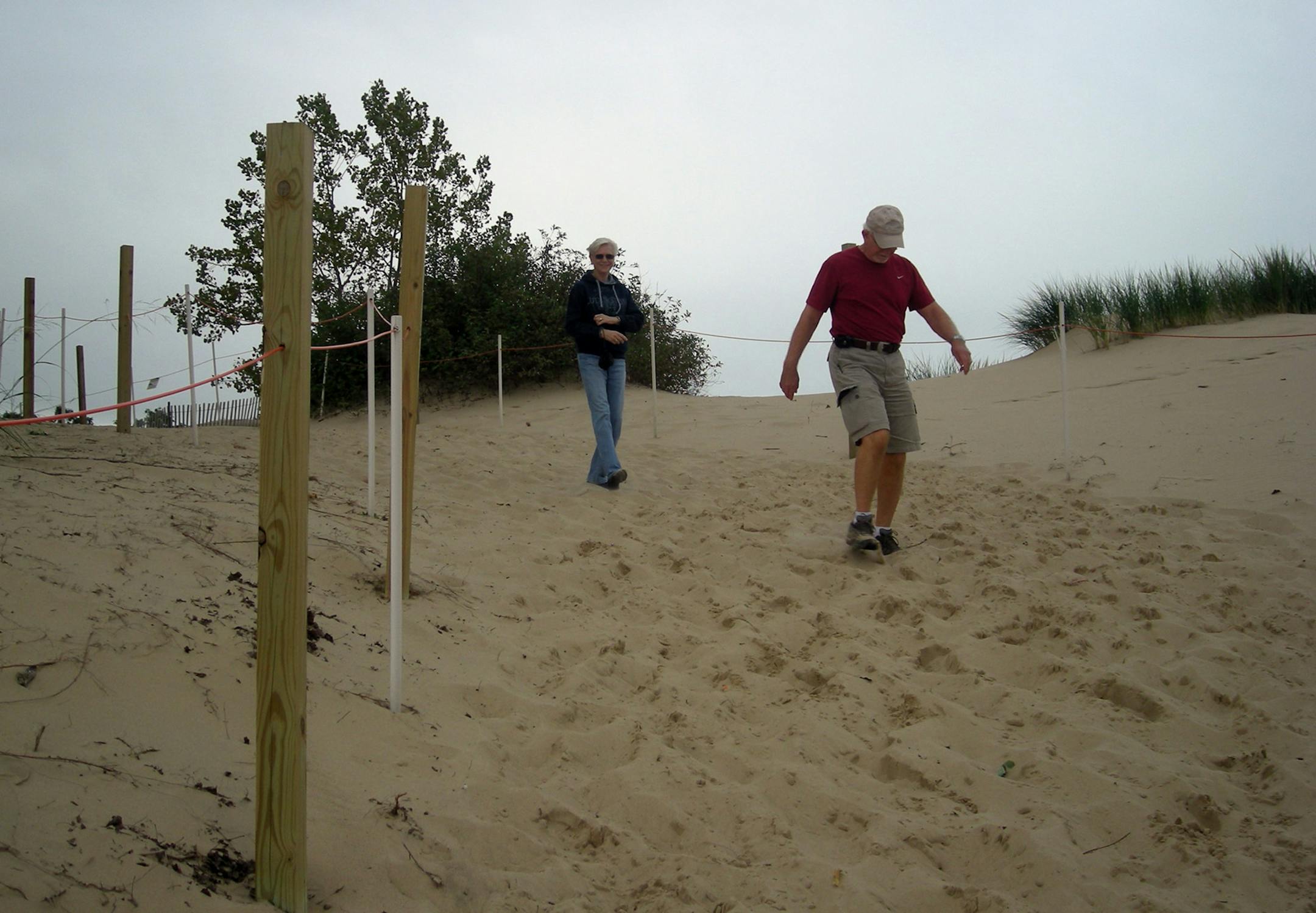
Mount Baldy is still moving, but its movement has been slowed.
Mount Baldy features high hills of wild, windswept sand, topped by grasses, shrubs and small trees. It rises 126 feet above Lake Michigan at Indiana Dunes National Lakeshore. It is the one dune at the federal lakeshore in northern Indiana that visitors are welcome to climb up and slide down.
But the movement of sand that is altering Mount Baldy is slowing. Lakeshore officials have added barriers to keep visitors on designated trails atop Mount Baldy to stabilize the vegetation on the tallest moving sand dune in the lakeshore.
The lakeshore encompasses 2,182-acre Indiana Dunes State Park and several state-run nature preserves. It is a mosaic of dunes, prairies and bogs at the edge of heavily industrial northern Indiana.
Baldy, a bowl-shaped dune at the eastern end of the federal park, is an impressive sight. From the top, you will see a nearby power plant, steel mills to the west in Gary and, on clear days, the Chicago skyline. You still climb two trails to reach the top of Mount Baldy, but parts of the dune are now off-limits. The southern slope with its half-buried trees above the parking lot is closed, as is a third trail. You can scale the dune from the lakeside or take a trail to the top and then hike down its north face.
These are among the world's highest freshwater dunes, distinctive for their plant diversity. Strangely, you will find Arctic plants and desert vegetation thriving among about 1,400 plant species.
One of the key plants is marram grass, which pokes up through the sand and thrives in the extreme conditions. The narrow waxy leaves and the dual-purpose root system help it endure high winds, shifting sands and temperatures that range from below freezing to desert-like heat. A single marram grass may spread more than 20 feet in diameter.
The Park Service planted 200,000 marram grass plants in 2012 to anchor the dunes. It relied on volunteers after superstorm Sandy to replant about 30,000 of those plants.


