

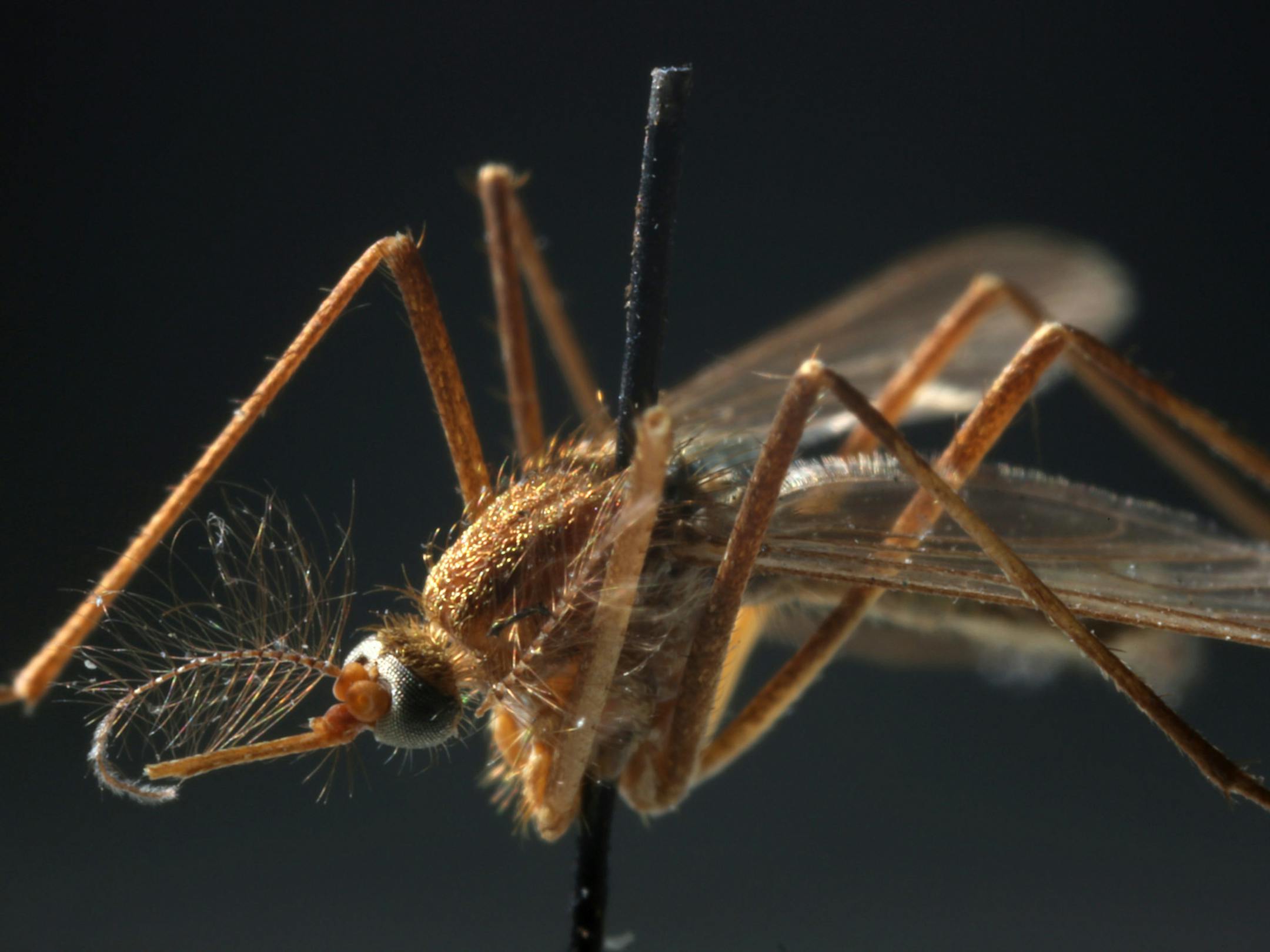
Michael Keasling of Lakewood, Colo., was an electrician who loved big trucks, fast cars, and Harley-Davidsons. He'd struggled with diabetes since he was a teenager, and was already quite sick in August when he contracted West Nile virus after being bitten by an infected mosquito.
Keasling died on Nov. 11 at age 57 from complications of West Nile virus and diabetes, according to his mother, Karen Freeman.
Spring rain, summer drought and heat created ideal conditions for mosquitoes to spread the West Nile virus through Colorado last year, experts said. West Nile killed 11 people and caused 101 cases of neuroinvasive infections — those linked to serious illness such as meningitis or encephalitis — in Colorado in 2021.
The rise in cases there may be a sign of what's to come across the country: As climate change brings more drought and pushes temperatures toward what is termed the "Goldilocks zone" for mosquitoes — not too hot, not too cold — scientists expect West Nile transmission to increase.
"West Nile virus is a really important case study" of the connection between climate and health, said Dr. Gaurab Basu, a primary care physician and health equity fellow at the Center for Climate, Health, and the Global Environment at Harvard's public health school.
Although most West Nile infections are mild, the virus is neuroinvasive in about 1 in 150 cases, causing serious illness that can lead to swelling in the brain or spinal cord, paralysis or death, according to the Centers for Disease Control and Prevention. People older than 50 and transplant patients, as Keasling was, are at higher risk.
Over the past decade, the U.S. has seen an average of about 1,300 neuroinvasive West Nile cases each year.
Basu saw his first one in Massachusetts several years ago. "That really brought home for me the human toll of mosquito-borne illnesses and made me reflect a lot upon the ways in which a warming planet will redistribute infectious diseases," Basu said.


