

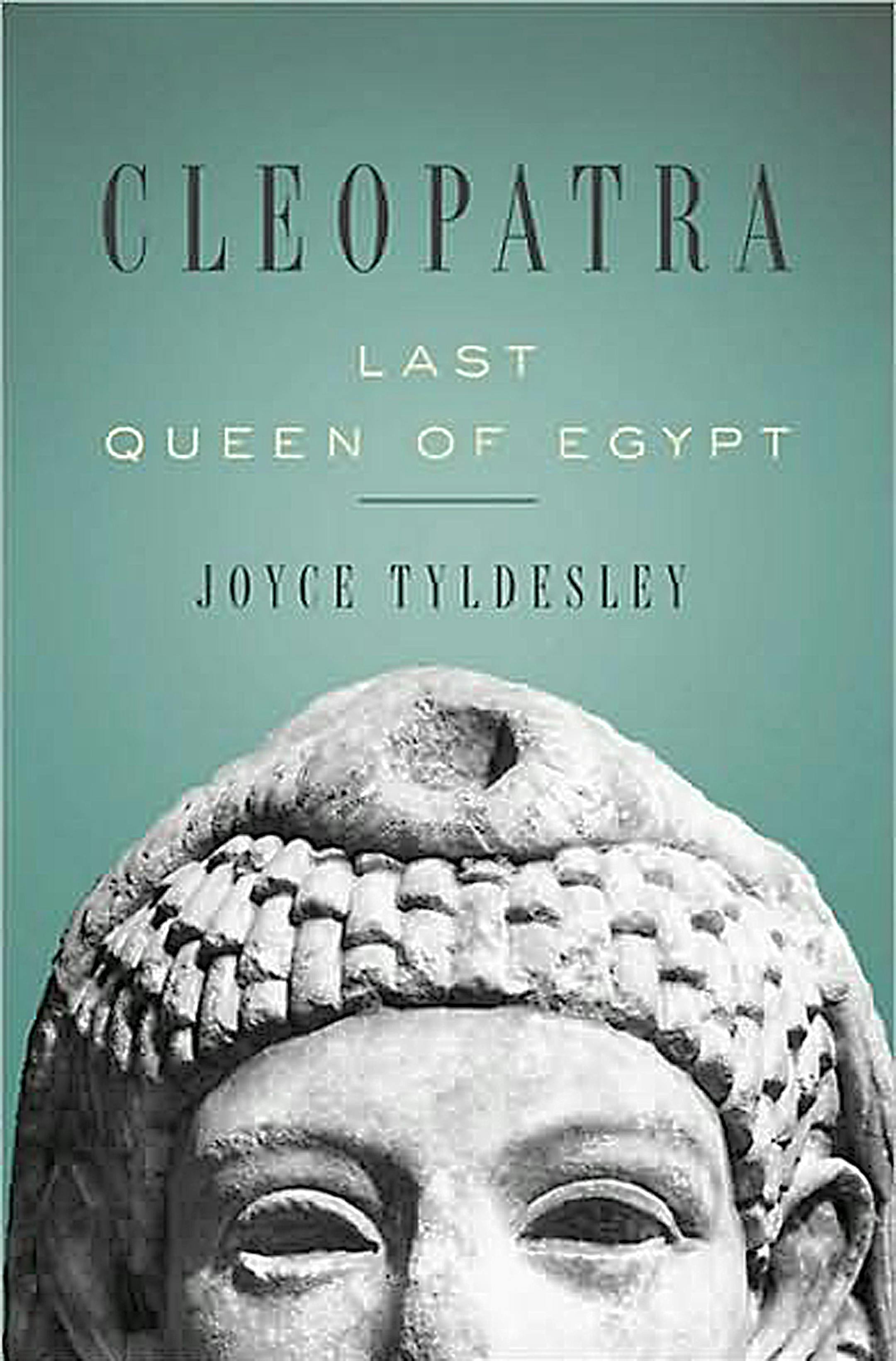
Cleopatra has generated more fame -- in the form of poems, paintings, books, plays and films -- per known fact than any woman in history. As Joyce Tyldesley phrases it in her fascinating and irresistible biography, "Cleopatra, Last Queen of Egypt," "it is clearly never going to be possible to write a conventional biography of Cleopatra." So Tyldesley has gone ahead and written one.
An archaeologist, author ("Daughters of Isis"), and popular consultant for TV shows on ancient history, Tyldesley has chosen to re-create her subject by putting together the puzzle pieces of history that surround Cleopatra's life and legend. Neither an Egyptian by blood nor an actual Greek -- she could trace her ancestry on her father's side to the original Ptolemy, a general of Alexander the Great -- she was a fabulous hybrid of those cultures and several others which were native to the Egypt of the first century B.C.
What she was not, Tyldesley argues, was the villainous vamp portrayed in the movies. Played by such actresses as Theda Bara, Claudette Colbert and Elizabeth Taylor, the movie Cleopatra derived from the overheated imaginations of such western writers as Plutarch, whose "Life of Mark Antony" influenced most later writers, including Shakespeare.
Where Tyldesley's book differs from most modern accounts of Cleopatra's life and times is that her conclusions stem from an intimate knowledge of Egyptian culture rather than from Greek and Roman historians, to whom Cleopatra was a combination of sorceress and seductress. Charm and intelligence were almost certainly her most alluring traits and what first attracted Caesar to her. (Her money didn't hurt, either; according to Tyldesley, "Cleopatra was the wealthiest monarch in the world.")
Cleopatra was, she concludes, "an intelligent and effective monarch who set realistic goals and who very nearly succeeded in creating a dynasty that would have re-established Egypt as a world super power." Roman historians, though, saw only "an unnatural, immodest woman who preyed on other women's husbands. From this developed the myth of the sexually promiscuous Cleopatra ... a harsh legacy indeed for a woman who probably had no more than two, consecutive sexual relationships."
Readers who enjoy not only history but how it evolves into myth will find a feast in Tyldesley's book. You may be disappointed to find out that the Queen of Egypt did not first appear to Caesar unwrapped from an Oriental carpet, and it's unlikely that Cleopatra succumbed to the bite of an asp, but Tyldesley's theories as to what most likely did happen are at least as interesting as the folklore.
Allen Barra writes about sports and culture for the Wall Street Journal. His next book is "Yogi Berra, Eternal Yankee," due in March 2009.


