

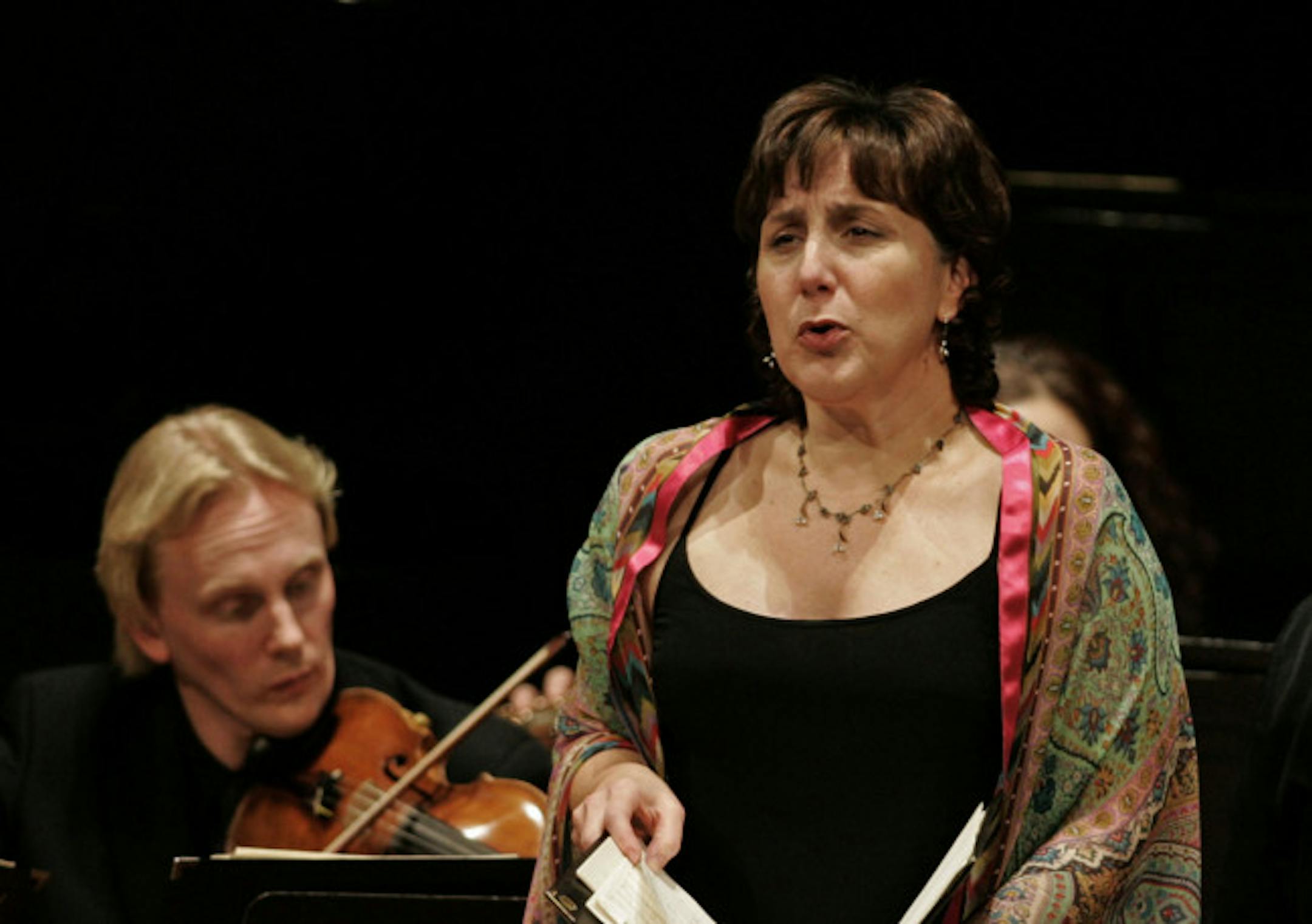
Concertgoers who spent Wednesday and Thursday evenings at the Ordway Center, in the company of bass Eric Owens and the 12 men of Chanticleer, would be forgiven for supposing that musical performance remains a male-dominated sport. But Friday's concert in the same hall by the St. Paul Chamber Orchestra, which more than once touched the sublime, belonged to the women.
The headliner, in vibrant voice, was soprano Dawn Upshaw, concluding her second season as an SPCO artistic partner with a program no other singer would devise. Every bit her equal was the young conductor Joana Carneiro, a major-league musical export from Portugal.
Carneiro's opening Haydn, the uniquely tinted Symphony No. 22, was arresting, its solemn Adagio a pre-echo of Mozart's "Magic Flute." Her closing Ravel, the ravishing "Mother Goose," was even better, its textures aglow, its inimitable mix of innocence and sophistication caught on the wing. The conductor's fluid, choreographic gestures, not just for show, drew playing of sweep and finesse from the SPCO musicians, who applauded her enthusiastically.
Between Haydn and Ravel came Upshaw's portion of the program, which began with four songs of desire and despair by Renaissance composer John Dowland, their lute accompaniments arranged for string quartet by Stephen Prutsman. (One of the SPCO's original artistic partners, Prutsman is no mere copyist; his arrangements, played in a semblance of period style, are spiced with string harmonics foreign to the era.)
Next came the riveting "Lúa Descolorida" (Colorless Moon), written for Upshaw by Argentinean-born Osvaldo Golijov. Though barely six minutes long, the work -- originally with orchestra, played here in a version for string quartet -- takes on the gravity of a universal lament. Haunting and uncanny, the vocal line enfolds the listener; singer and song become one.
But the pièce de résistance, Witold Lutoslawski's gemlike "Chantefleurs et Chantefables" (Song-flowers and Song-fables, 1990), was still to come. A late, lovable masterpiece by the great Polish composer (whose inner landscape brightened after the fall of communism), "Chantefleurs" is a setting of nine French surrealist children's poems on flora and fauna. The music, Gallic in its transparency, crackles with invention and wit; especially in "L'Angélique," it also has moments of heart-stopping beauty. Upshaw, Carneiro and the band were alive to every nuance. And to pair it with Ravel was ingenious.
Larry Fuchsberg writes regularly about music.


