

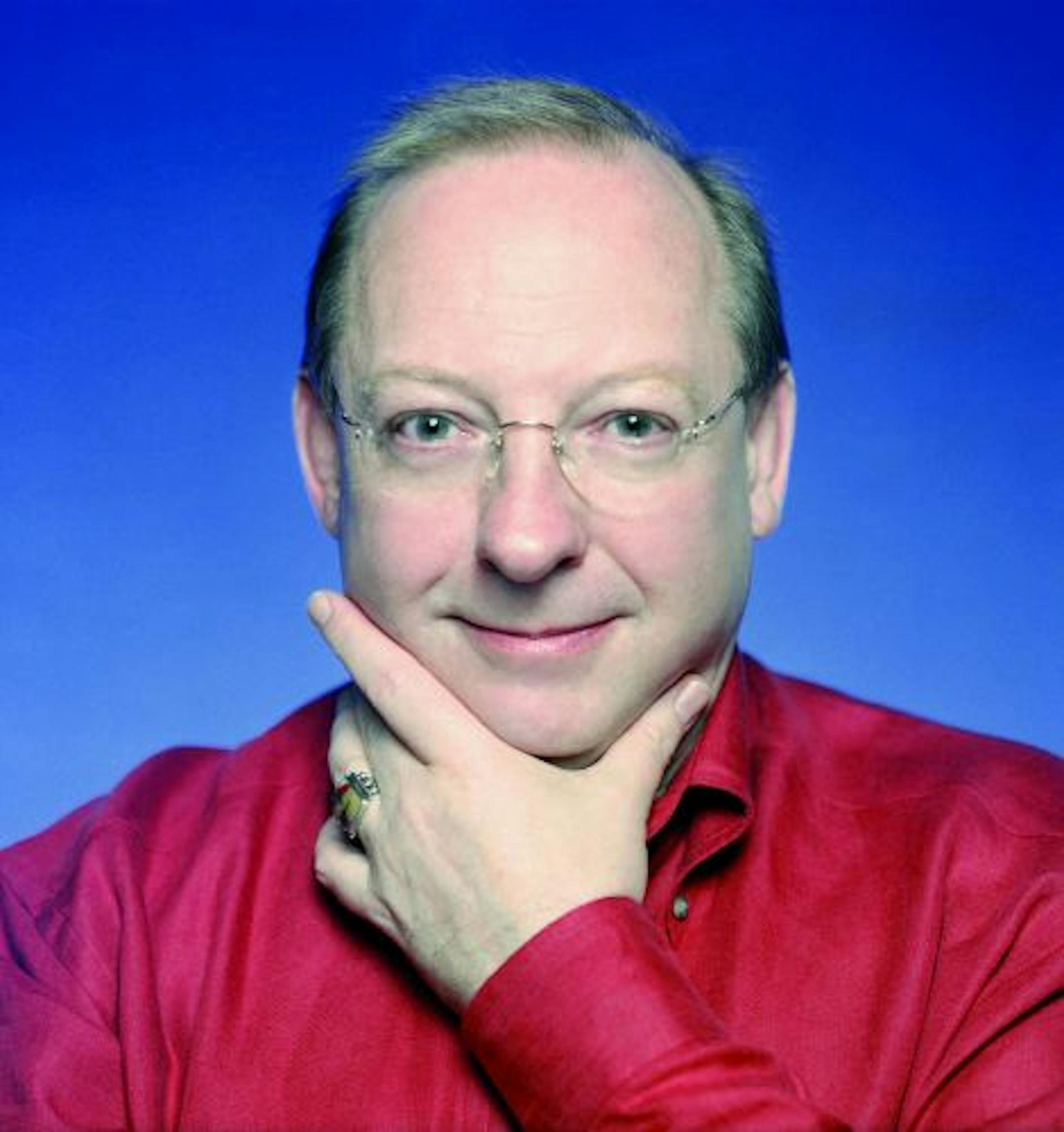
Nicholas McGegan -- a man routinely labeled "ebullient" and "irrepressible" -- has led the St. Paul Chamber Orchestra regularly since November 1988, serving as director of its Baroque Series and later as one of its original artistic partners. This week he takes leave of the orchestra in properly pyrotechnic fashion -- with the "Royal Fireworks Music" of George Frideric Handel, the composer with whom he's been most closely associated.
Also on his program: more Handel, Edward Elgar's Handel-influenced "Introduction and Allegro" for strings, and (with SPCO principal second violin Dale Barltrop) Peter Maxwell Davies' "A Spell for Green Corn," which recalls an ancient Scottish blessing of the crops.
While he lives in Berkeley, Calif., and is music director of the Bay Area's Philharmonia Baroque Orchestra, McGegan takes his Scottish heritage seriously: His hobbies include furnishing his 19th-century flat in Scotland, and his preferred scotch is Lagavulin.
McGegan's conversation is no less stimulating than his conducting. Here are extracts from an interview recorded in December.
On new music:
I usually do music by dead white European people. Rarely do I do music by live composers. So it was great to do the Libby Larsen I did last year and actually have the composer present. Max [Peter Maxwell Davies] is a friend, and a wonderful composer. The "Green Corn" piece is one that I adore, partly because I have a certain amount of Scottish heritage. (The McGegans are actually Irish but came from Ireland to Scotland in the 18th century.) "Green Corn" is based on dances from a wedding in Orkney. It's a perfect piece for Dale [Barltrop], a violinist who I admire the hell out of. This will be the third or fourth time we've worked together.
On chamber orchestras:
I'm a big chamber-orchestra fan. Of course, it's thrilling for a conductor to play big, loud stuff with a symphony orchestra, but chamber orchestras are a joy to rehearse. And they take the music to the audience rather than expect the audience to come to the music.


