

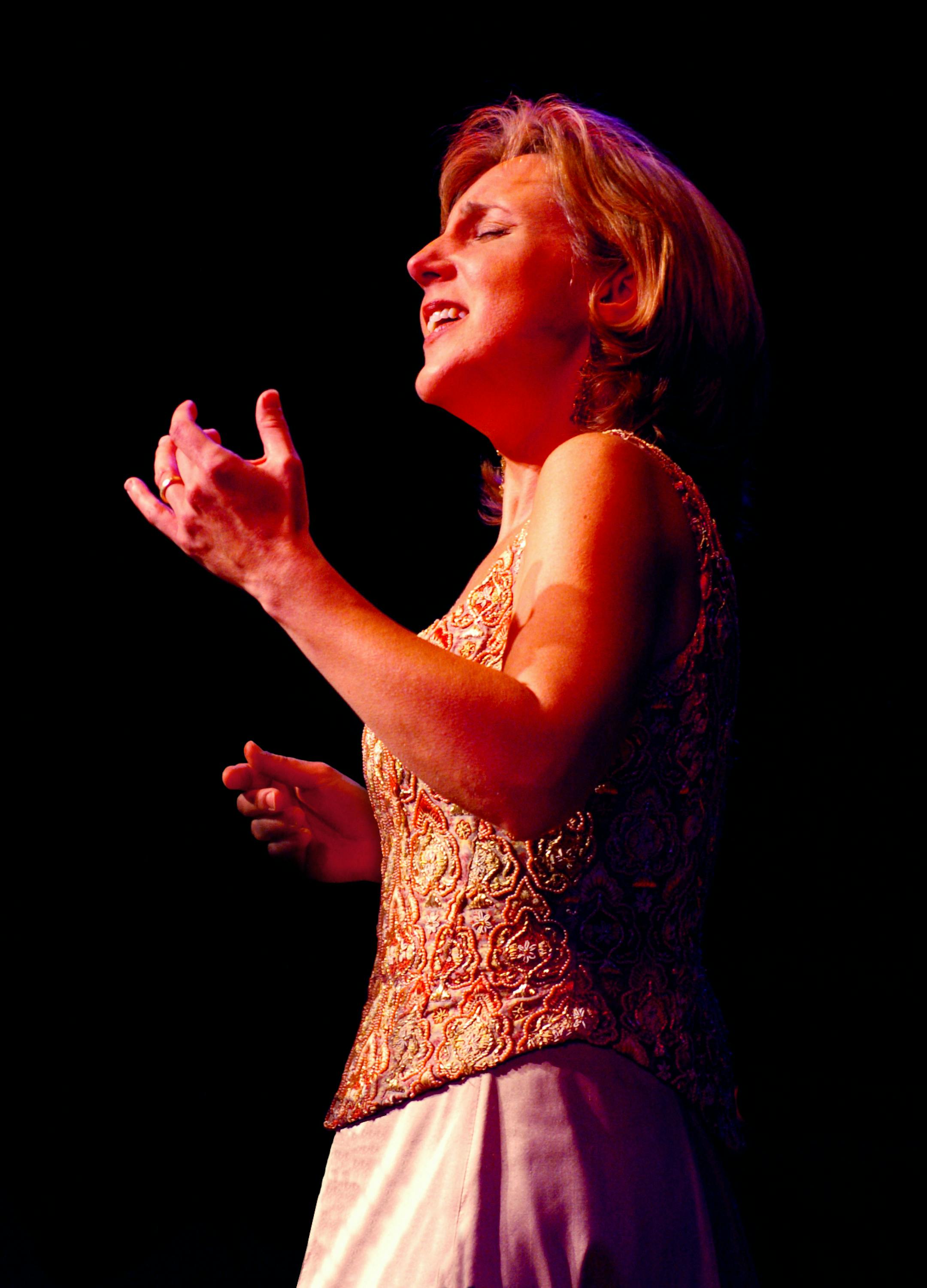
Talking with Dawn Upshaw, even on the telephone, is a musical experience. Her speech is melodious; her laugh deserves a Grammy.
The soprano, who last fall received a MacArthur Foundation fellowship ("genius grant"), begins a three-year artistic partnership with the St. Paul Chamber Orchestra this week, in the company of partner Pierre-Laurent Aimard.
Q How does your partnership with the SPCO differ from a series of more conventional engagements?
A It's a huge honor to be given the freedom to do pretty much whatever I'd dream of doing with the ensemble. I hope I'll be adding some new color to the huge palette you're already experiencing with the SPCO. The partnership is a unique way of organizing and presenting concerts, and certainly it's a unique opportunity for me.
Q All the other SPCO partners have led the orchestra in some fashion -- from the podium, or from the keyboard, or with a violin bow. Is that something you're inclined to try?
A Not with my arms. But I move a lot when I sing, and I think that when there' s no conductor the players tune in to my body language in different ways than they do with a conductor in front of them. I like the way their listening shifts. I'm working on the repertoire for concerts in October that will involve some pieces without conductor.
Q Your inaugural program includes Ravel's "Three Poems of Stéphane Mallarmé" and Stravinsky's "Pribaoutki." Why did you choose them?
A I suggested the Ravel, which is a favorite of mine, along with some other Stravinsky, and then Monsieur Aimard came back with the idea of "Pribaoutki," which I've also done before. The Ravel has a certain subtle musical language that is so intimate, that requires real dedication by the players and a very careful act of listening, as any chamber music does -- as any music does. "Pribaoutki" -- the word means "witticism" -- is very short, four charming little songs in Russian.


