

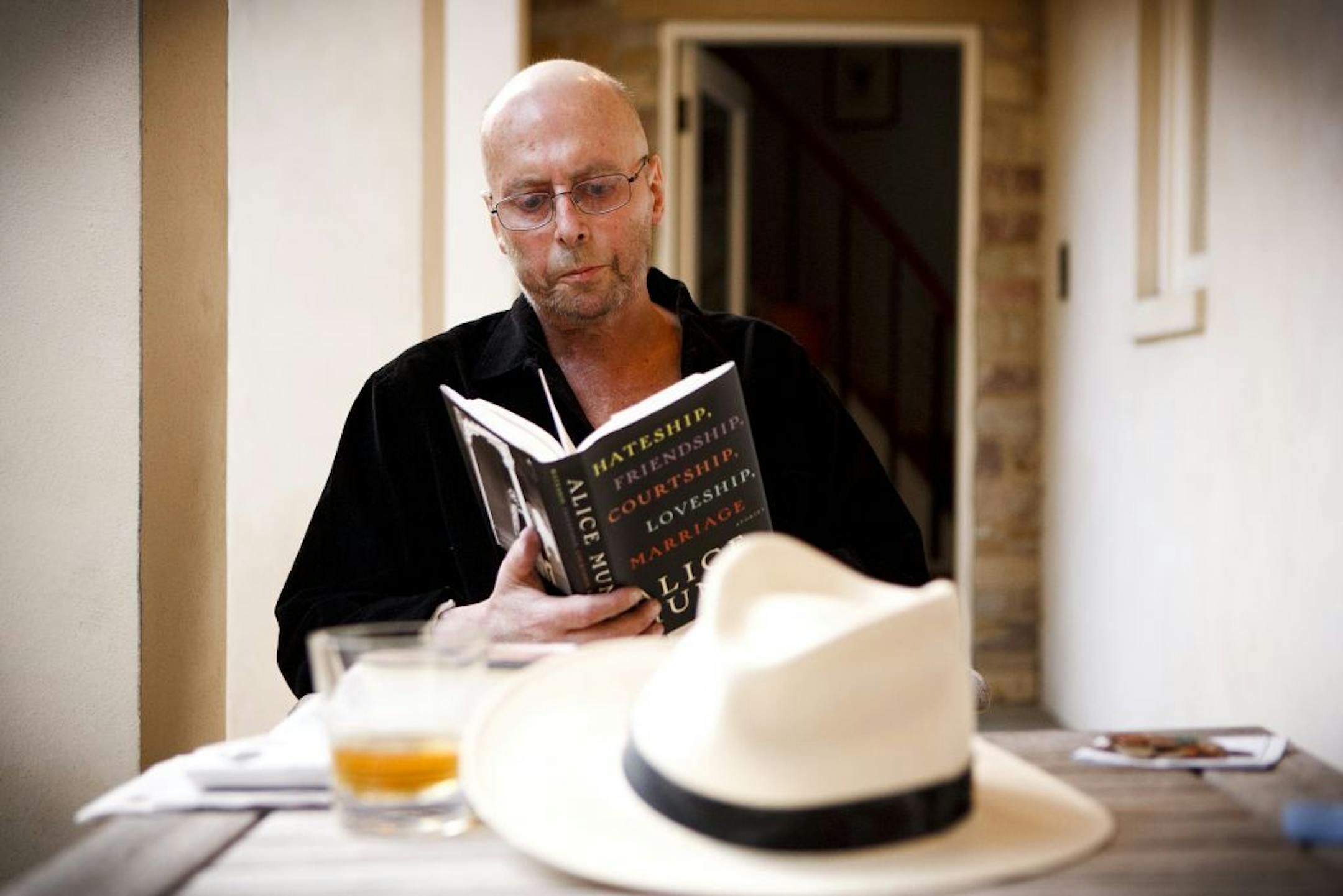
Cancer weakened but did not soften Christopher Hitchens. He did not repent or forgive or ask for pity. As if granted diplomatic immunity, his mind's eye looked plainly upon the attack and counterattack of disease and treatments that robbed him of his hair, his stamina, his speaking voice and eventually his life.
"I love the imagery of struggle," he wrote about his illness in an August 2010 essay in Vanity Fair. "I sometimes wish I were suffering in a good cause, or risking my life for the good of others, instead of just being a gravely endangered patient."
Hitchens, a Washington, D.C.-based author, essayist and polemicist who waged verbal and occasional physical battle on behalf of causes left and right, died Thursday night at M.D. Anderson Cancer Center in Houston of pneumonia, a complication of his esophageal cancer, according to a statement from Vanity Fair magazine. He was 62.
"There will never be another like Christopher. A man of ferocious intellect, who was as vibrant on the page as he was at the bar," said Vanity Fair editor Graydon Carter. "Those who read him felt they knew him, and those who knew him were profoundly fortunate souls."
He had enjoyed his drink (enough to "to kill or stun the average mule") and cigarettes, until he announced in June 2010 that he was being treated for cancer of the esophagus.
He was a most engaged, prolific and public intellectual who wrote numerous books, was a frequent television commentator and a contributor to Vanity Fair, Slate and other publications. He became a popular author in 2007 thanks to "God Is Not Great," a manifesto for atheists.
"Christopher Hitchens was everything a great essayist should be: infuriating, brilliant, highly provocative and yet intensely serious," said Britain's Deputy Prime Minister Nick Clegg. "I worked as an intern for him years ago. My job was to fact check his articles. Since he had a photographic memory and an encyclopedic mind, it was the easiest job I've ever done."
Long after his diagnosis, his columns and essays appeared regularly, savaging the royal family, reveling in the death of Osama bin Laden or pondering the letters of poet Philip Larkin. He was intolerant of nonsense, including about his own health. In a piece that appeared in the January 2012 issue of Vanity Fair, he dismissed the old saying that what doesn't kill you makes you stronger.


