

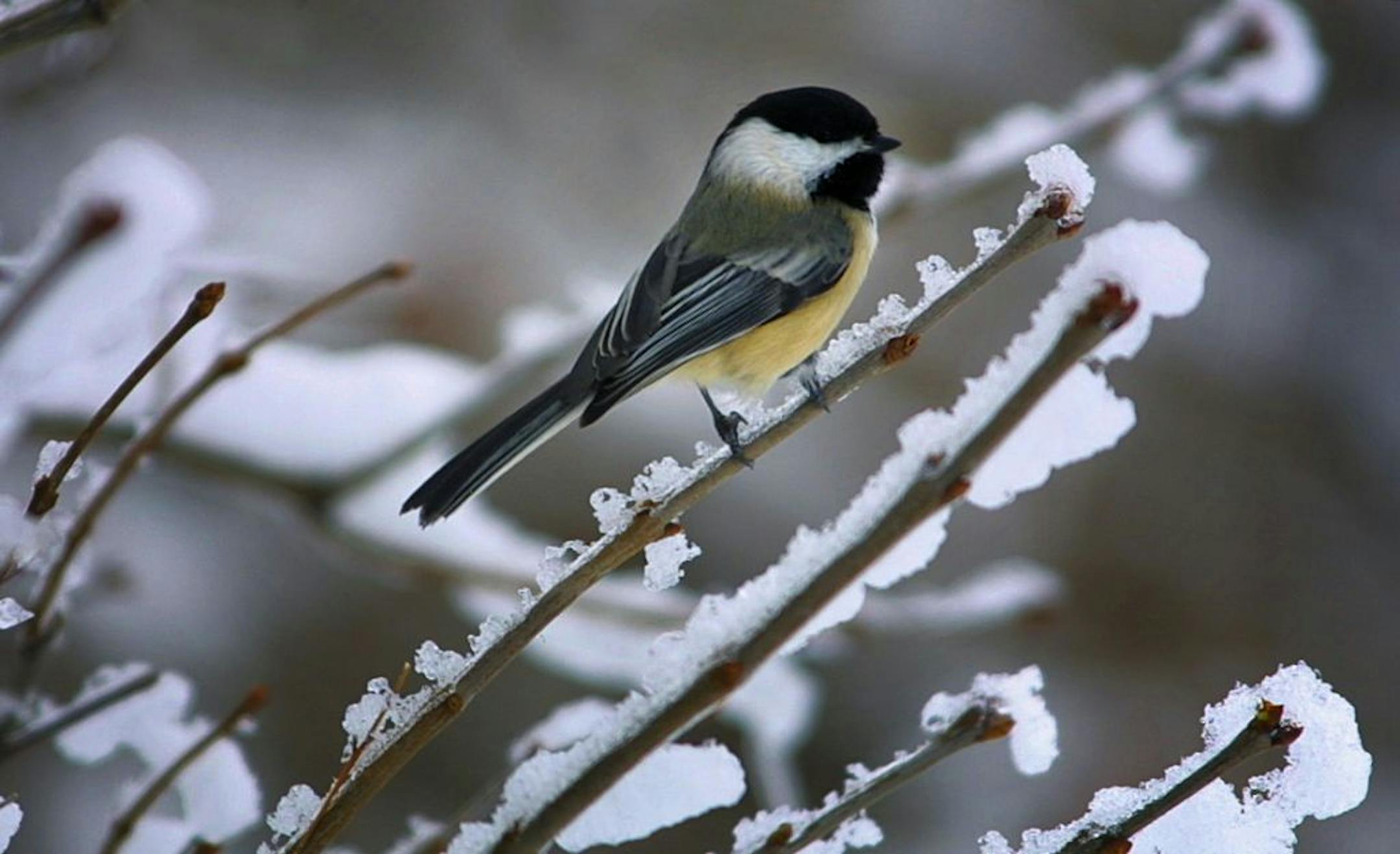
The number of chickadees coming to our feeders varies with my ability to count them. The best I've done is five, but there could be more. They nest in our yard, after all, and will raise seven or eight chicks at a time.
But chickadees wander in winter, usually living within a mile-wide circle. Winter flocks, when studied, had from six to eight members on average. They stay together through the winter, and flocks will re-form the following winter in the same area with the same members.
So, the chickadees using our feeders could be old friends by now, if I could tell one from another.
To lure a chickadee from preferred natural habitat -- wooded areas -- to feeders, you will do best if there are what biologists call "suitable avenues of approach." That means the bird would rather not fly a significant distance without the protection of cover. Feeders near trees -- the more trees the better -- are likely to be busier.
The birds' innate need for that protection is easily seen if you place nesting boxes in a variety of locations. I maintain boxes on a nearby golf course. If I want chickadees or house wrens to nest, the boxes must be placed adjacent to wooded areas. Cover counts.
Air temperature and wind speed also are factors in the birds' use of feeders. They prefer warmer air and low wind speed (duh). Our feeders catch winter sun from half an hour after sunrise to late afternoon. The feeders are sheltered from the north and northwest by woodland. I assume this helps attract birds to our yard.
Much of the information here comes from academic papers I've read recently. Some of the findings could be considered obvious (see air temp above), but science does not make assumptions.
So, as you'd suspect, when it's colder outside, it's been established by science that chickadees eat more. They also limit activity to save energy. Studies have found that daily energy expenditure and basal metabolic rate for chickadees will rise by almost 300 percent from summer to winter.


