

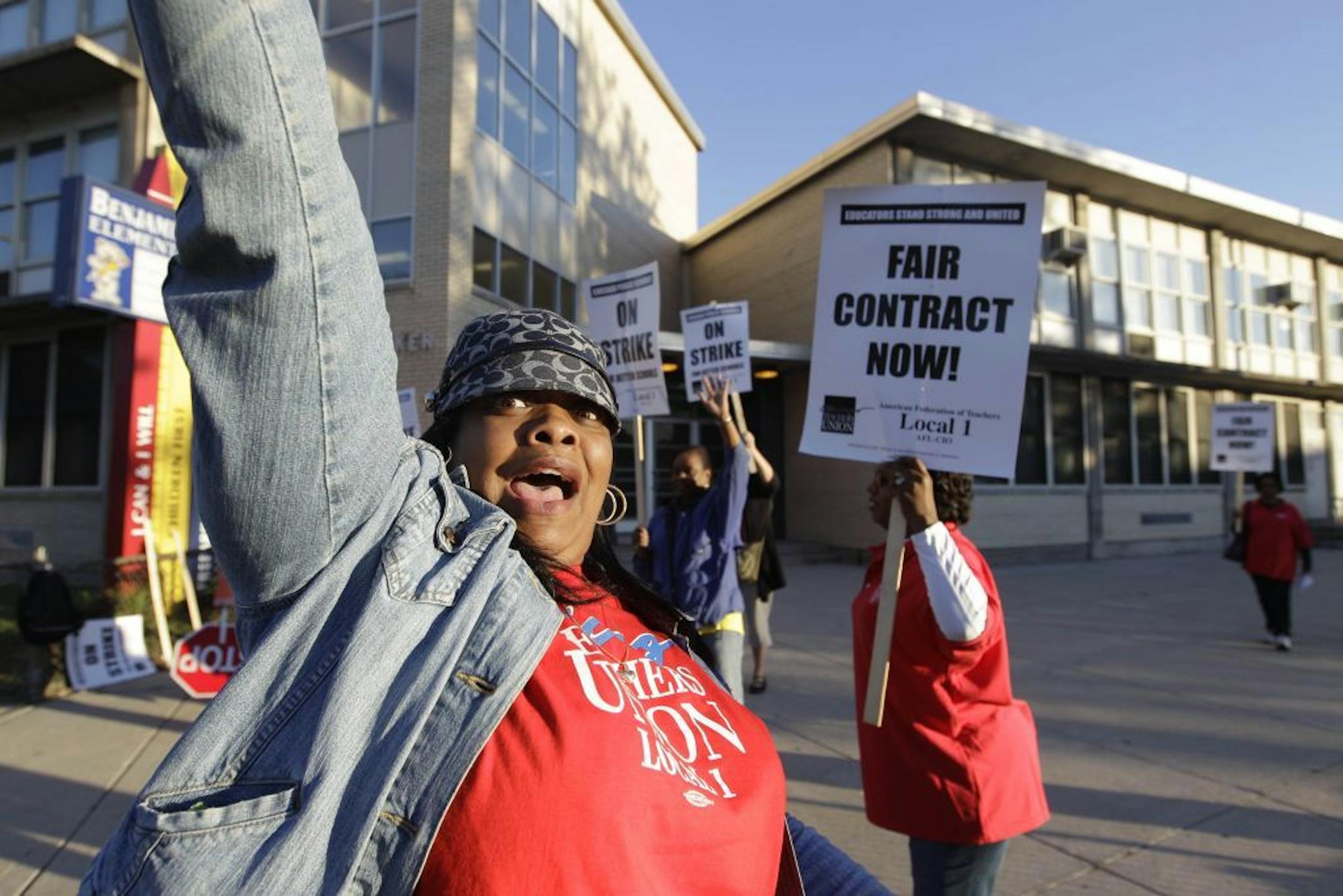
CHICAGO - Rose Davis wasn't about to let her two young grandchildren walk alone through one of the city's most violent neighborhoods, even though they were going to a school kept open for students who needed a safe haven while teachers walked the picket line.
So Davis, who has a painful diabetic condition that affects nerves in her legs, walked with them Monday the six blocks to Benjamin E. Mays Elementary Academy in Englewood — about five blocks farther than the school they normally attend — where they ate breakfast and lunch, read books, worked on computers and played games. She went back four hours later to escort them home.
"They had to go out of their home zone, and you never know what gang violence is going on on the other side of the zone," said Davis, 47, who said she will continue making the difficult trek until teachers return to the classroom.
But Davis and other parents and caregivers who scrambled Monday to figure out what to do with more than 350,000 idle children must do it all again Tuesday — and perhaps longer — after the teachers union and district failed to reach a settlement to end the first strike in a quarter century.
Chicago School Board President David Vitale said he thought an agreement could be reached on Tuesday. But Chicago Teachers Union President Karen Lewis sounded less optimistic, saying the district has not changed its offers on the two most contentious issues, performance evaluations and recall rights for laid-off teachers.
The walkout — less than a week after most schools opened for fall — has created an unwelcome political distraction for Mayor Rahm Emanuel. In a year when labor unions have been losing ground nationwide, the implications were sure to extend far beyond Chicago, particularly for districts engaged in similar debates.
"This is a long-term battle that everyone's going to watch," said Eric Hanuskek, a senior fellow in education at the Hoover Institution of Stanford University. "Other teachers unions in the United States are wondering if they should follow suit."
The union had vowed to strike Monday if there was no agreement on a new contract, even though the district offered a 16 percent raise over four years and the two sides had essentially agreed on a longer school day. With an average annual salary of $76,000, Chicago teachers are among the highest-paid in the nation, according to the National Council on Teacher Quality. But some teachers said raises were less important to them than other issues.


