

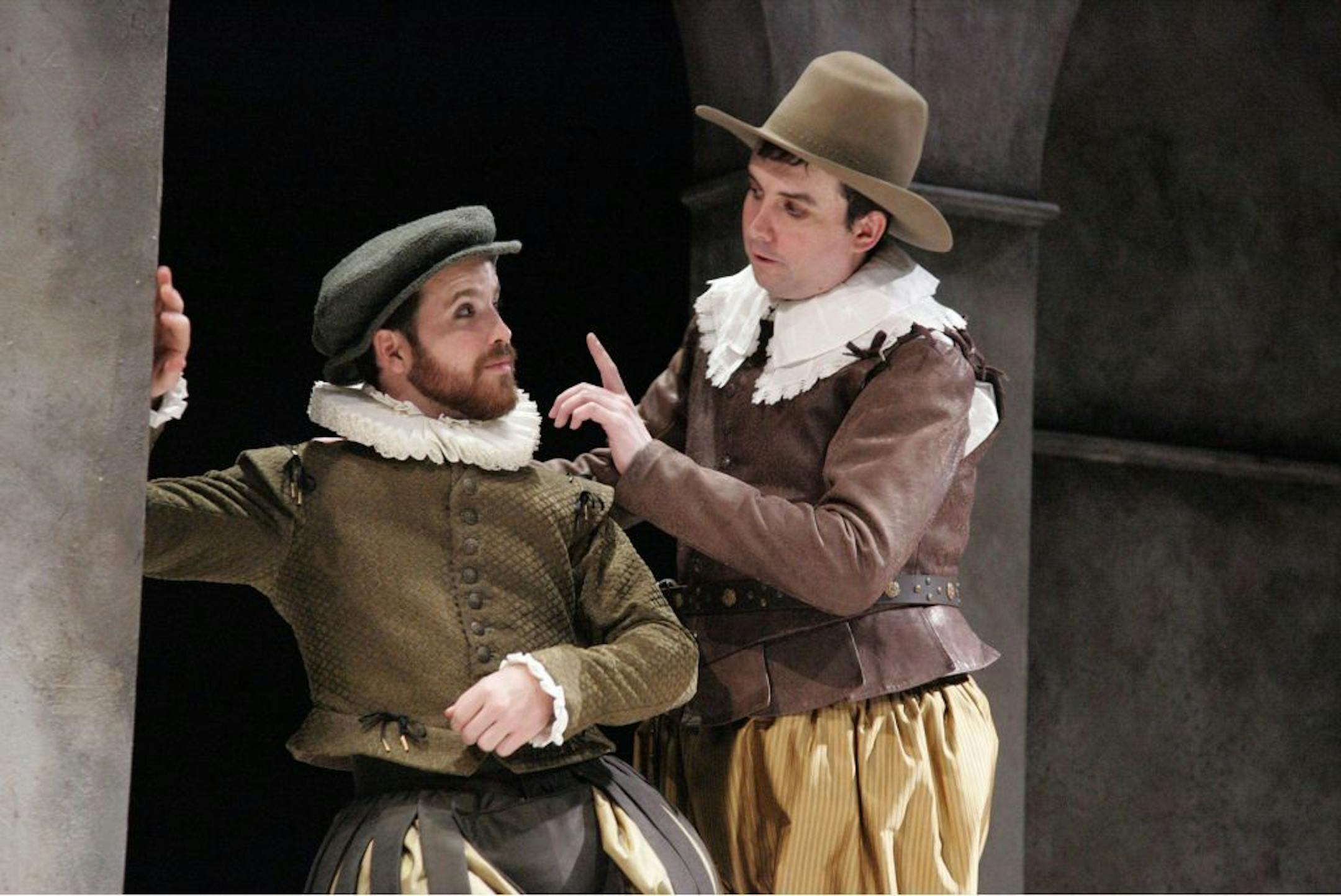
The Acting Company has arrived again this spring at the Guthrie. In a partnership that dates to 2009, the New York-based troupe (which includes several Guthrie BFA alums) brings a Shakespeare tour to town.
This year, the company has muscled up, producing "Rosencrantz and Guildenstern Are Dead," in repertory with "Hamlet."
Tom Stoppard planted his flag in the theatrical firmament with "Rosencrantz" in 1966. Drawing from the simple line at the end of "Hamlet" that announces the death of the prince's friends, Stoppard produced a work that explores fate and certainty. He brings to life fictional characters who have no say over their future. His point, of course, is that none of us does.
The play owes as much to "Waiting for Godot" as it does "Hamlet." Actors Ian Gould and Grant Fletcher Prewitt portray two bewildered souls wondering what forces have brought them to this blank slate of existence. Gould, with a long dour look, makes intellectual inquiry into the game of chance that is life. But he is vexed when he sees that something odd is happening: Mere chance seems to have been replaced by a certain future. In other words, something really is rotten in the state of Denmark, and Guildenstern can smell it.
Prewitt's Rosencrantz is more at ease in his skin, willing to smile and ride with the tide. As the two flip coins and it comes up heads — 96 times in a row — he shares none of Guildenstern's wary skepticism. He just considers it happy luck.
Along with his existential quest and absurdist play architecture, Stoppard draws tightly a comparison between theater and life. Is the way we perceive reality influenced and determined by what we see in fiction? All the world is a stage, right?
The playwright also reduces "Hamlet" from a mythic persona to a rather small figure in his own story. Rosencrantz and Guildenstern were, after all, brought to Elsinore to talk with Hamlet and find out what is going on in that boy's head. In his own play, Hamlet clouds his thoughts in eloquence. Guildenstern and Rosencrantz are blunt and direct.
"Let's see," says Guildenstern. Hamlet's father was assassinated, and, despite the prince being of age, his uncle usurps the throne and marries Hamlet's mother. Young Hamlet consequently is scared.


