
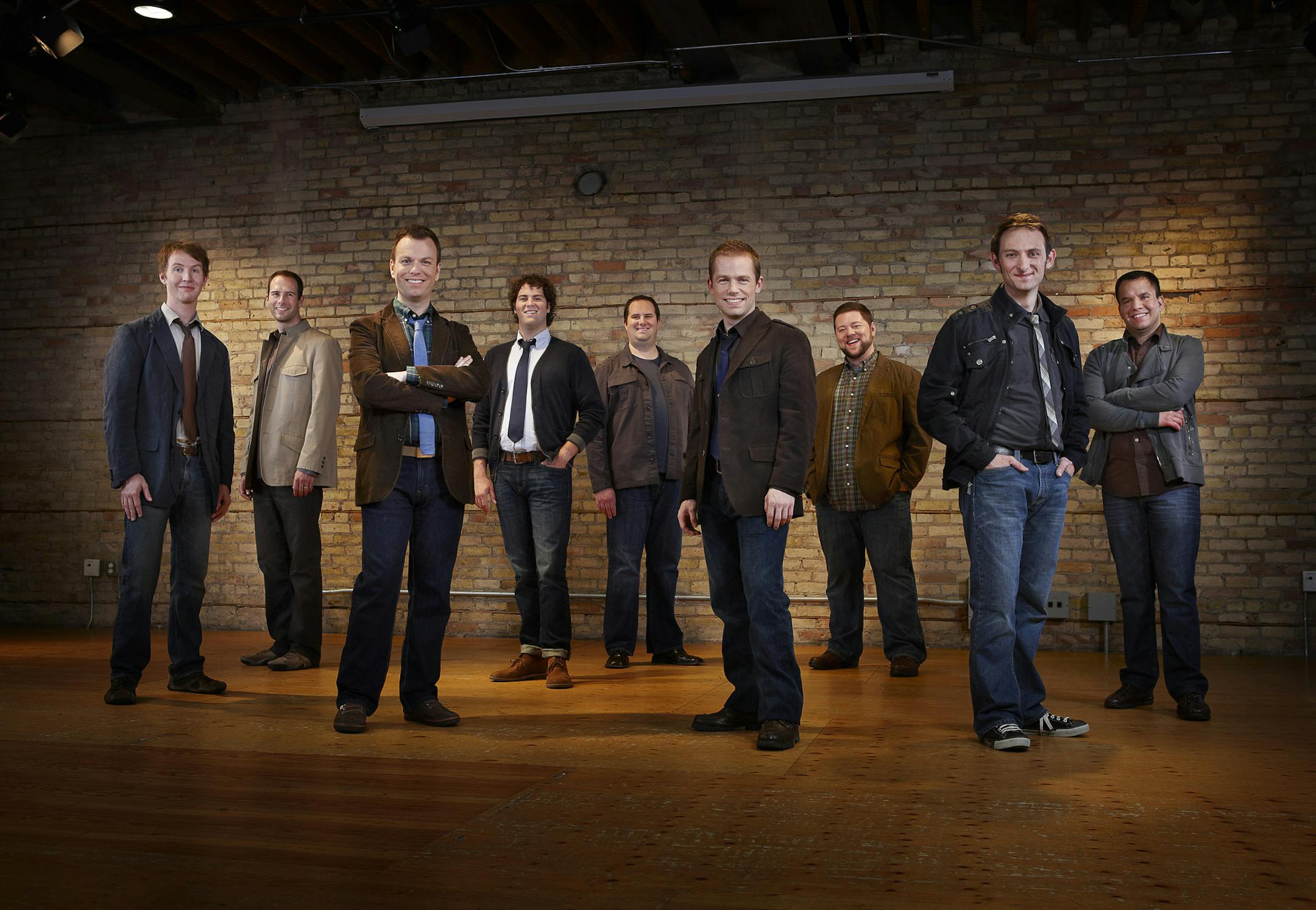
Cantus songs survey the Dvorak influence

The choral ensemble argues that the composer helped the New World find its classical voice.

For the Minnesota Star Tribune
March 15, 2014 at 1:20AM
Cantus
Cantus (The Minnesota Star Tribune)

A series of pianissimo chords hung tremulously in the air of the Cowles Center in Minneapolis on Thursday night. The familiar theme of Antonin Dvorak's Symphony "From the New World" was sung as the haunting opening of Cantus' spring concert, "Dvorak: Going Home."

The program supplemented works by Dvorak with works by composers who had influenced him (Smetana, Brahms, Tchaikovsky and Wagner), and those who had been influenced by him (Gershwin and Copland).

It was Cantus' contention that Dvorak helped America find its classical voice, and the second half tried to bear that out.

From time to time, the singers got too carried away by all the connections they were making. The extensive introductions began to feel like ­lectures. At one point, I leaned to my companion and wondered, "Will there be a test?"

As usual, the diction, in Czech, German, Russian and English, was flawless, as was the remarkable dynamic control. A crescendo in the "Pilgrim Chorus" from Wagner's "Tannhäuser" sounded much larger than the nine members.

Occasionally, Cantus focused too much on vocal production, making Dvorak's settings of Lithuanian folk texts sound too elegant and refined. Better if it had been earthier, more raw.

In 1892, Dvorak became artistic director of New York's National Conservatory of Music in America. He saw the purpose of his time there to help America create "a national style of music."

Most interesting, here, were arrangements by Harry T. Burleigh, Dvorak's assistant at the school and the son of slaves. Burleigh gave Dvorak many of the spiritual melodies that went into the "New World" Symphony.

Songs by Gershwin and Copland were included because Dvorak had taught the man who had then taught them. I'm not sure Cantus proved its argument about Dvorak's influence on American music, but the music itself was reason enough for the programming.

Also featured was "Eventide," a world premiere by Dvorak enthusiast Byron Adams, setting a poem by Henry Wadsworth Longfellow, one of Dvorak's favorites. It was a competent effort, but missed the sadness embodied in the text.

The concert came full circle, ending with "Going Home," a setting of a melody from the "New World" Symphony. It was a highlight of the evening, ending on a note of sublime melancholy.

William Randall Beard writes about ­music and theater.

about the writer

about the writer

WILLIAM RANDALL BEARD

More from Minnesota Star Tribune

See More
card image
J. SCOTT APPLEWHITE, ASSOCIATED PRESS/The Minnesota Star Tribune

The "winners" have all been Turkeys, no matter the honor's name.

In this photo taken Monday, March 6, 2017, in San Francisco, released confidential files by The University of California of a sexual misconduct case, like this one against UC Santa Cruz Latin Studies professor Hector Perla is shown. Perla was accused of raping a student during a wine-tasting outing in June 2015. Some of the files are so heavily redacted that on many pages no words are visible. Perla is one of 113 UC employees found to have violated the system's sexual misconduct policies in rece