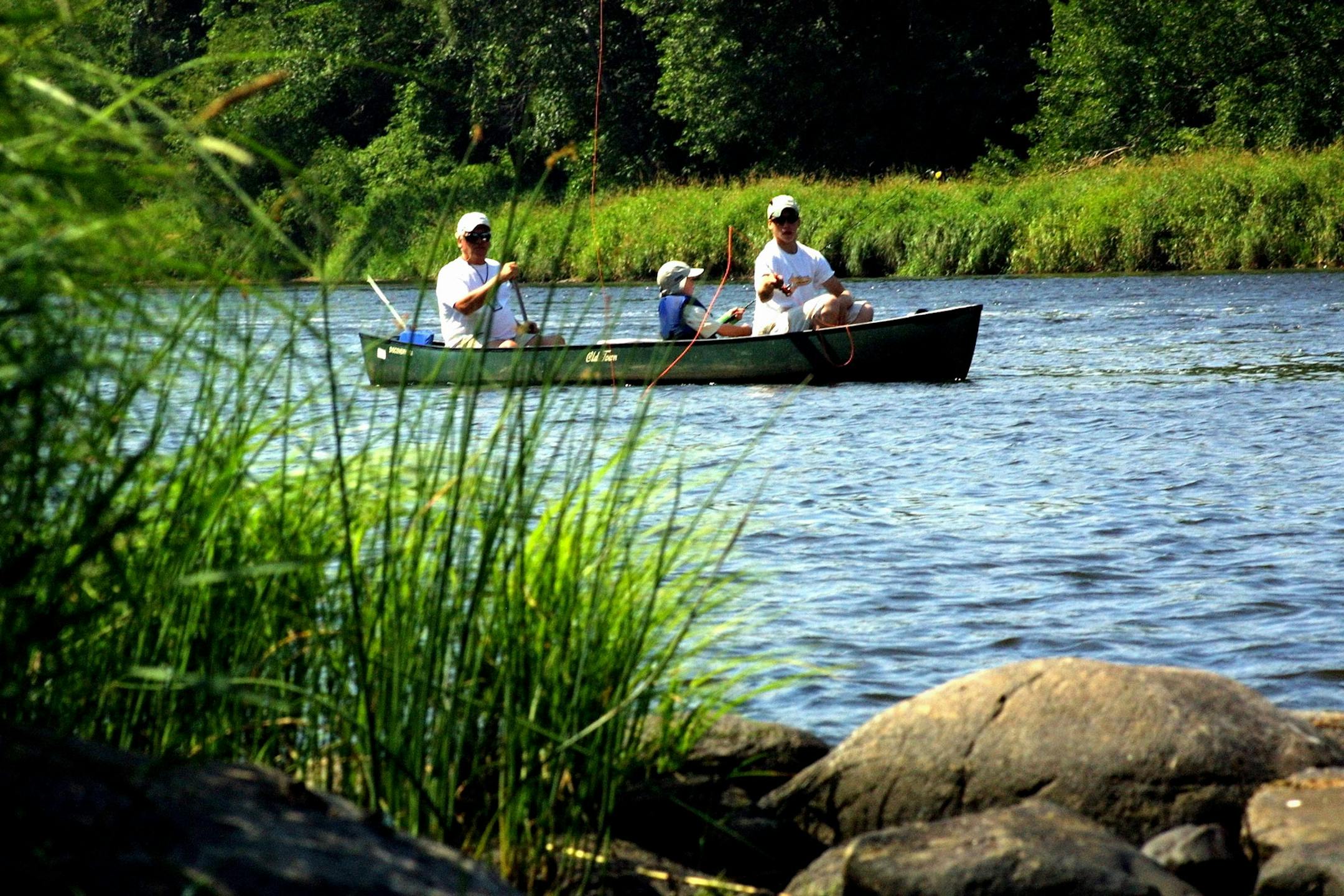
Drifting down the St. Croix, we came upon three kayakers. Two were in an eddy, where a man gave advice to a woman whose boat teetered on a rock. Not far away, another paddled a kayak with not one but two rods -- a fly rod and a spinning rod -- sticking upright like masts, and such an array of gear lashed to his deck that his boat looked like a world-traveling sailboat.
This was his first trip down the river, he said. "We're pleasantly surprised. You're the first people we've seen."
We were pleasantly surprised as well, for the fisherman and his crew were among the few people we had seen -- even though it was a weekend in mid-July, peak of the season.
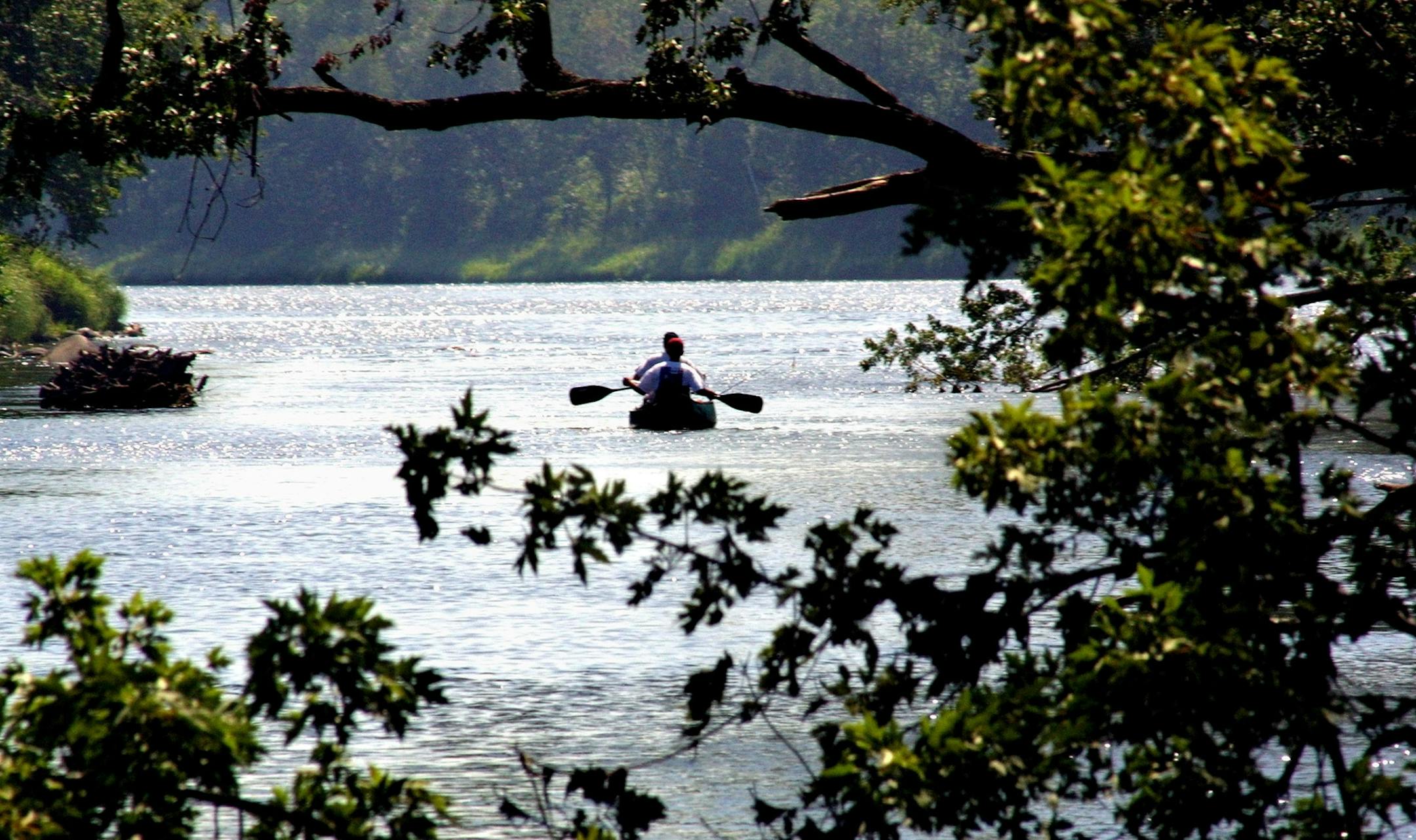
We might as well have been on a river far to the north. But we weren't. My wife, Susan, and two friends had slipped our canoes into the river at Hwy. 70 west of Grantsburg, Wis., just an hour and a half north of the Twin Cities. We had parked our friends' car at the Nevers Dam Landing on the Wisconsin shore, 26 miles downstream. We planned to float and fish a few miles, camp overnight along the river, and reach their car the next day.
The St. Croix and its Wisconsin tributary, the Namekagon, are the only components of the national wild and scenic rivers system in Minnesota or Wisconsin. Over the years, I had paddled the swift rocky reaches of the St. Croix near Gordon Dam, and the roller coaster waves of the river near the confluence with the Kettle River. I had floated on the near-continuous current of the Namekagon near Trego, Wis. But it had been 20 years since I had paddled this deeper, slower stretch of the river, and I had forgotten how pretty it was.
We bobbed down broad riffles through clots of islands. We saw hardly any cabins or homes or any other development, just a solid screen of pine and hardwoods. Occasionally we scrubbed against rocks, usually because we were fishing and not paying attention. And the fishing was better than I remembered. Susan and I laid fly-rod poppers and streamers along the bank and in the deeper runs in the riffles, where smallmouth bass hammered them and tail-walked on the water.
Through the afternoon, overcast turned to sprinkles. Then the sky opened. Lightning, thunder and strong winds drove us to an island, where we rushed to set up a tarp to shield us from the heavy rain. As the tarp strained against the wind, a stake occasionally flew from the soft sand, and I'd scramble around to find it and sink it back into the ground. A small group of the wettest kayakers I had seen paddled by and disappeared again into the gray rain. After an hour, the rain abated, the clouds broke apart, and the sun shone.
Back on the river, we floated through the afternoon. Then we found a campsite, a grassy opening beneath a spreading oak where we set our tents and roasted bratwurst over a campfire.