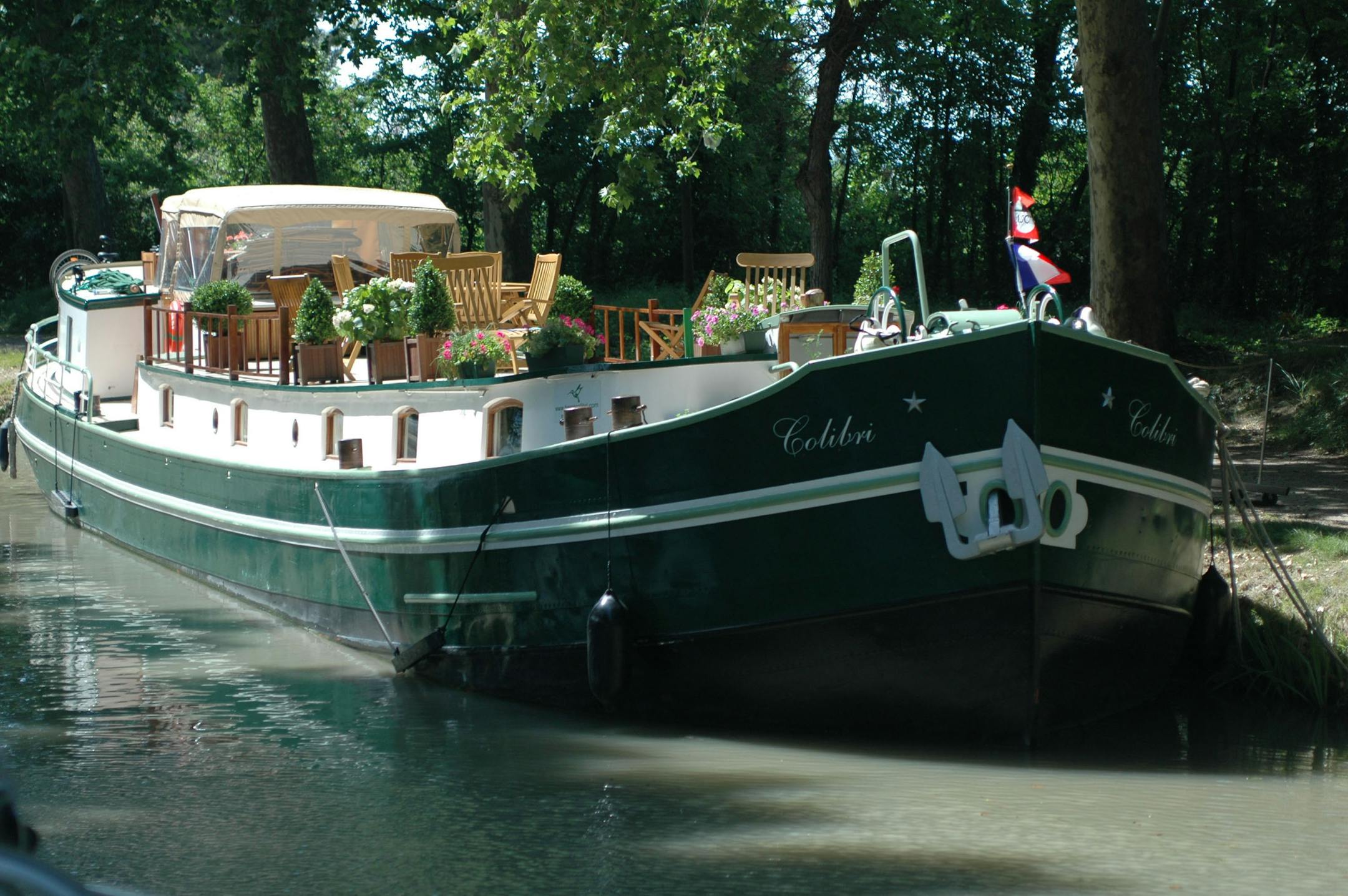
Try this once in your life: Stand on a boat as it moves slowly down the narrow waterway of a foreign country. The world passes by, close and observable, and you watch it with a sense of elevated station. The clarity, the buoyancy, the cushiness make you feel privileged in a way even the sportiest rental car can't. You have moved from tourist to grand marshal. I did this last June with my wife, Hania, and our friends Donnette and Graham from Chicago and their friends Dan and Barb from Melbourne, Fla. We picked up our boat from Rive de France in the little town of Colombiers on the Canal du Midi in the south of France. The port was full of what looked like pleasure boats: gleaming white 42-footers with pointed bows. Our model had two steering wheels: one inside and one outside, which is where you want to be if the weather is good. It also had three cabins and three heads.
Because both Graham and Dan were longtime boaters and their wives excellent cooks, we had no need of a crew. (Hania and I would serve as interpreters.) Once underway, a village floated by; a bridge crept up and made us all duck. The movement was as lovely as that of a ship -- contemplative and unhurried -- but with the added advantage that everything was at eye level. Those first few kilometers were a revelation, and I wondered why everyone didn't see France in this fashion.
'
We reached the first town, Capestang, a little before 7, and pulled in front of a long row of boats, including a couple of old-fashioned barges. It was an idyllic spot: shaded, just beyond an old stone bridge and a waterfront cafe. This is the other nice thing about a boat: You see a fine location and you install your hotel.
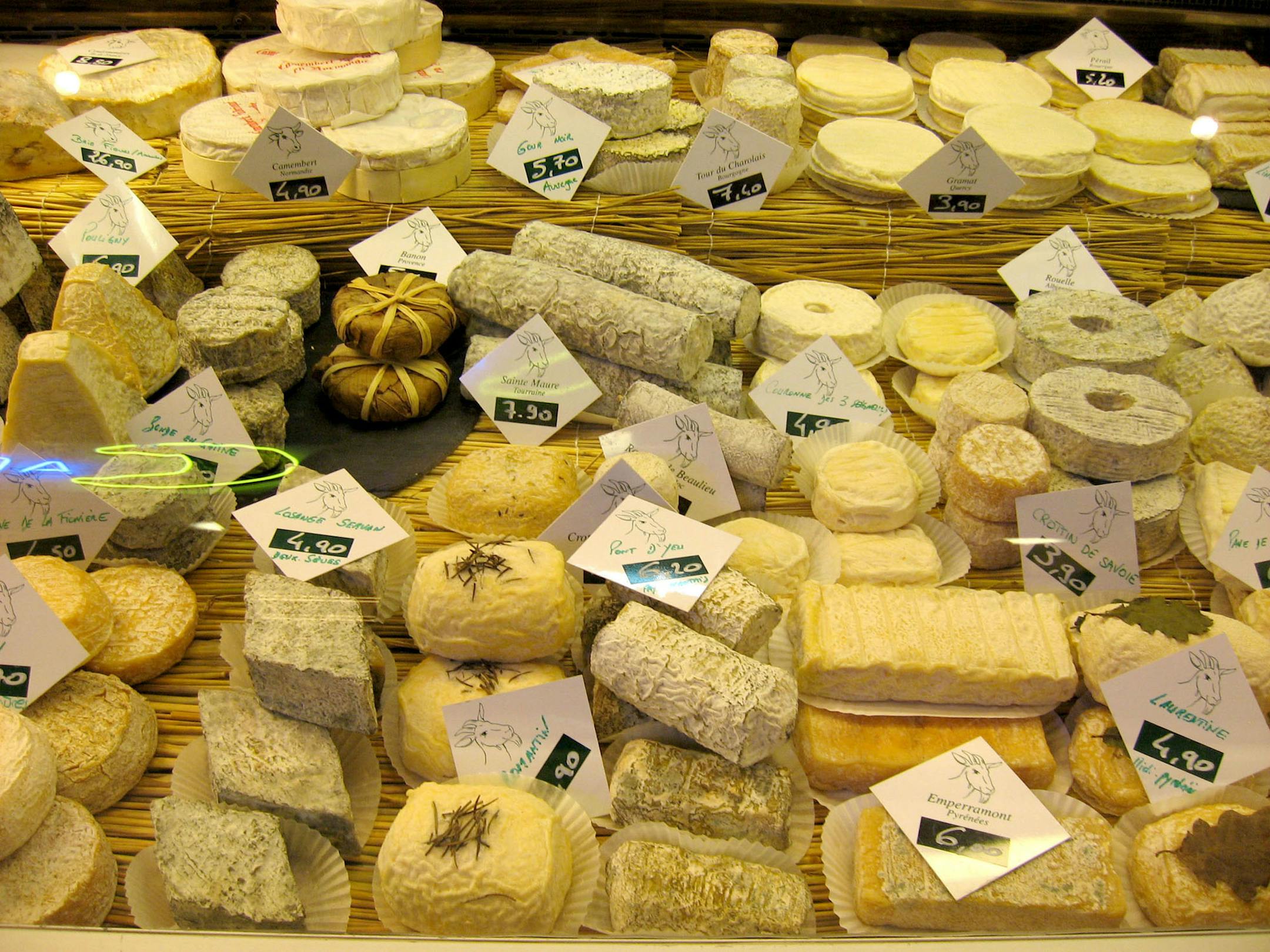
The table on the open deck soon filled with sausages, cheeses, bottles of rosé. What a change from your usual arrival in a new town: the search for lodgings, the stares from locals. Dan sat back with his glass of wine (Barb had packed two wine glasses in her suitcase) and announced: "It's nice to be king."
We crossed the bridge and headed into town. It was the first in a series of quaintly drab settlements drained of life. It was hard to tell if this was the result of depopulation or simply French disinclination toward public life.
We stopped by a restaurant cave and bought two bottles of rosé from a smiling waitress.
In the morning, a community yard sale -- vide grenier (empty the attic) -- stretched along the canal. The table in front of our boat had boxed LPs of Charles Aznavour, Jacques Brel, Edith Piaf. We bought a roasted chicken (plucked from its spit) and roasted potatoes with a little sack of gravy; olives and tapenade; local cheeses from a man whose white sideburns dramatically and luxuriantly connected to his mustache. Then we carried our booty back to the boat.