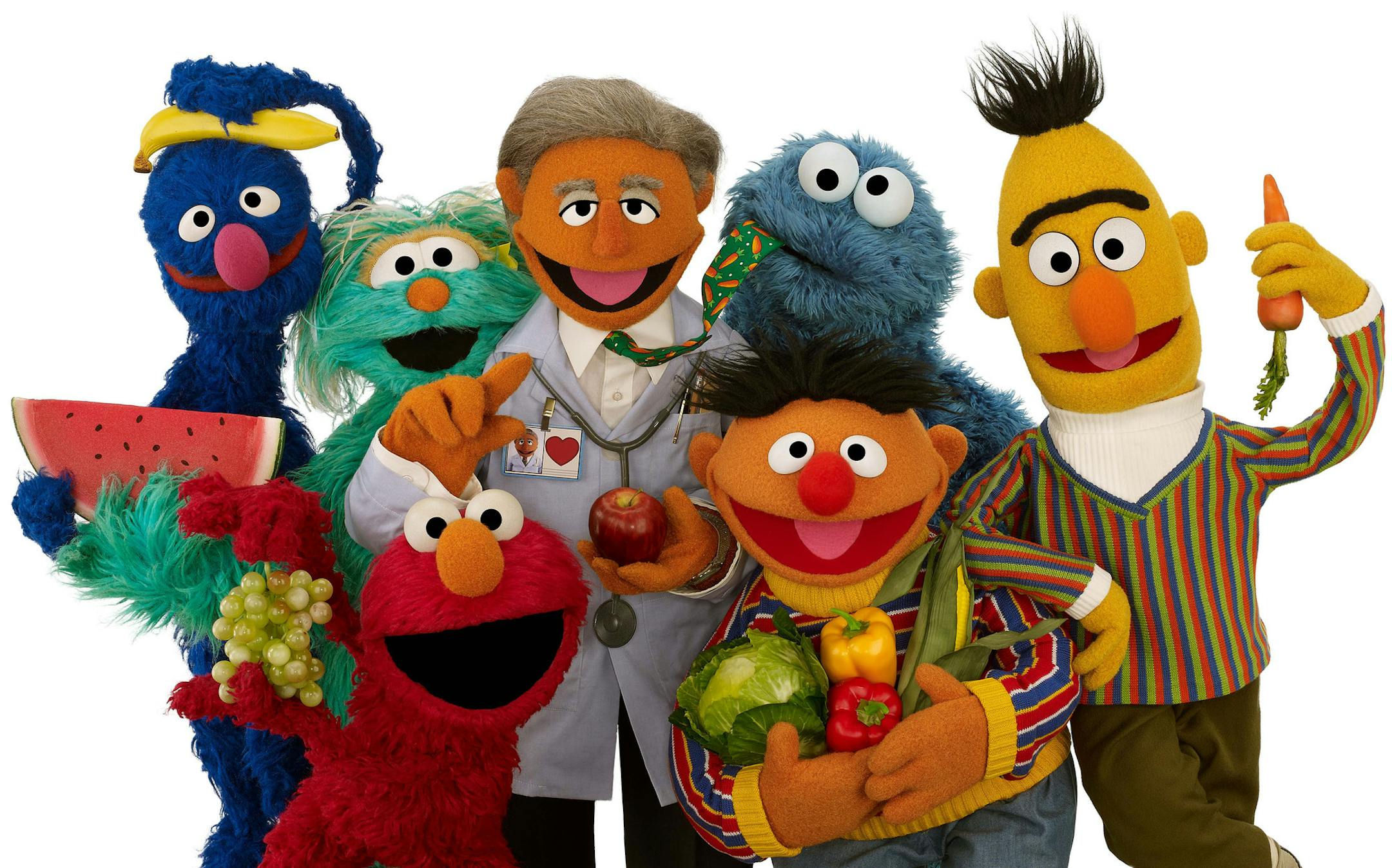
Bert and Ernie jump rope and munch apples and carrot. Cookie Monster has his namesake treat once a week, not every day. Can a Muppets mini-makeover improve kids' health, too?
A three-year experiment in South America suggests it can. Now, the "Sesame Street" project is coming to the United States.
Already, a test run in a New York City preschool has seen results: Four-year-old Jahmeice Strowder got her mom to make cauliflower for the first time. A classmate, Bryson Payne, bugged his dad for a banana every morning and more salads.
"What we created, I believe, is a culture" of healthy eating to fight a "toxic environment" of junk food and too little exercise, said Dr. Valentin Fuster, a cardiologist at New York's Mount Sinai Hospital.
Six years ago, he started working with Sesame Workshop, producers of television's "Sesame Street," on a project aimed at 3- to 5-year-olds.
"At that age they pay attention to everything" and habits can be changed, he said.
A clear need to do something
The need is clear: A third of U.S. children and teens are obese or overweight. Many don't get enough exercise, and a recent study found that kids' fitness has declined worldwide. They're at high risk for heart and other problems later in life.
"The focus is younger and younger" to try to prevent this, said Dr. Stephen Daniels, a University of Colorado pediatrician and a spokesman for the American Heart Association. The group's annual conference featured Fuster's experiment as one of the year's top achievements in heart disease prevention.