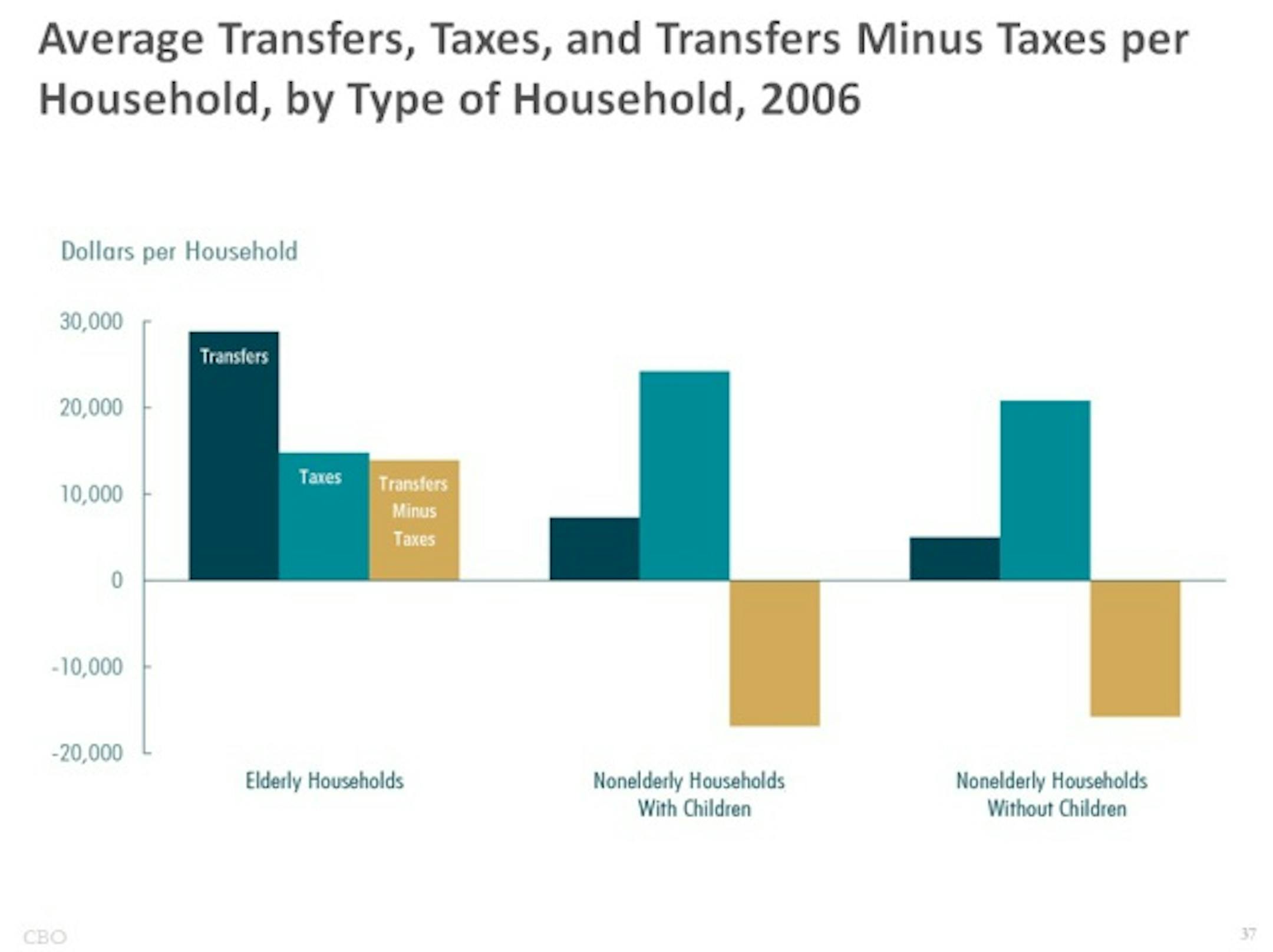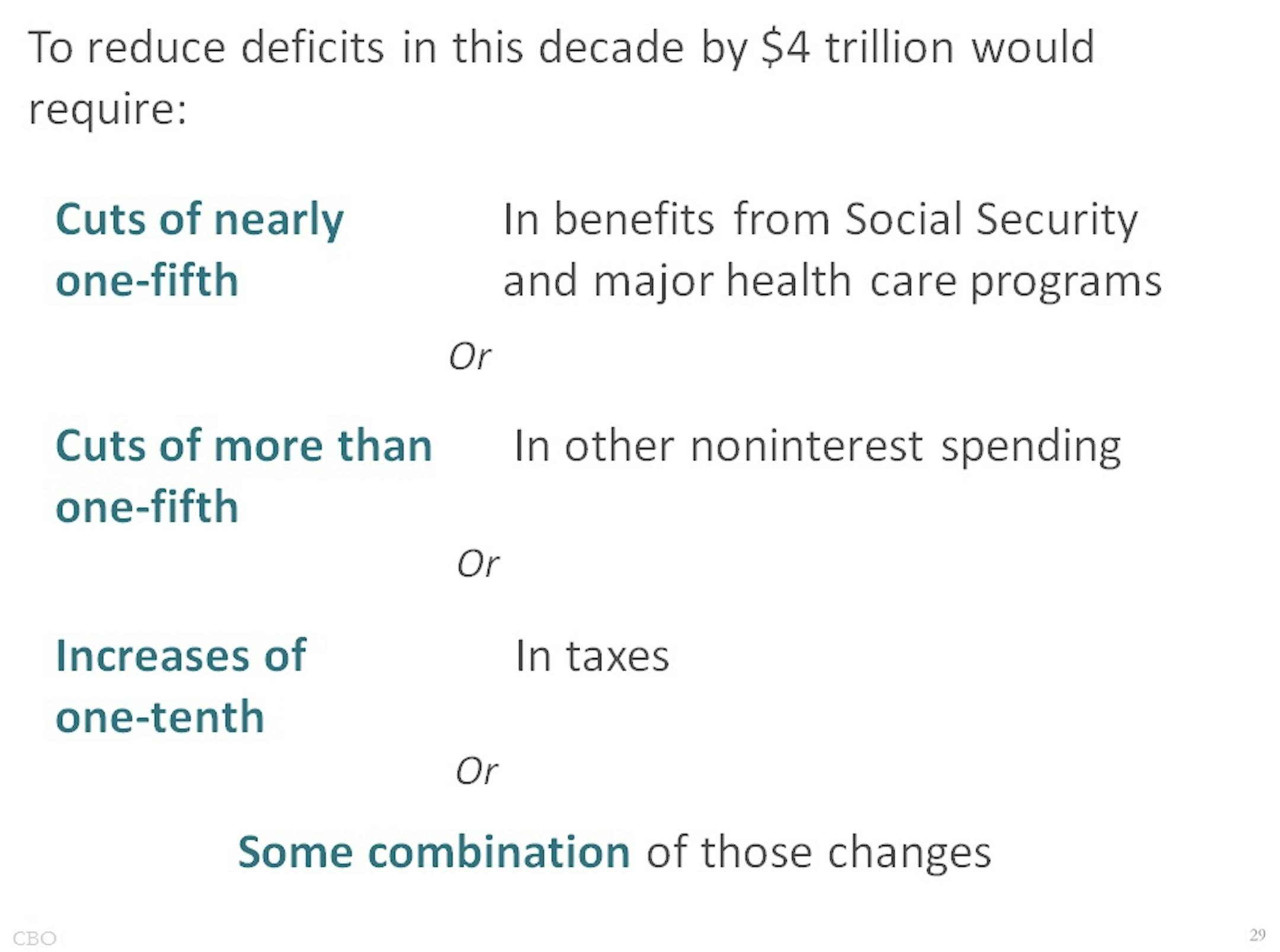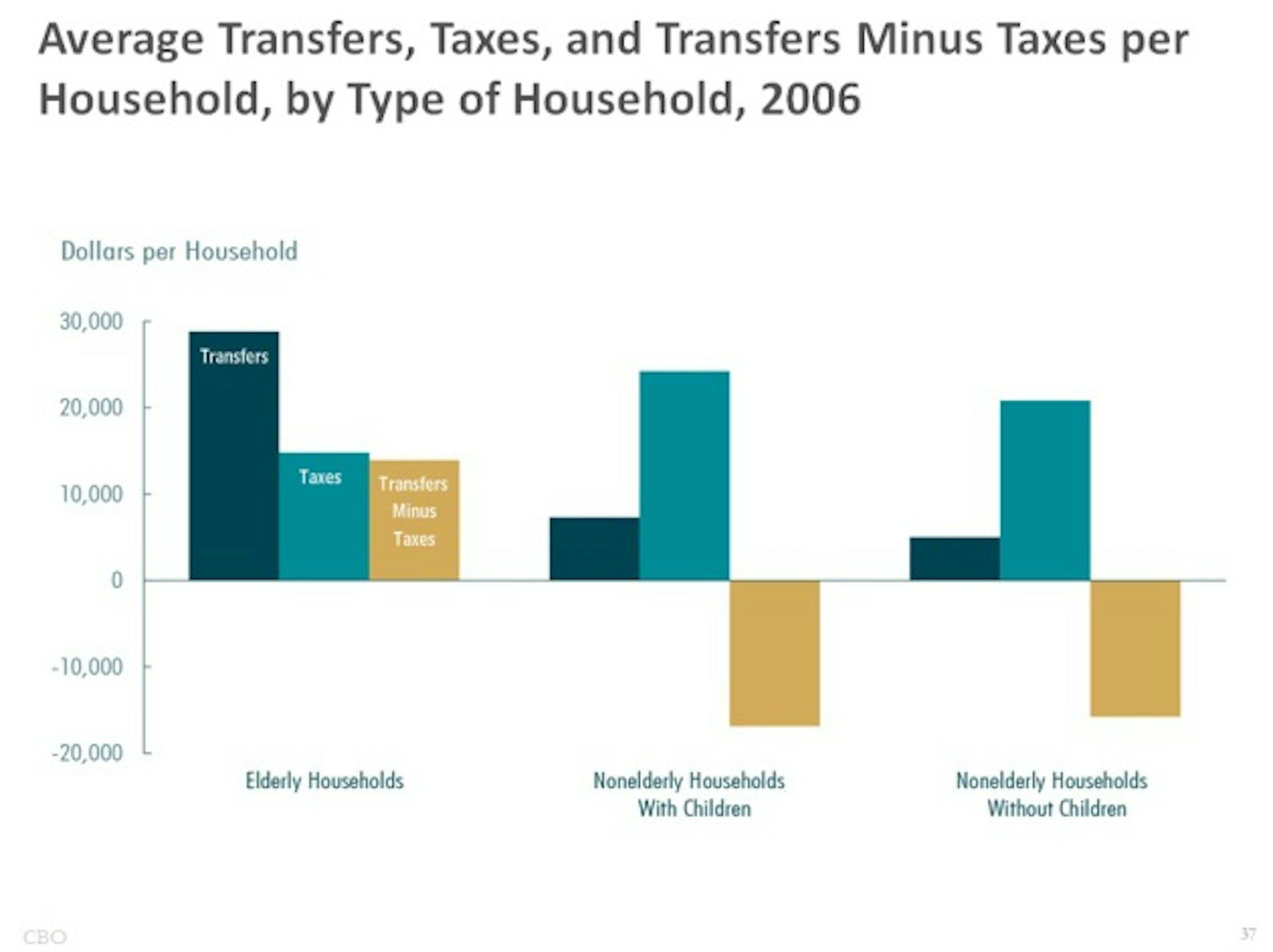
Doug Elmendorf, the head of the Congressional Budget Office, came to Minneapolis to speak to the Economic Club of Minnesota on Thursday. He was armed with slides and data, and his message was that the federal budget, thanks mostly to growing spending on older citizens, is on an unsustainable path.
No big surprise, right? We know that. The national debt is $16 trillion and growing.
But the clear nature of the problem is what might surprise you: The nation's budget problems are exclusively about old people, health care, and paying interest on the national debt.
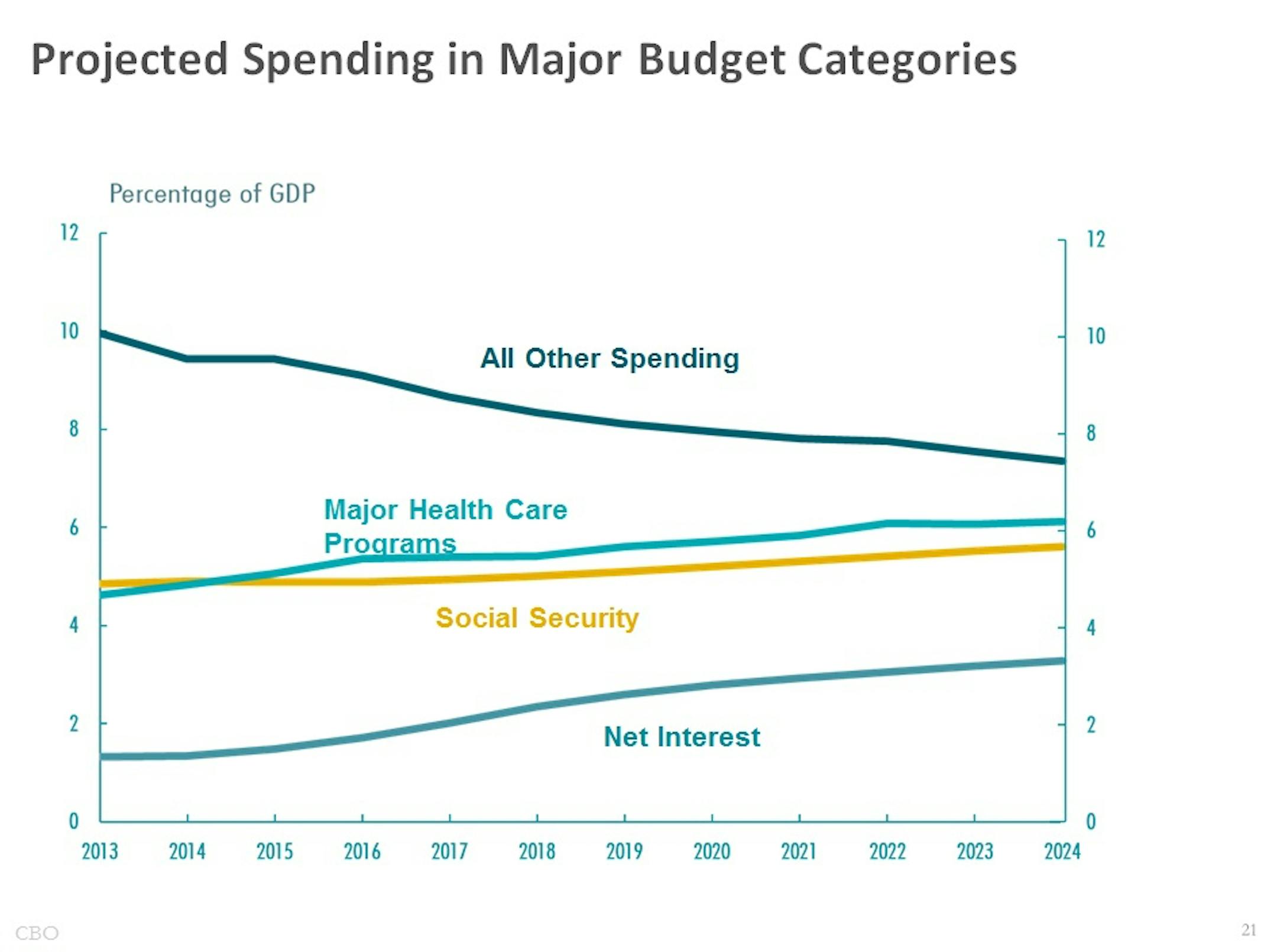
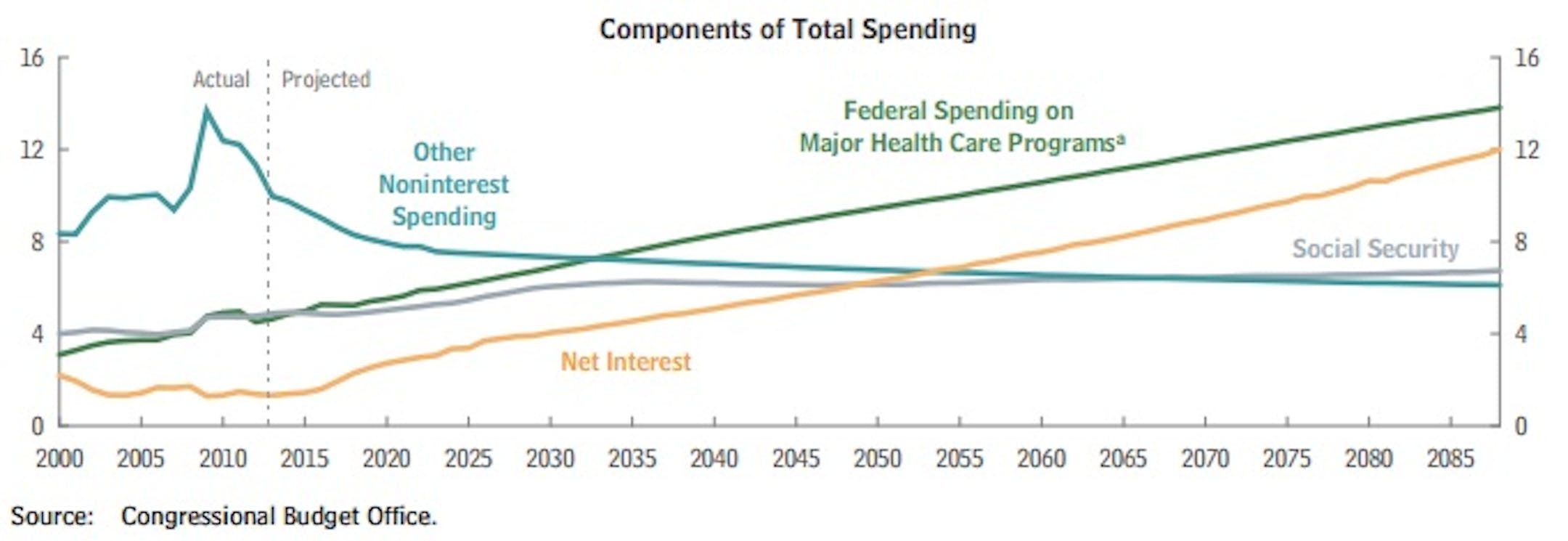
The amount of government spending is actually projected to shrink in coming decades as a percent of GDP, with the exception of three categories, and they completely tip the balance: health care spending, interest payments on the debt, and Social Security.
The growth in health care spending is happening, by the way, with or without Obamacare.
As John Spry pointed out to me, the long-term outlook is even scarier, and the problem clearly becomes health care spending and net interest payments. By 2090, the two categories together will equal nearly 30 percent of GDP annually:
And solving this impending crisis is going to require some hard choices.
"The nation has not made the fundamental choices about the federal budget that it needs to make," Elmendorf told the Economic Club of Minnesota on Thursday. "Sometimes we talk about the lawmakers not making choices, but more fundamentally we as citizens have not made these choices. And because these choices have not been made, the federal debt remains on an unsustainable path."