

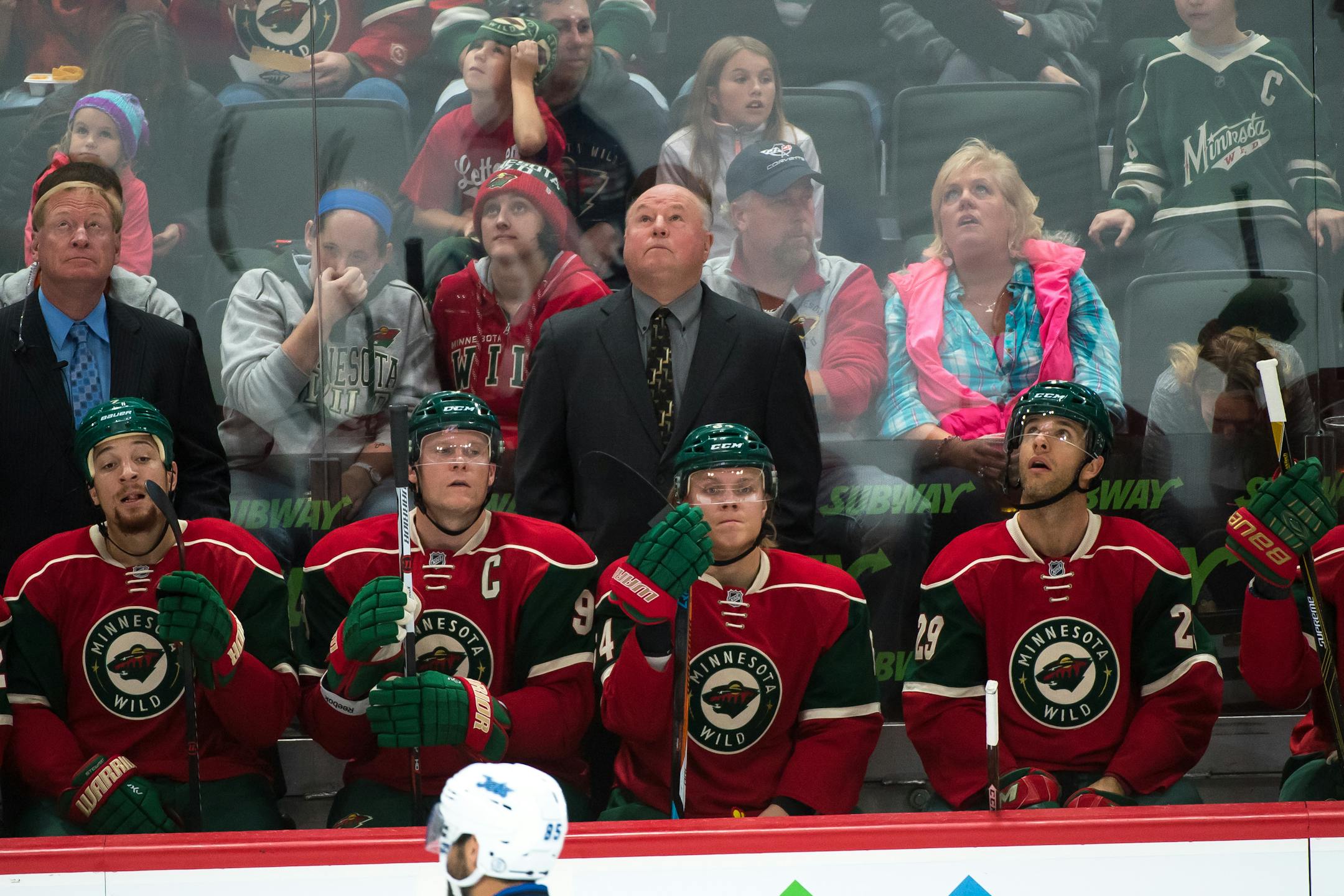
ST. LOUIS – Running a bench is a lot more complex than when the Wild's Bruce Boudreau and the St. Louis Blues' Ken Hitchcock began coaching.
"There's a lot of things in our game that are becoming really critical and really important that didn't exist years ago," said Hitchcock, who on Thursday beat the Wild for his 759th regular-season victory, fourth most all-time. "Some of it is the players you lose because of the new concussion protocol, some of it is making the right call on the bench with the right information on challenges.
"There is a lot of responsibility on the coach that didn't used to be. You need a lot of people working together just for me to get the information."
Coach's challenges were introduced last season. Coaches get one a game to contest goals that may have been scored due to goalie interference or after a player entered the zone offside. If you're wrong, you lose your timeout.
Referees still have the final say on goalie interference by way of a monitor in the penalty box, but this season, the Toronto Situation Room will make the majority of offside rulings to speed up the process. Also this season, instead of relying on a video coach radioing the bench on potential challenges, all benches are outfitted with monitors for coaches to personally look at replays.
"Anything to make it easier to detect will be good," Boudreau said.
The concussion protocol is tweaked. It remains each team's responsibility to identify a player who requires removal from play for a possible concussion, but the NHL has hired a staff of Central League Spotters (certified athletic trainers who have worked in elite level hockey) who will monitor all games from the Player Safety room in New York.
They are authorized to require a player's removal if he exhibits certain visible signs of a concussion following a direct or indirect blow to the head. In-arena league-hired spotters and on-ice officials will complement the Central League Spotters.


