3:14
3:14Seated amid the office-space denizens rushing in and out of the City Center Starbucks, Brother Ali at once looks more out of the ordinary than usual, but somehow more anonymous. The downtown Minneapolis coffee shop is a good place to not get recognized as one of Minnesota's famous rappers.
Or infamous, some might now say.
"I just got a message from a guy on Facebook who served in Afghanistan," he says, looking up from his smartphone, where he's also checking the number of YouTube views for his controversial new video (50,000 in just a few days). Solemnly, he says, "The dude said he's coming out to the Boston show to drop me on my face."
Welcome to Brother Ali's world circa 2012. His sales and page views are as strong as ever, and so are his personal convictions. He was arrested for them in June at an Occupy Homes protest. He aired them on the Huffington Post three weeks ago in a widely debated essay, "The Intersection of Hip-Hop and Homophobia."
Mostly, though, Ali poured those pesky morals all over his provocative fourth album, "Mourning in America and Dreaming in Color," which brings his tour back to town -- hopefully, with his albino-skinned face intact -- for shows Friday and Saturday at First Avenue.
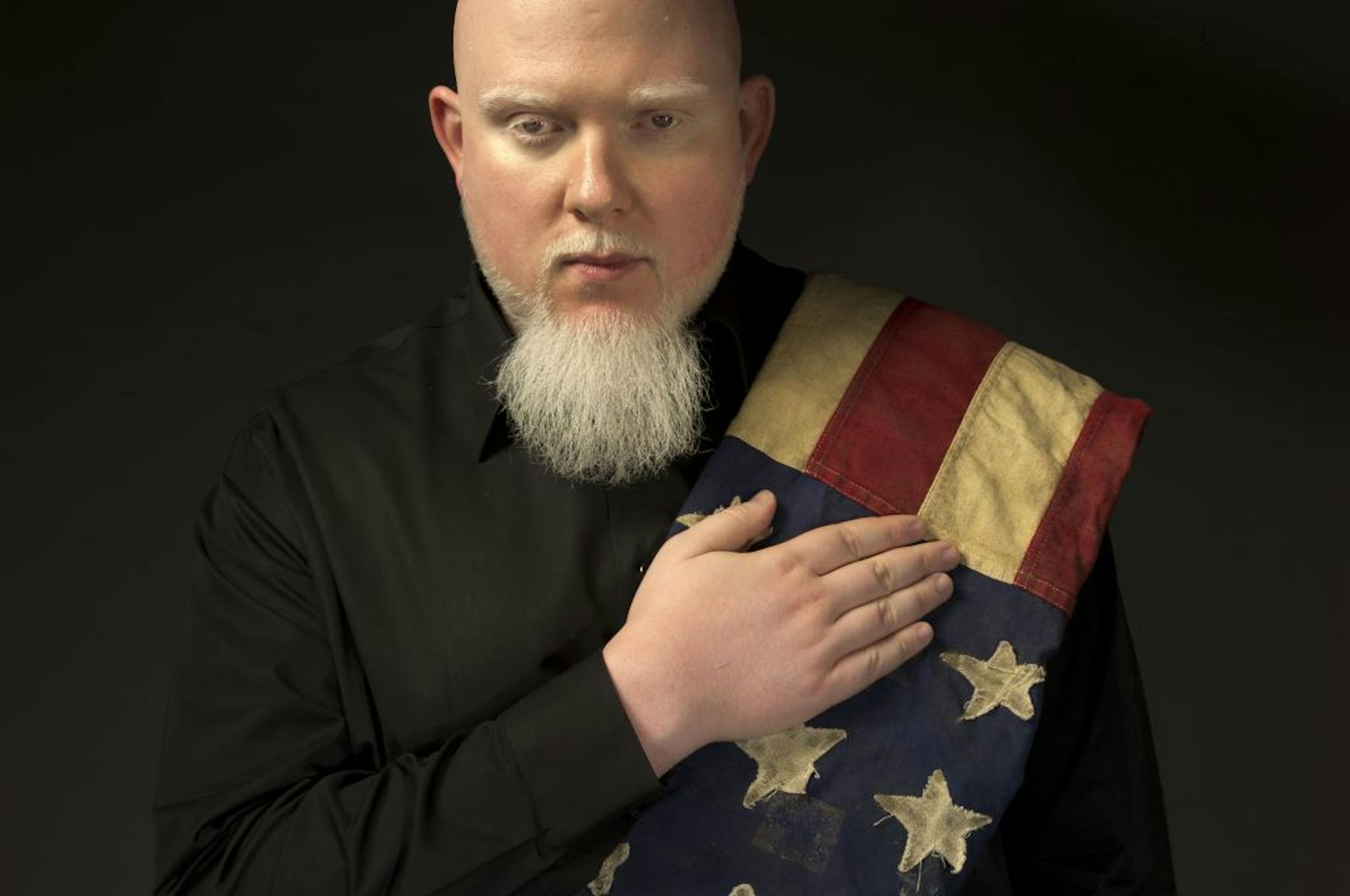
Two days before he hit the road with a new live band -- and two weeks before violent anti-American protests arose in the Middle East -- Ali talked at length about how his Muslim faith and frustrations with America shaped the album, and the cover photo that prompted the Boston threat.
"This album is my prayer for America," he explained of the artwork, which shows the rapper kneeling on a U.S. flag in a Muslim prayer pose.
"Unless you are absolutely convinced that all of Islam is against you as an American, you should only see it as me treating the flag reverently."