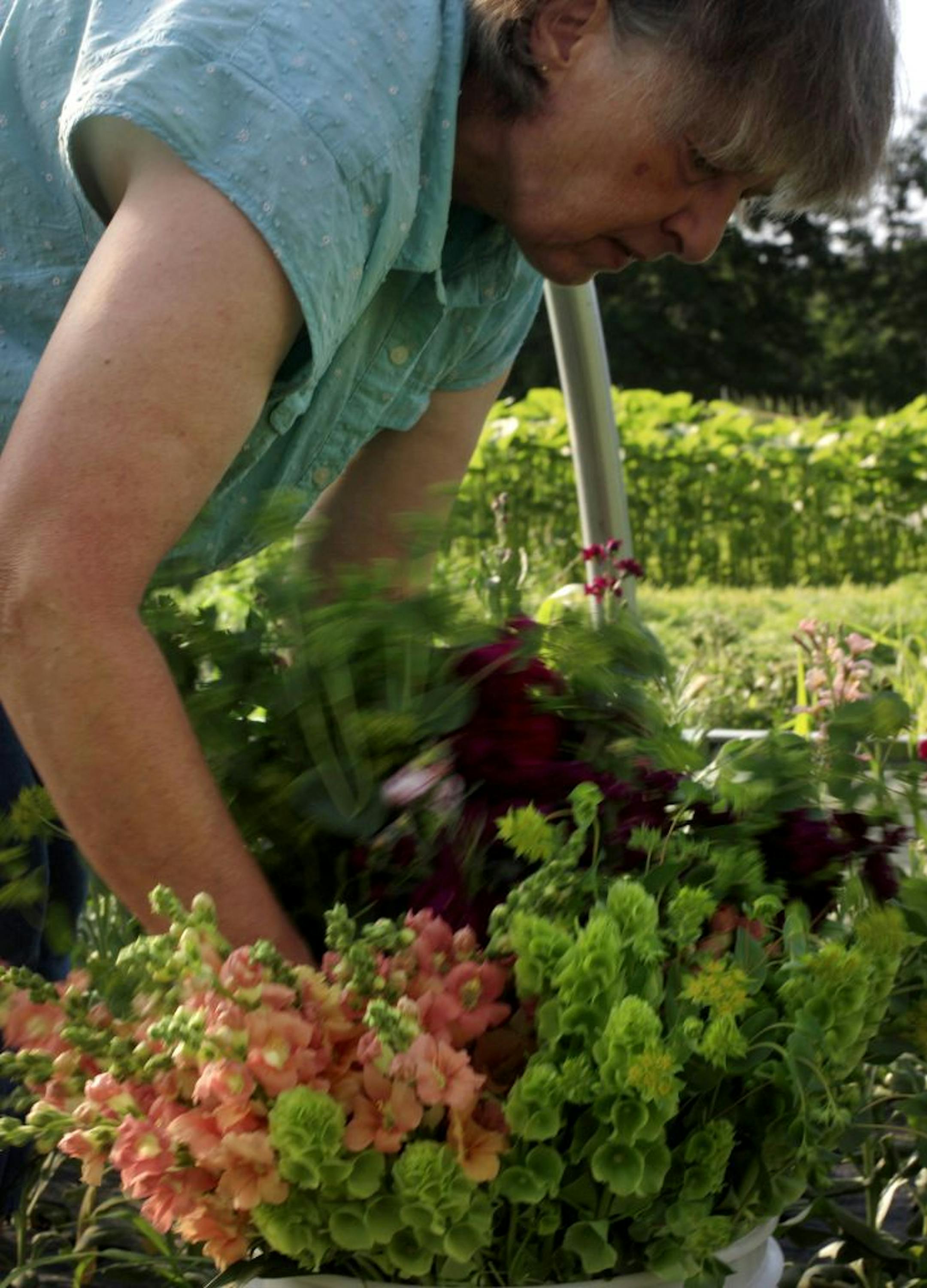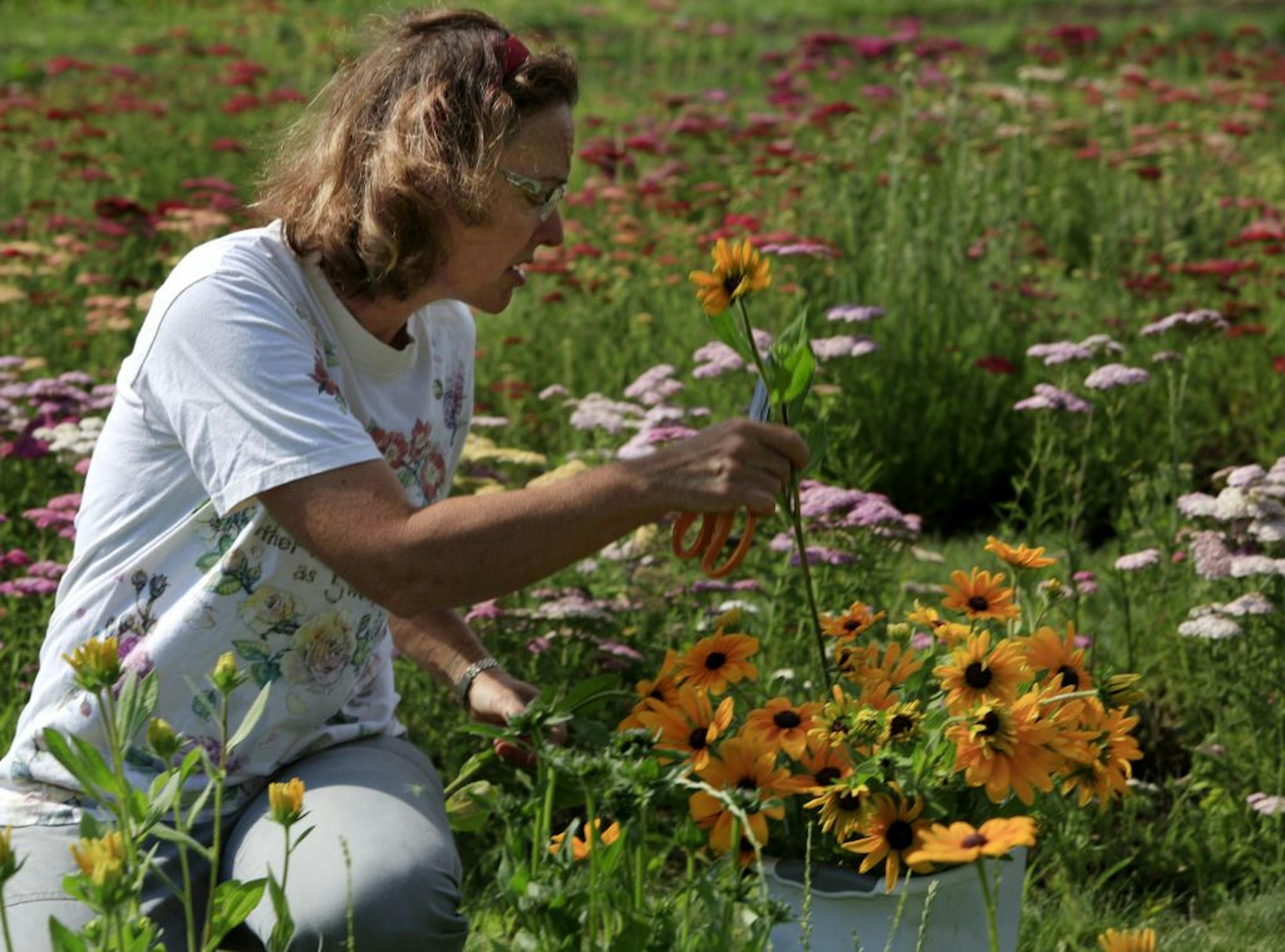
Hot weather is hard on growing flowers -- and hard on flower growers. Last week, when temperatures hit 100 degrees, Robin Trott, co-owner of Prairie Garden Farm in Starbuck, Minn., spent about four hours every day, drenched in sweat, hose in hand, watering fields of blooms.
She forced herself to take her time by singing waltzes in her head. "It slows me down," she said. "If I rush, the flowers pay."
The flowers need to look their best because they're Trott's livelihood. Every week, Prairie Garden Farm delivers its freshly cut flowers, in a refrigerated van, to florists in west central Minnesota and the Twin Cities.
"It's a challenge to be a flower farmer up here," said Doug Trott, Robin's husband and farming partner. "It's a short growing season, but during the season, things work really well."
Mom-and-pop flower growers like the Trotts are a rare breed, even in an agricultural state like Minnesota. These days, most of the bouquets and bunches sold in florist shops, discount chains and grocery stores come from South America, where the growing season is long and labor is cheap. There's a small but growing push toward locally grown, seasonal blooms -- much as the locavore movement raised awareness of locally grown, seasonal food.
'Slow flowers'
"It's a harder sell than local food," admitted Debra Prinzing, the Seattle-based author of "The 50 Mile Bouquet," a new book that celebrates the "slow flower" movement, small local growers and eco-friendly floral designers. Some publishers weren't interested in the topic, she said. "A lot of the reaction was, 'We're not putting [flowers] in our mouths -- why should we care?' But we're touching them, bringing them into our home. Wouldn't you rather be touching things that haven't been sprayed with toxic chemicals?"
Prinzing was inspired by "Flower Confidential," the 2007 bestseller by Amy Stewart that offered a behind-the-scenes look at the global floral industry. After reading it, Prinzing felt "outrage -- that something as beautiful as flowers had such serious implications for the environment and the people who grew them," she said. So she and photographer David Perry decided to travel across the country "to put a face on the flower farmers and tell their story."