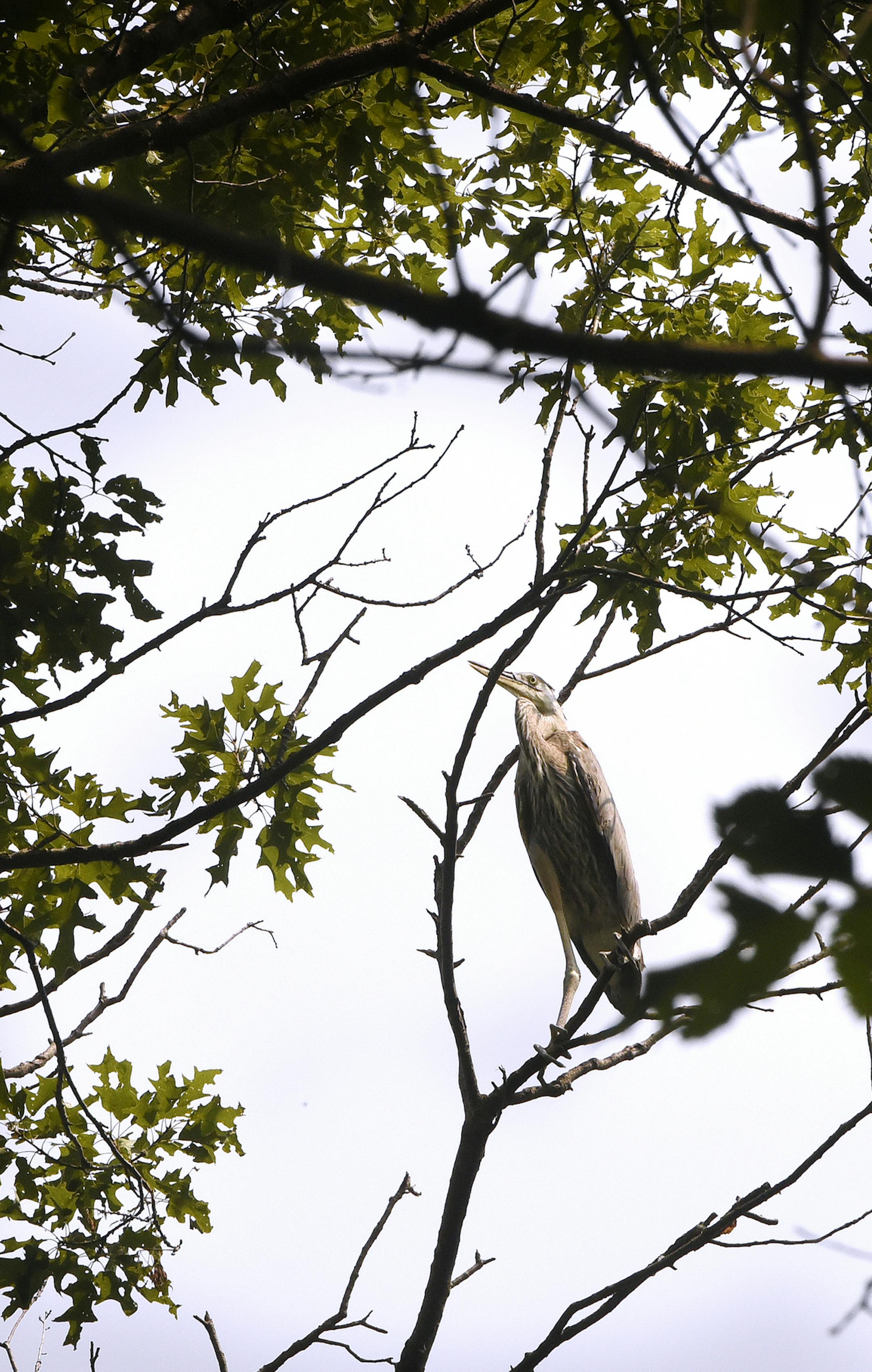
ALBANY, Minn. – A new great blue heron colony has settled in the Avon Hills, managing to conceal 6.5-foot wingspans amid a dense canopy of oaks.
Some bird-watchers have hoped for a revival or replacement of the long-abandoned Cold Spring rookery, which supported 1,585 great blue heron nests at its peak in 1974. They've wondered if great egrets, among the colonial water birds that shared that rookery on the Sauk River, might surface along a different stretch. The best chance of that discovery was during the five-year Minnesota Breeding Bird Atlas survey, which wrapped up in 2013.
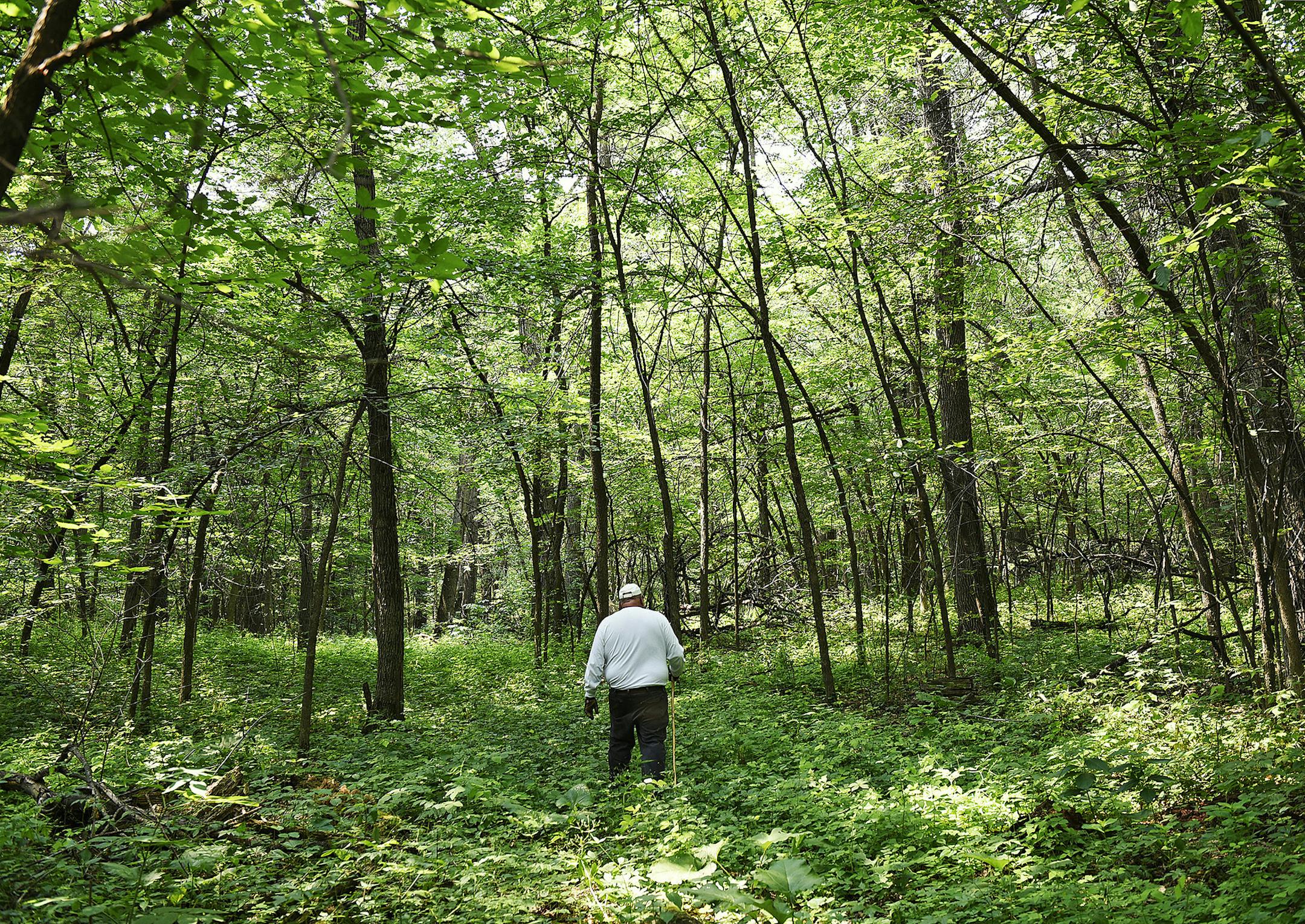
Cliff Borgerding wasn't looking for herons or egrets. He came upon the colony quite by accident during one of his frequent walks in the Avon Hills Forest Scientific and Natural Area (SNA).
"All of a sudden I could hear this barking, almost like a dog," Borgerding said.
He looked down and saw a 3-foot-wide circle of whitewash. He looked up and counted 25 nests. This spring, he counted 45.
In early July, he revisited the spot with a reporter, a photographer and two cans of mosquito repellent.
We pulled off a back road halfway between Avon and Albany, walked west on the Wobegon Trail, and then entered the SNA. Vegetation obscured what was at best a faint trail into the woods. We waded through a tangle of stinging nettles, brambles and vines. We made inadvertent circles, recognizing the same fallen logs, climbing the same rises, skirting a swamp, kicking up clouds of relentless mosquitoes.
This colony is nothing like the densely populated, extensively studied and easily accessible Cold Spring Heron Colony SNA, 15 miles to the southeast off state Hwy. 23. For 35 years, St. Cloud State University biology professor Max Partch and his students studied its great blue herons.