

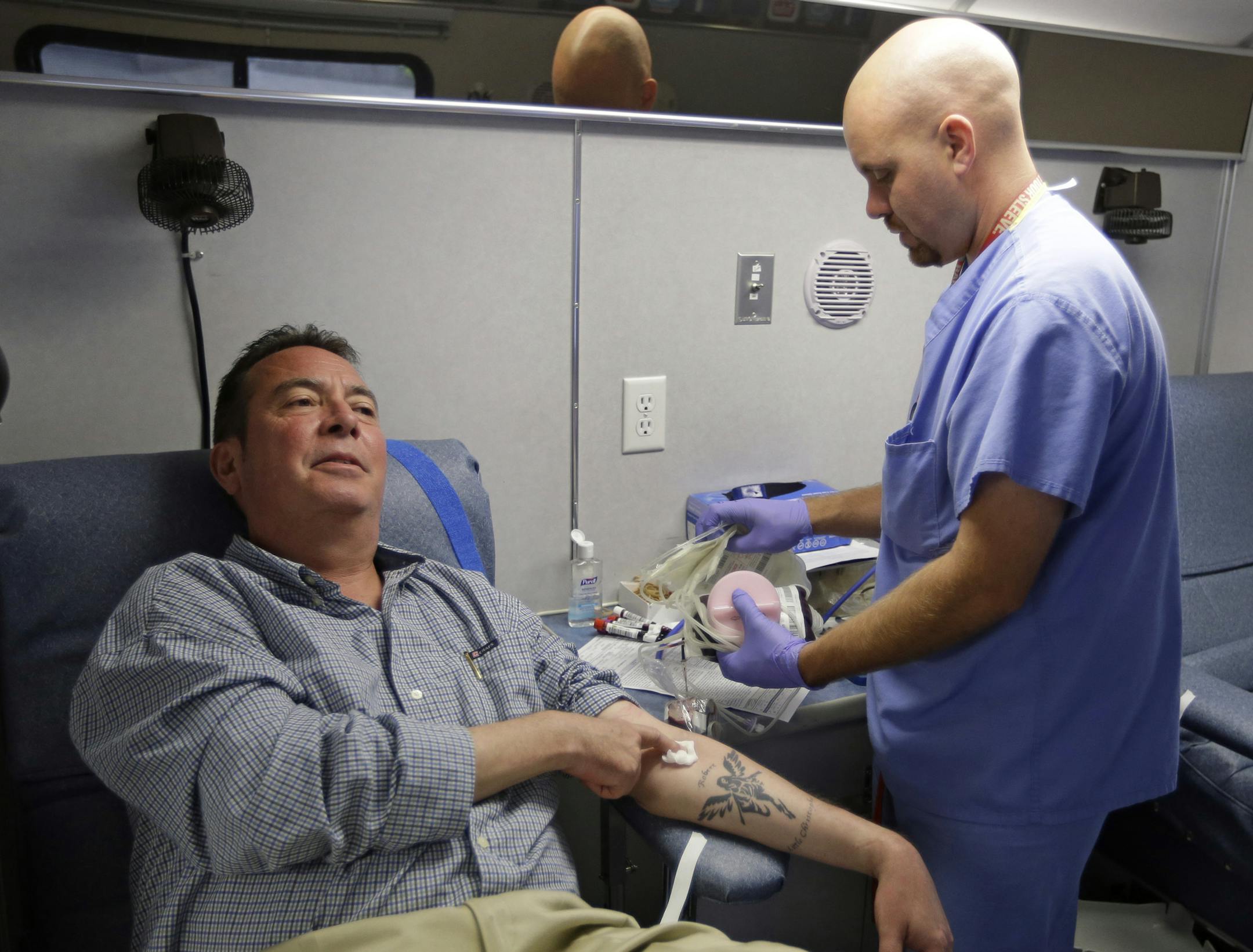
SOUTH BEND, Ind. – Blood banks are declaring fewer critical shortages these days and in some cases cutting staff in response to a dwindling demand for blood — the result of fewer elective surgeries being performed and medical advances that curb bleeding in the operating room.
The nation's blood-collection system has undergone a dramatic change from just a decade ago, when agencies that oversee the blood supply worried whether they could keep up with the needs of an aging population.
Now blood banks are making fewer but more targeted appeals for donations and reducing the size of their operations.
Blood centers shifted "from a collect-as-much-as-you-can mentality to a collect-to-need mentality," said Dr. Darrell Triulzi, medical director for the Institute for Transfusion Medicine in Pittsburgh and a former president of AABB, formerly known as the American Association of Blood Banks. "They started collecting only what they needed. That's new to the industry. We're still learning how to do that well."
Job cuts have been a part of the process.
The Indiana Blood Center announced in June that it would eliminate 45 positions in a restructuring that also involved reducing its mobile operations, closing a donor center and cutting other costs because demand from hospitals had fallen 24 percent from the previous year.
The Community Blood Center of the Ozarks in Springfield, Mo., announced in March that it was cutting staff by nearly 18 percent. Blood centers in Florida, West Virginia and Connecticut have taken similar steps.
The blood-collection system began changing dramatically with the recent recession, when Americans who had lost their jobs and health insurance put off non-critical procedures.


