

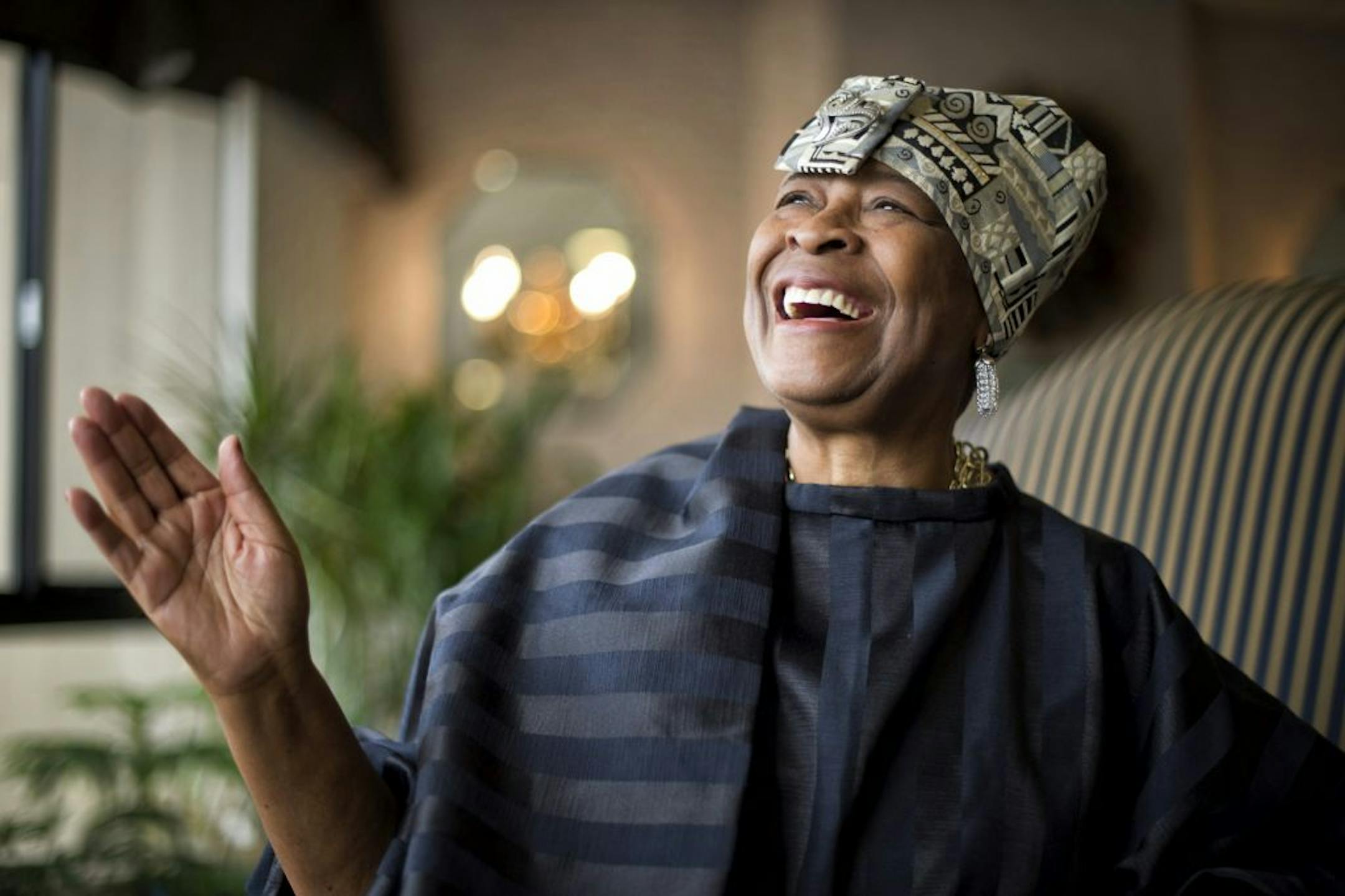
As a teenager in a God-fearing South Carolina household, Rosa Bogar knew it was sinful to sew on Sundays, "because it would be like sticking a needle in Jesus' heart," she said, then leaned closer and added: "So I had to ask for forgiveness a lot. I'd say, 'Jesus, I don't mean to make your heart bleed, but I have to finish this outfit so I can sell it and get some money.'"
She kept designing and sewing her own clothes, even after moving to Minneapolis and pursuing a career in education. Then in late 1981, KMOJ radio put out a call for black designers for an upcoming fashion show. Bogar thought: "I'm black. I design my clothes. Why not give it a shot?"
Long story short: She was named the top designer in the Shades of Blackness fashion show, which jump-started her career, which led to bigger fashion shows, which eventually brought black and white communities into the same room, which now is culminating in a reunion of those pioneers of black fashion on Sunday night.
Models, designers, photographers and all who appreciated great style in the 1970s, 1980s and into the 1990s are invited to attend the reunion at the Capri Theater in Minneapolis. Donations are appreciated, but Bogar said there is no charge "because you can't put a price on history."
The reunion will recall a time in Minneapolis, and the nation, when black and white communities were trying to find their way toward each other. For some, fashion proved a bridge.
The black fashion shows "became a cultural phenomenon," said Rozenia Hood Fuller, a participant in those early shows who became one of the first black models to walk the runway at Dayton's Oval Room shows.
"They exposed designers of color and provided networking opportunities for models getting their start," Fuller said. The shows were grass-roots efforts, not necessarily because black models and designers often were excluded from established fashion shows, "although that factor must be included in any conversation," she said. "It was in response to the inequity that we got to do something that would give us a place and a stage, give people a way to build their résumés."
She added that the shows, many of which were fundraisers for churches, schools and community efforts, also performed a subtler function: building self-esteem among young men and women by celebrating an alternative to the standards of beauty that, for much of America at that time, were defined as white.


