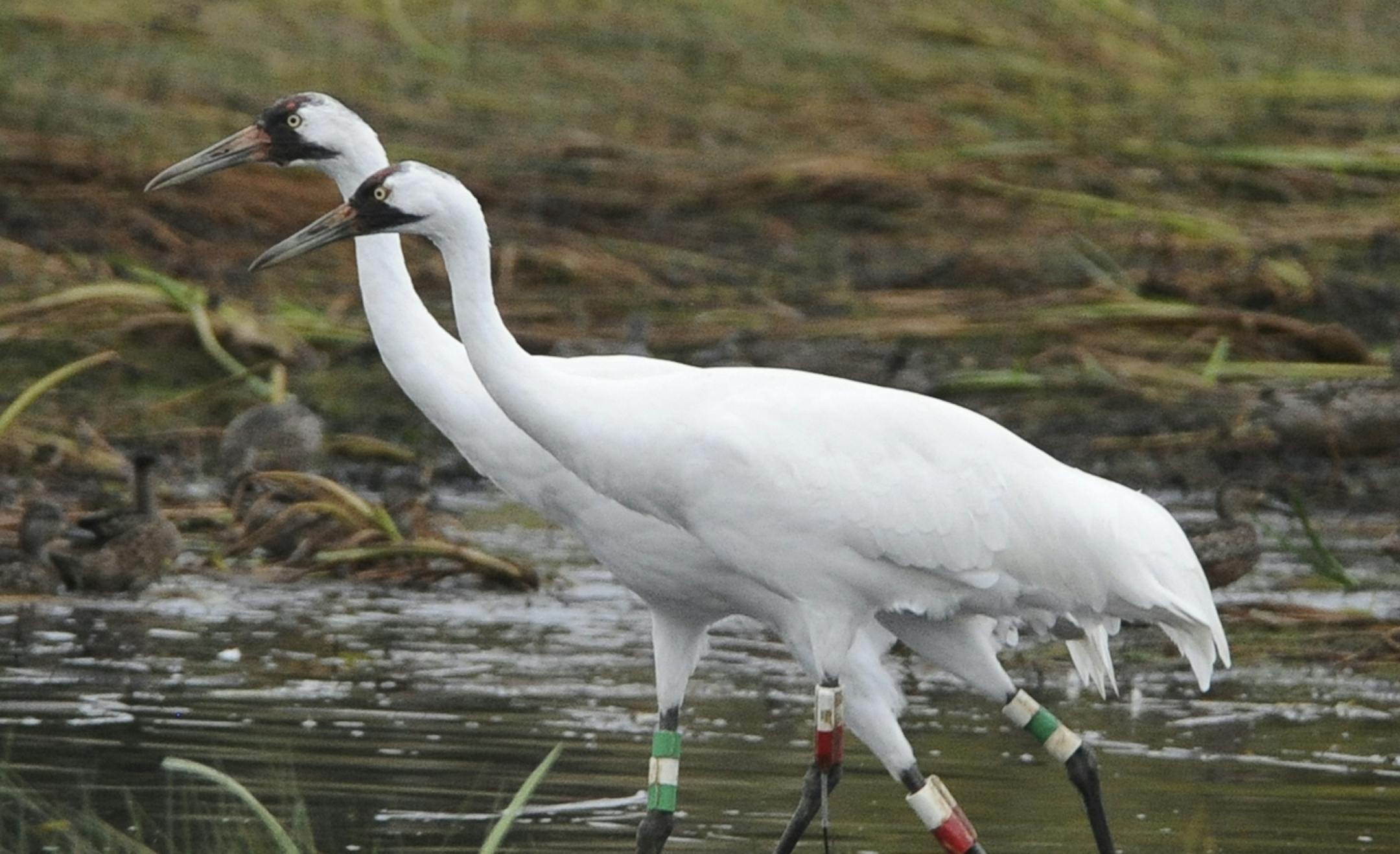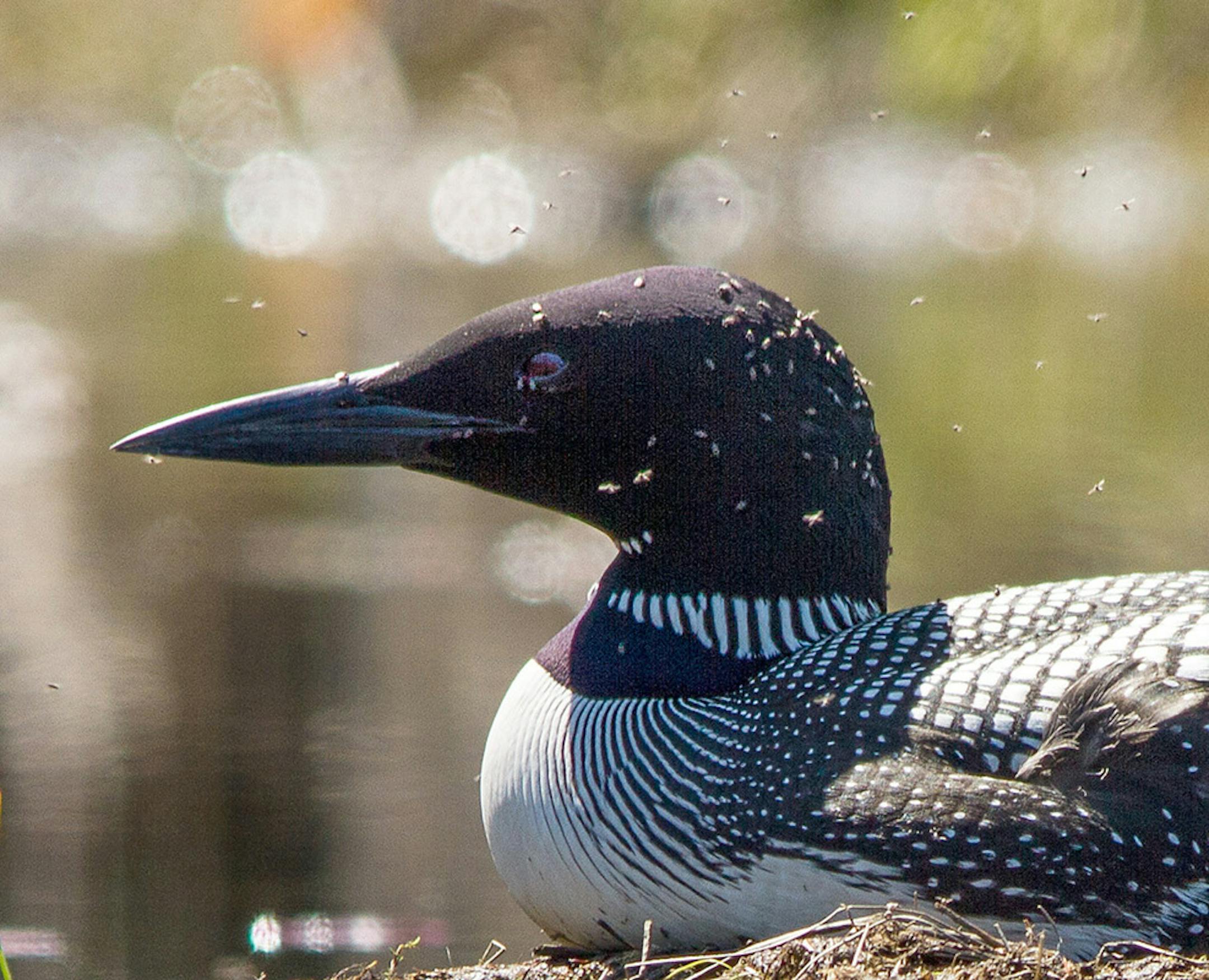
Common loons have joined whooping cranes as iconic birds under attack by black flies this year. The tiny, voracious, biting insects are driving those birds off their nests, exposing eggs to loss.
The problem is historic, but worse this year than most, involving other bird species as well.
You know about black flies if you spend time in almost any part of Minnesota near clean running water during the insects' active period. That's usually a few weeks in early to midsummer, the word "few" relative to the timing of your vacation or weekend visits.
Black flies are a worldwide phenomenon, with thousands of species. Some specialize by animal species in their search for blood. Loons are among birds tormented by a fly with a specific appetite.
Researchers from Northern Michigan University successfully collected these flies for examination by using loon decoys. The flies showed strong preference for visual clues. They'll find you by detecting the carbon dioxide you exhale, or by showing strong preference for the dark-colored visual clues you might be wearing.
Dark-colored clothing is bad, light colors good if you are trying to avoid fly bites.
Female flies need a blood meal to produce eggs. Eggs are laid in streams and rivers that flow fast, have good oxygen content, and show no or little sign of pollution. (Our efforts to clean streams and rivers are being validated by black flies.) In midsummer they were in the Mississippi, Crow and St. Croix rivers as well as northern streams.
More species under attack
Minnesota has about 40 species of black fly. They are either ornithophilic — looking for birds — or mammalophilic — looking for us. They are tiny, with characteristic humped backs. Saliva numbs your skin. Razors in their mouths draw blood.