Four species of frogs and one toad species live in the swampy marsh behind our home. They are bird food, the kind that provides a show for a watchful birder.
It's easiest to identify these creatures by their voice, each distinct: leopard frog, wood frog, chorus frog, a species of gray tree frog, and American toad.
I've seen the leopard and wood frogs and the toad. Leopard frogs fell into a window well until I covered it. Wood frogs are dangerously (for them) active during breeding season. They scurry after one another in shallow water, leaving little waves of disturbance.
The toads, almost always juveniles or whatever it is you call a not-fully grown toad, can be found in our lawn. When I'm mowing, I have said "Ohhhh" more than once.
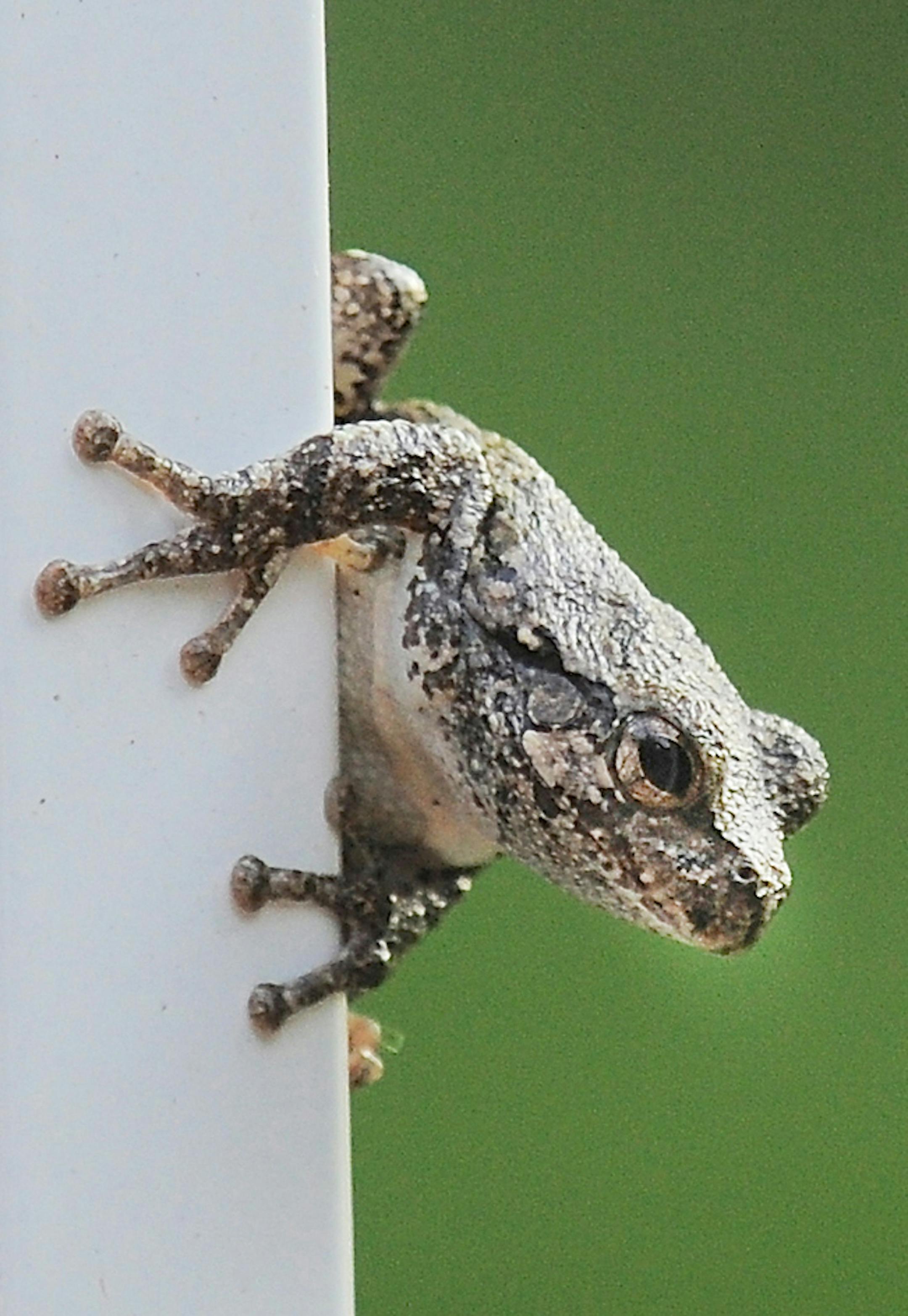
Chorus and tree frogs go unseen, very alert and well camouflaged if you try to pin a voice to a body. The other day, though, a tree frog fell out when we opened our patio umbrella. They hide during the day.
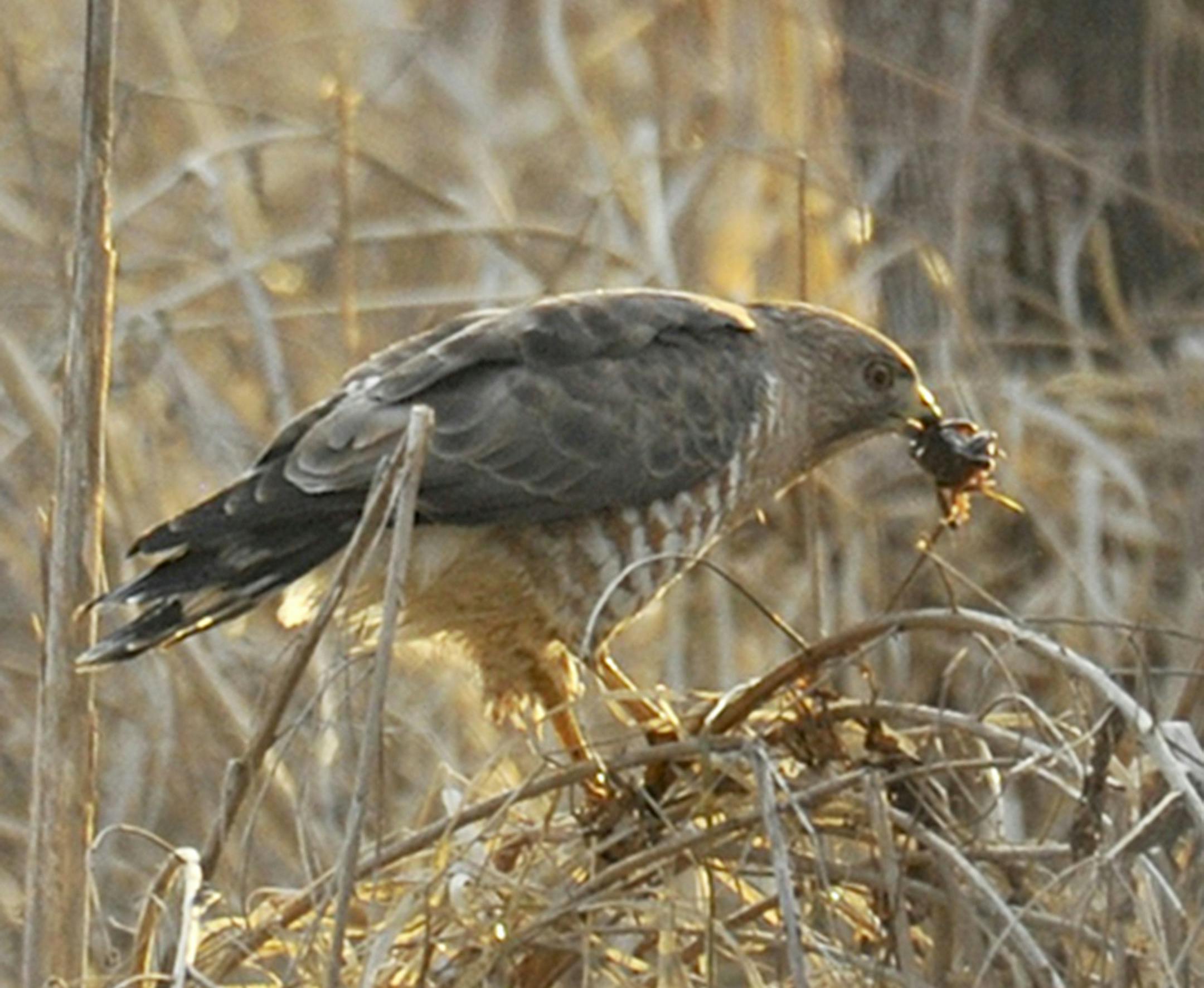
Birds, on the other hand, don't need window wells or lawn mowers. I've watched a broad-winged hawk successfully hunt frogs in our yard, launching a strike from a branch overhanging the marsh. Barred owls eat frogs in the coffee darkness of the wee hours. I've never seen that.
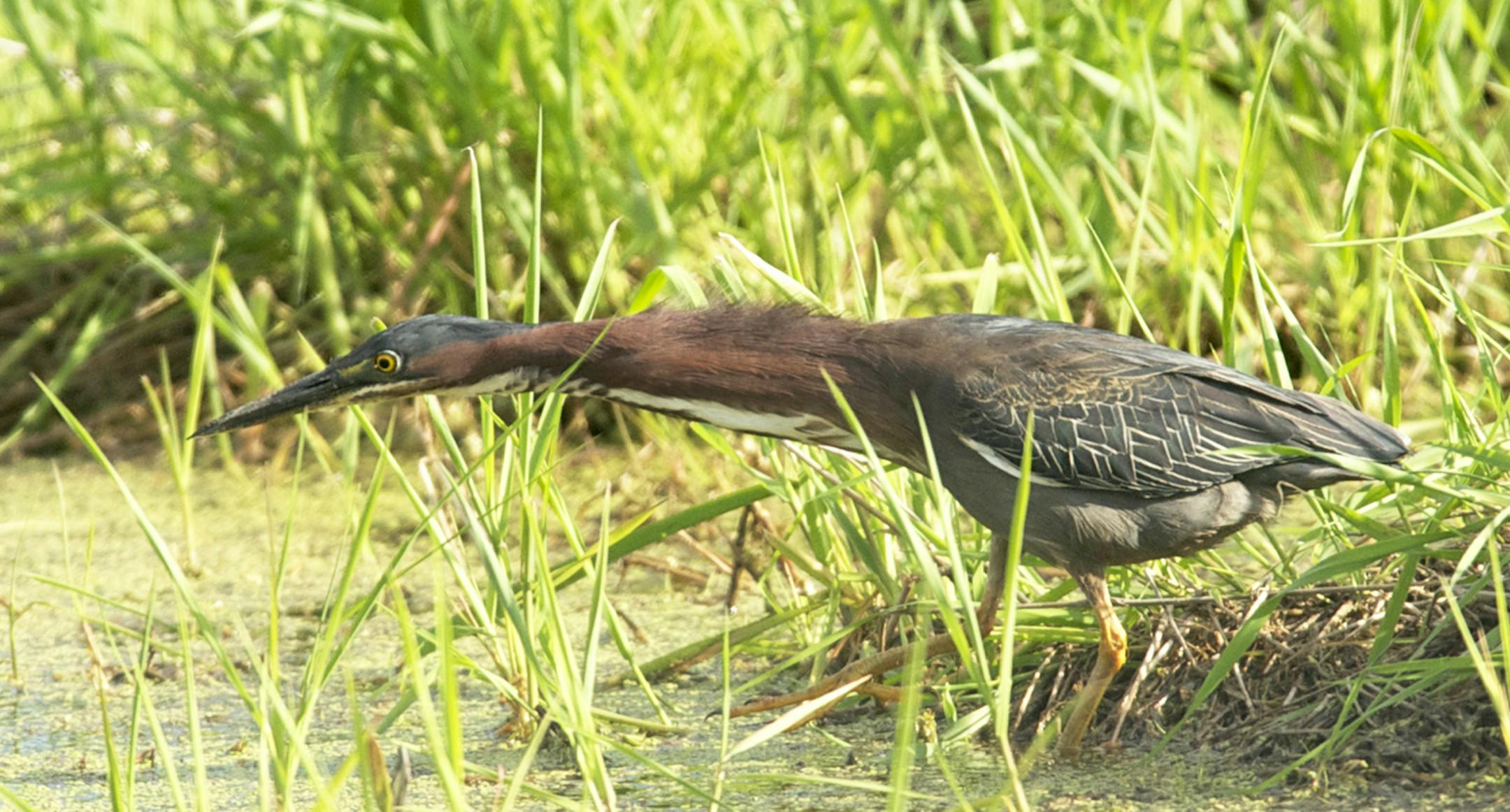
Champion among the frog hunters for me is the green heron, because it hunts most frequently and is easy to see. The heron starts its hunt with a frog-filled pond, extreme patience and good eyesight. And then it follows this technique: Wait. And wait and wait. Stab. Swallow.
Our pond has held fish; I've watched a heron catch one, wondering if it was as surprised as I was. Our pond has in our years here both frozen to its very bottom and dried up. Neither is conducive to fish.